
Living Energy
A Family Story of Mitochondria, Uncertainty, and Love

LIVED EXPERIENCE
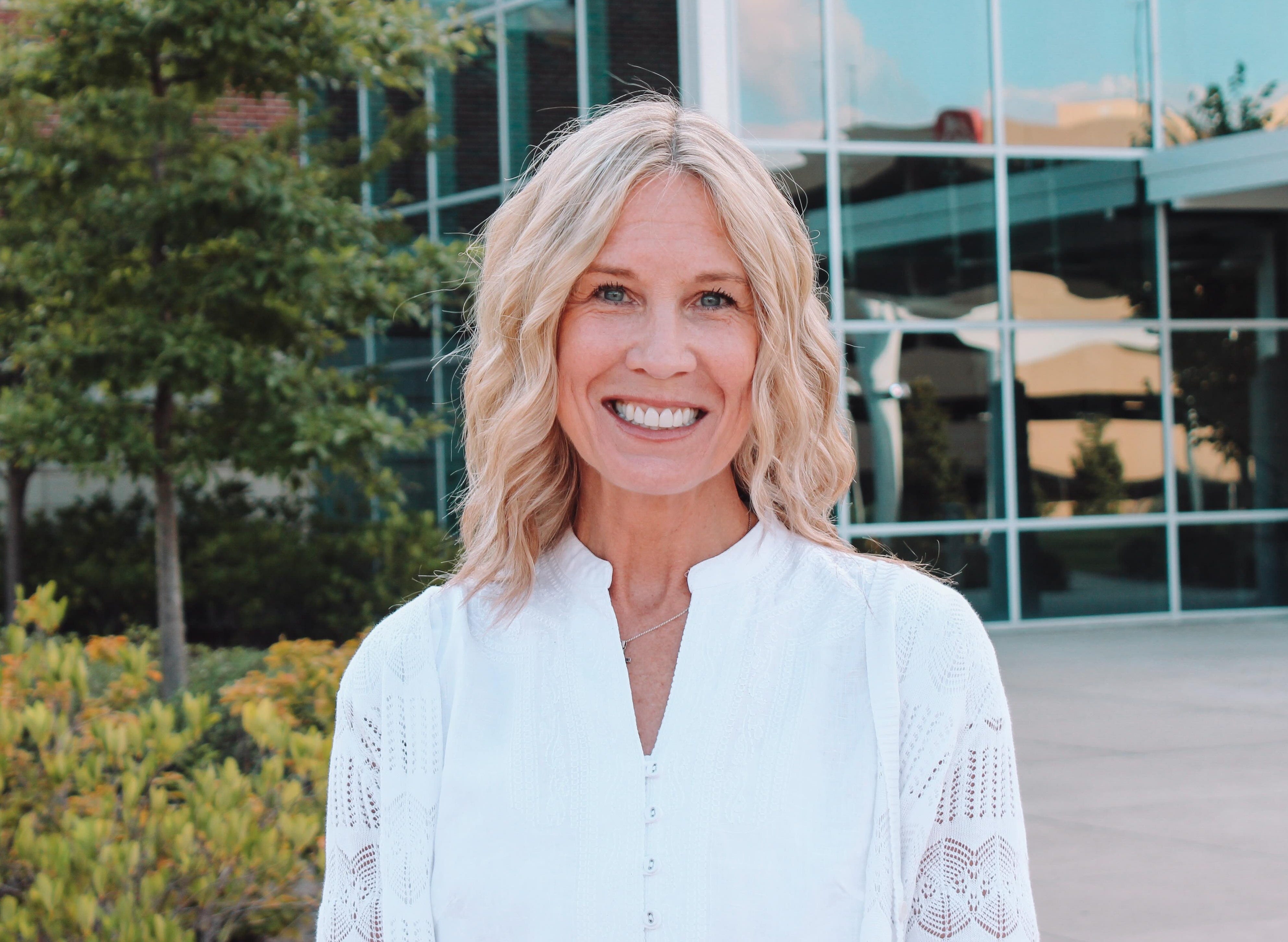
Our TSEE guest writer Robin Lanzi, PhD, MPH, is Professor of Health Behavior, Psychology, and Adolescent Medicine at the University of Alabama at Birmingham. For three decades she has worked at the intersection of developmental psychology, public health, and community-engaged implementation science—and since 2014 she has lived the work from the inside, as a person with Leber Hereditary Optic Neuropathy Plus, the mother of five sons who all carry the same rare mitochondrial mutation, and a caregiver to her mother. She writes and develops tools as a scientist, stakeholder, and story-holder, a triple lens that grounds her AHA (Agency, Hope, Action) Implementation Science Framework—a bioenergetics-informed model linking mitochondrial capacity to implementable behavioral and psychosocial supports. She welcomes connection at rlanzi@uab.edu.
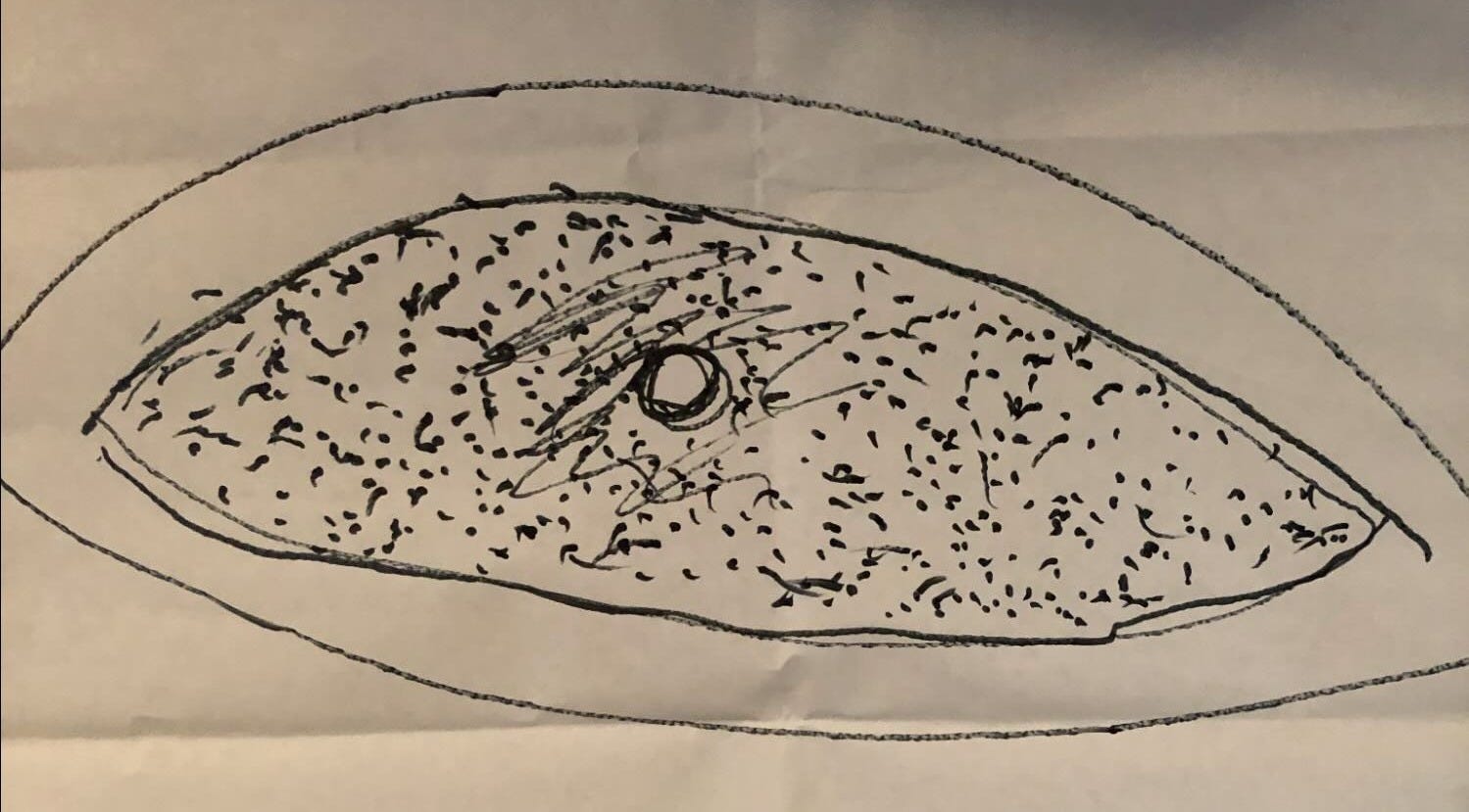
“Mom, I think I am going blind in my right eye.”
The words were simple. Plain. Almost careful.
For a moment, my brain did not know what to do with them. Time seemed to stretch just enough for me to notice everything at once—the way his voice did not shake, the way the kitchen light hummed above us, the way my body went completely still.
It felt as though something heavy had settled into my chest. Not sharp. Not panicked. Just final—a quiet, sinking weight I could not dislodge with reason or reassurance.
I did what mothers do instinctively. I asked questions. I searched for explanations before accepting meaning. I asked questions that implied this might be temporary. Fatigue. A migraine. A hit to the head. Anything that would allow that sentence to loosen its grip.
But even as I spoke, part of me already knew.
This was not fear speaking through him.
This was observation.
Somewhere between his calm delivery and my body’s involuntary response, I understood—before any diagnosis, before any tests—that something permanent had entered our lives.
That sentence did not just describe a symptom.
It changed the shape of our future.
A Timely Reflection
It is April 6, 2026.
Twelve years.
Twelve years since our oldest son, Stephen, stood at our kitchen table after dinner and said something so quietly, so plainly, that it took my brain a moment to register the meaning of his words: “Mom, I think I am going blind in my right eye.”
This morning—twelve years later—Stephen is unloading the dishwasher.
It is early.
The house is still.
The kind of quiet that only exists before the day has decided what it will ask of you.
Plates clink softly as he stacks them into the cabinet he knows by heart. I thank him automatically, the way parents do when they see something kind being done. He smiles and shrugs, almost sheepishly. I ask him why he always unloads the dishwasher.
It’s easy, he says.
It feels good to do it.
And something in me stops.
Not because unloading the dishwasher is profound.
But because what he says is. Because ease is.
In our family—now shaped by a rare genetic mitochondrial condition called Leber Hereditary Optic Neuropathy (LHON) that I unknowingly passed on to all five of our sons—ease was never something we assumed we would get back.
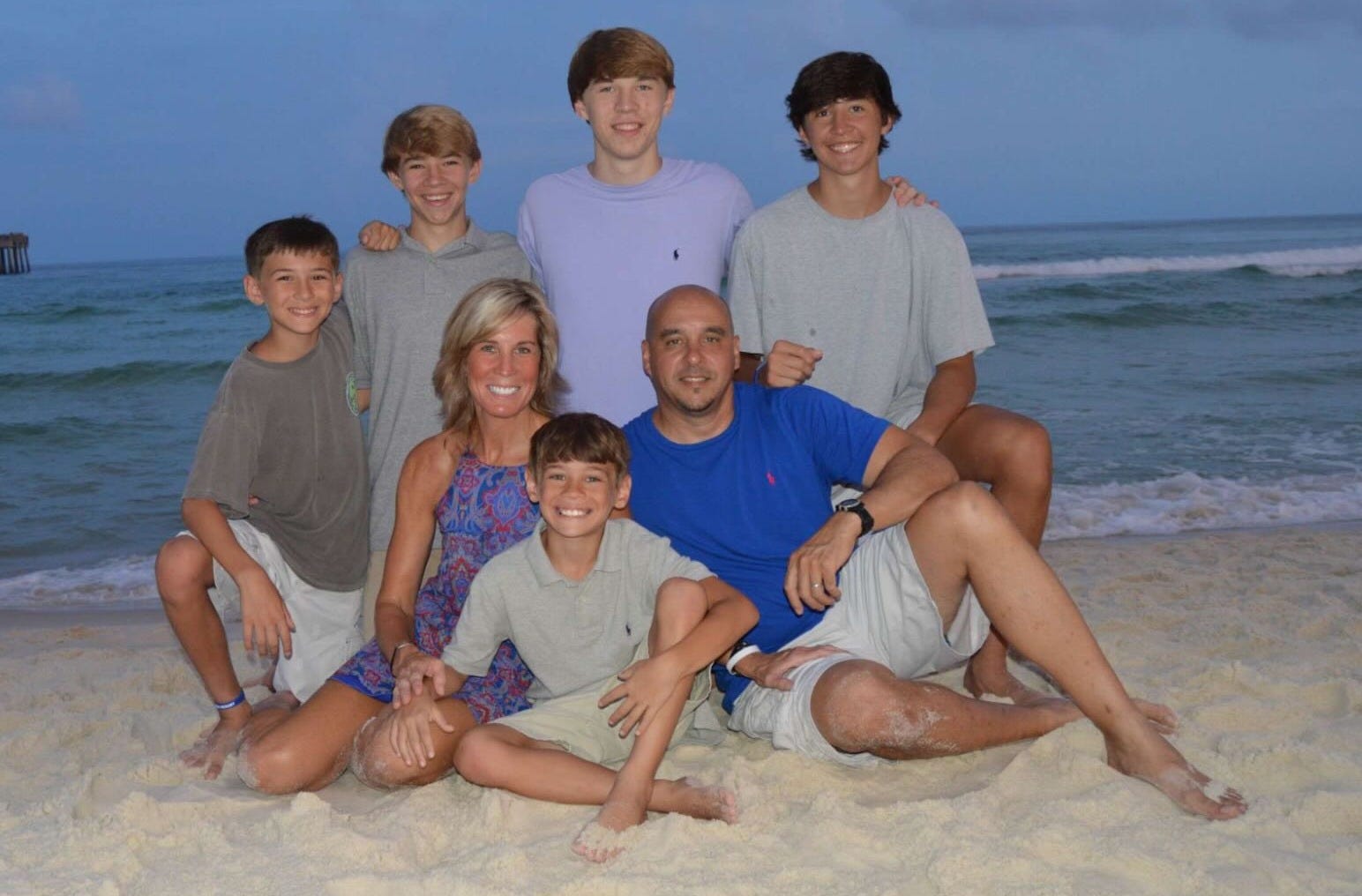
Mitochondrial diseases come in many varieties. LHON is one of them, a rare genetic mitochondrial condition, where affected individuals may lose central vision—the sharp, detailed vision we rely on for reading, recognizing faces, and seeing what is directly in front of us. Vision is lost first in one eye, and shortly after, typically within weeks to months, in the other. Peripheral, or side, vision is usually preserved. LHON is particularly difficult for families since, although everyone may have inherited the mitochondrial DNA mutation from their mother, it’s unpredictable who will lose vision, and when that might happen.
Some individuals carry the mutation their entire lives and never experience vision loss. Others do—and for them, the loss is usually permanent. For some, the condition extends beyond vision. What is sometimes called LHON Plus involves additional symptoms—neurological, cardiac, metabolic, gastrointestinal, cognitive—reflecting the broader reach of mitochondrial dysfunction throughout the body. The variability is extraordinary, even within the same family.
Because mitochondria exist in every cell, the implications can extend far beyond any one system—and the uncertainty of not knowing who will be affected, or when, can be a major source of strain.
For a long time, vigilance was our baseline. Monitoring energy, managing stress, anticipating needs, feelings, obstacles. Learning, again and again, that pushing through came with consequences.
But here it is.
Energy that moves without force.
Energy that feels—using my new mitochondrial psychobiology language—energetically pleasing.
Only later would I understand and truly appreciate how much biology and psychology live inside that moment.
The Moment Everything Shifted
When Stephen first said those words, we did what families do when something feels unreal. We searched for explanations and answers that could help.
He had been accidentally hit on the right side of his face while playing basketball at an AAU (for those not in the adolescent basketball arena, that’s Amateur Athletic Union) tournament two weeks earlier. When it happened, he dropped to his knees. Any 6’6” high school sophomore chasing a scholarship would do what Stephen did—shake it off, go back in, and have the game of his life.
In our family, injuries had a shape.
They had timelines.
Protocols.
Recoveries.
Broken bones were familiar. Between my husband and me—both college athletes—and five intensely athletic sons, fractures were almost expected. At one point, we had four sons in casts at the same time. Broken wrists. Broken ankles, toes. Broken arms, fingers. Concussions. Torn ligaments. Sports medicine appointments. Orthopedic scans. Ice packs lining the freezer.
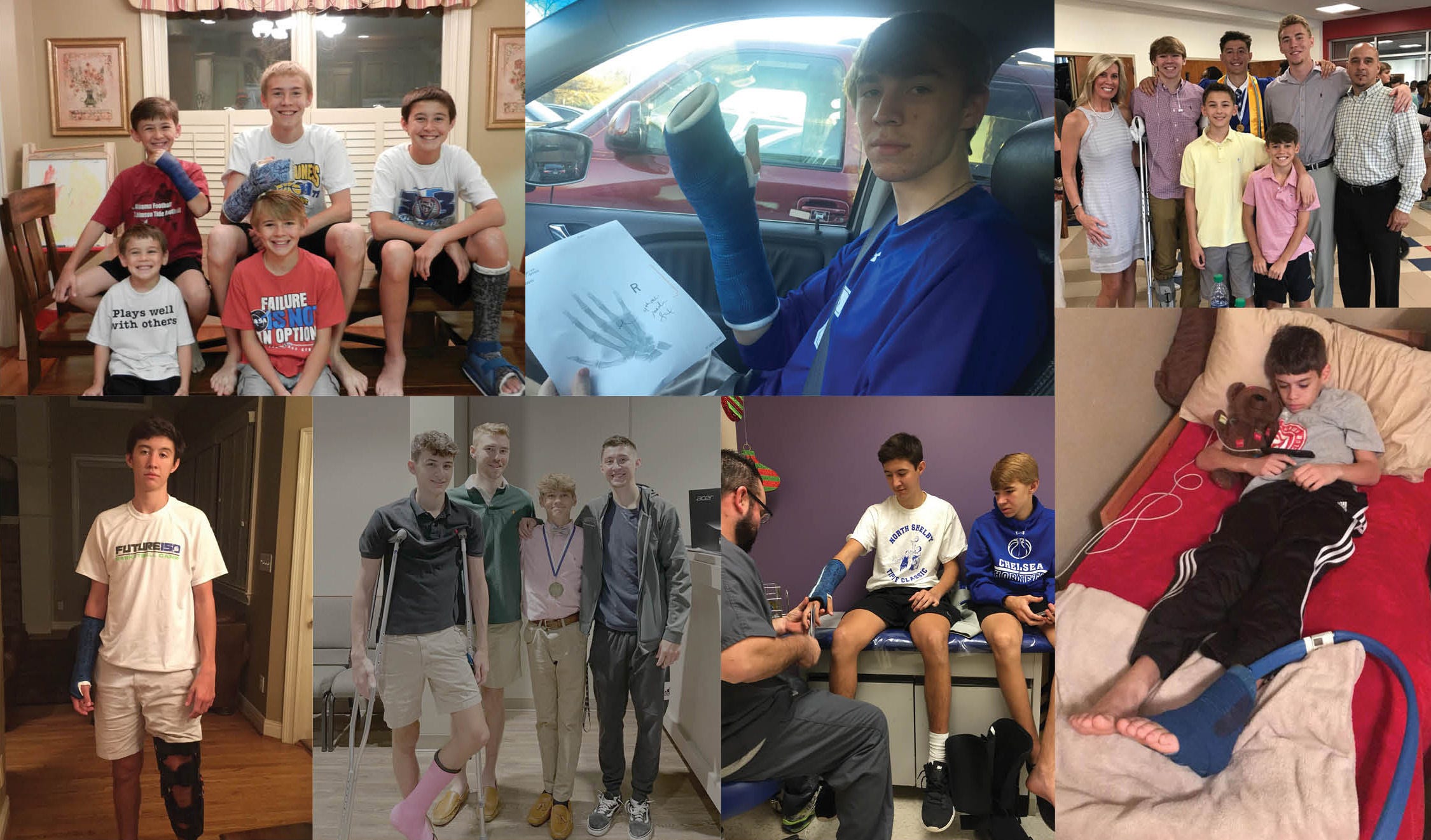
Each injury hurt, disrupted plans, cost time—but it made sense. Bones heal. Swelling goes down. Athletes rehab. Bodies recover. There is a script.
At first, this seemed to have a script. Stephen’s neuro-opthamologist, Dr. Michael Vaphiades, believed Stephen’s vision loss was traumatic optic neuropathy from the basketball injury, and we were told his lifelong goal now was to protect his left eye so that he could continue to see. For a moment, we thought we were grieving one injured eye.
We did not know that his “good eye” would soon begin to fail too.
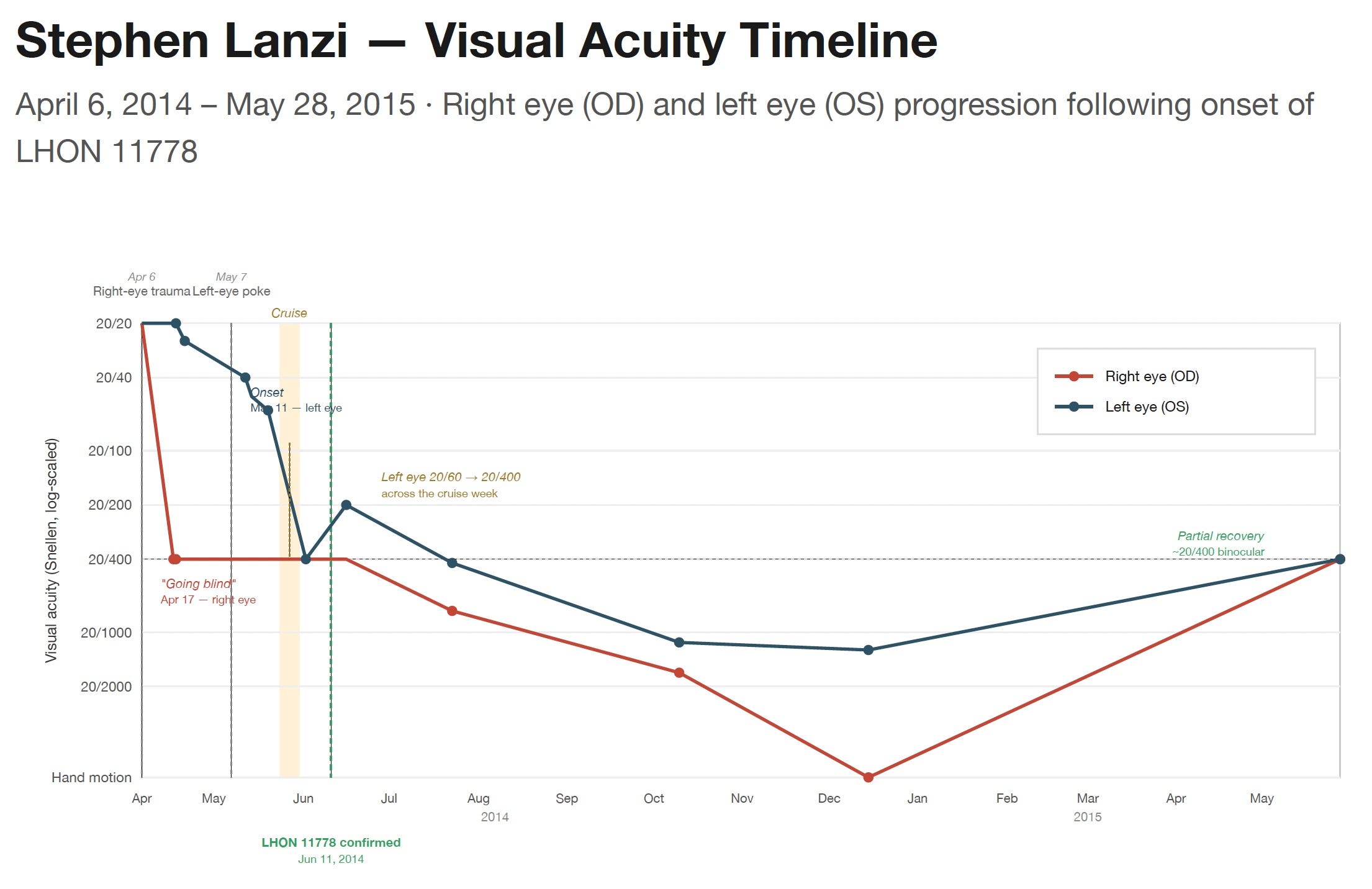
We were so blessed that Dr. Vaphiades suspected relatively early in Stephen’s diagnostic journey that he was losing vision to LHON. The initial injury to Stephen’s eye happened on Sunday, April 6, 2014 hit in the eye playing basketball. On Thursday, April 17, 2014, he said he thought he was going blind. By Wednesday, May 14, Dr. Vaphiades suspected LHON. He ordered genetic tests and shared resources.
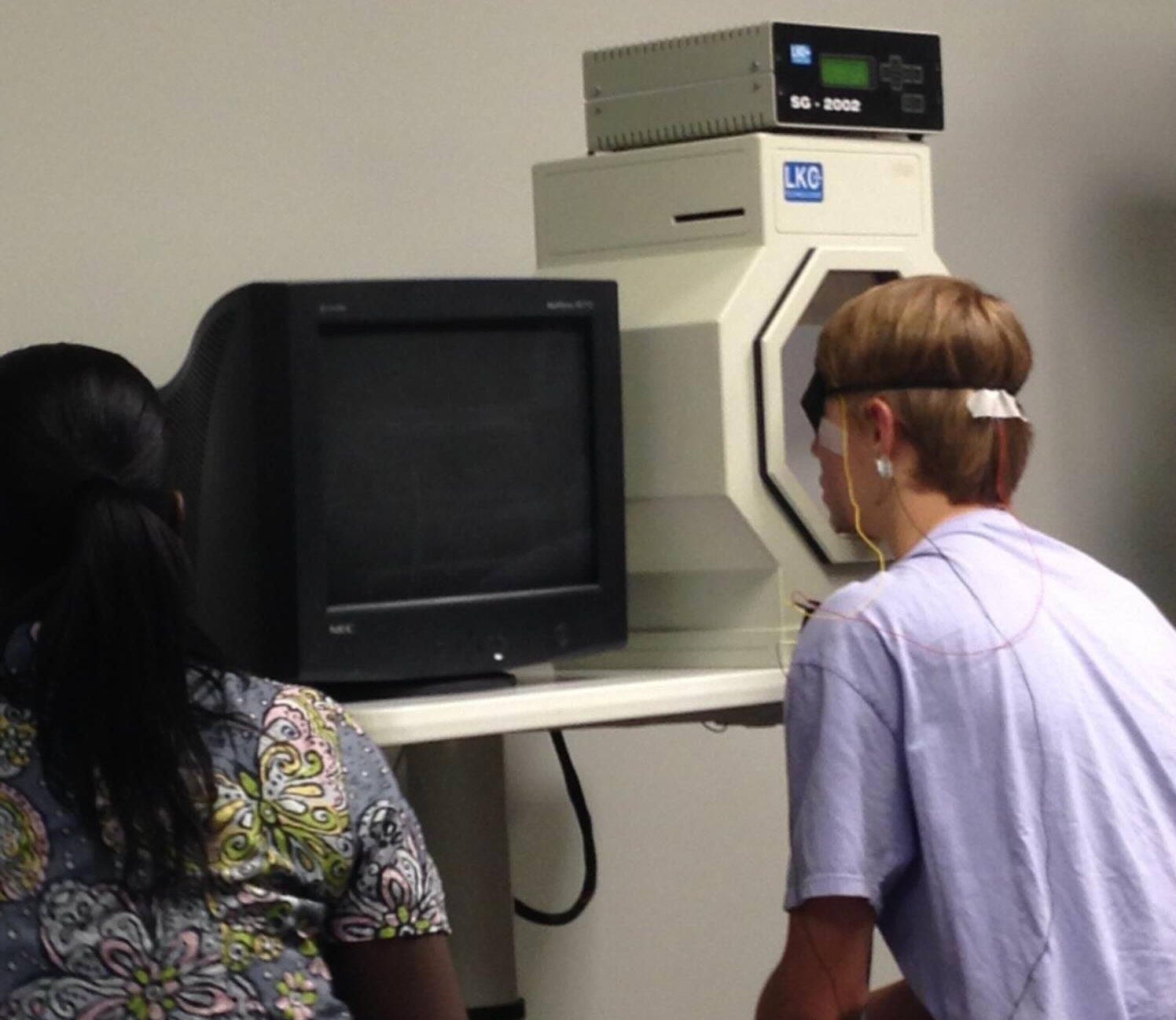
On June 16, 2014—forty days after Stephen first said those words at our kitchen table—we drove to Emory to see Dr. Nancy Newman, one of the country’s leading LHON neuro-ophthalmologists.
She was kind. She was thorough. She was intentional. She told us something that reframed everything: the trauma, the antibiotics—may or may not have caused this. Stephen had always carried this mutation. The basketball court may simply have revealed what was already written inside every cell he had ever had.
This was not bad luck. This was biology. And it was ours to understand.
This was different.
What began as a strange blur in one eye progressed quietly but relentlessly into something no one could explain away. Appointments stretched on. Tests multiplied. Words from clinicians landed without meaning. “Let’s wait.” “We don’t know yet.” “Come back in a few weeks.”
The world we assumed we lived in shifted without ceremony.
Without warning.
And somewhere inside me, something else began to shift too.
Because we knew—before the diagnosis—that this was loss.
The Visual Memory Cruise
As the uncertainty deepened, we decided to go on a visual memory cruise as we did not really know how much time we had before Stephen could no longer see.
We traveled with intention. We slowed down. We looked harder. We took photographs not because we knew they would matter, but because something in us understood—viscerally—that sight might soon become memory.
We lingered longer than usual.
Faced the light.
Held the horizon.
At the time, we did not call this adaptation.
We called it love—which it was, is, and always will be.
Only later did I recognize that love and agency were never separate—that what we were doing was both: choosing how to show up before we had language for it.
The idea for the visual memory cruise did not come from us. It was gently, generously suggested by Lissa Poincenot—a pioneering LHON mother who had already walked this road before us. She understood something we were only beginning to grasp: that waiting passively for loss compounds suffering, while intentional presence can soften it.
The cruise was emotionally perfect—and distinctly remarkable in ways we could not have anticipated. When we left, Stephen could still text his friends and family. He could read his phone. During the trip, our phones were put up as we were there to be with each other—and not pay the extra phone surcharges times 11 with our five sons, my mother and her husband, my mother in law, “Me-Mother” (my husband’s grandmother), my husband, and I. We were there to make memories together and feel each other’s presence.
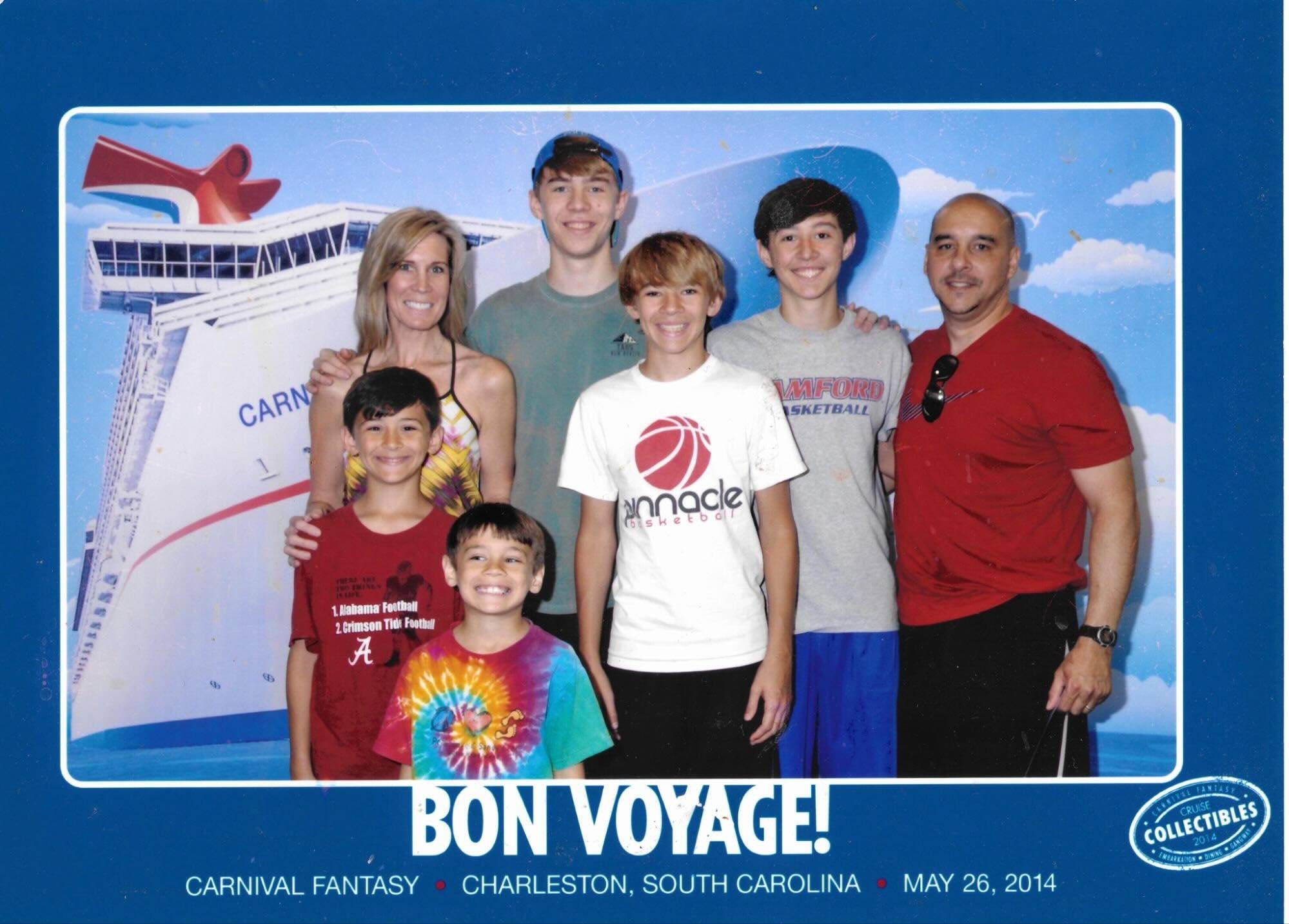
When we returned home and got into our car, of course the first thing our sons did was reach for their phones and turn them on to text. Somehow, I could feel the energy shift in the car. I looked in the rear-view mirror and saw Stephen looking out the window. I asked him what was wrong. “I can’t see my phone.” He said. My heart still feels the pain—12 years later.
The shift was sudden. Stark. The emotional toll was immediate—not just for Stephen, but for his brothers, for my husband, for all of us. Watching independence slip away in real time carries a unique weight. You can feel it register in the body before words arrive.
I watched Stephen absorb that loss quietly. I watched his brothers recalibrate—hovering, helping, holding back tears they did not yet know how to place. I watched my husband hold our family together with steadfast strength, protecting, grounding, and carrying all of us—while carrying his own grief alongside us.
That moment—returning home unable to text—changed the texture of our days. It marked the beginning of a new kind of vigilance that lived not just in our thoughts, but in our nervous systems.
Living Energy in a Family
Vision loss rearranges far more than sight.
It changes how energy flows—through a body, and through a family.
Stephen, the oldest of our five sons, adapted quietly. He kept showing up, the steadfast leader that he is—to school, to practice, to life—as the world became harder to see. He did not dramatize his vision loss. He absorbed it. Regulated it. Carried it. As I look back on my emails with his teachers during that time, Stephen did not share with his teachers that he was having any difficulties. He just tried to get by. Oh how my heart aches thinking back about what he went through. What his brothers went through experiencing it with him. What my husband went through, wanting to protect, to fix, to carry what he could for all of us… Words still feel insufficient to capture.
In that same stretch of time, Joseph, Stephen’s younger brother by 18 months and just one grade below Stephen stepped in—without naming it—to become Stephen’s eyes.
In hallways.
In locker rooms.
In classrooms.
At night, in the quiet of their shared bedroom, during conversations that did not require vision at all.
This was not martyrdom.
It was attunement.
The following year, Joseph would ask to mark that devotion on his body.
Around Christmas—December 23, 2015—Joseph tattooed the date April 6, 2014 over his heart. The day Stephen got hit in his right eye and began losing his vision. The day Joseph, almost without realizing it, took on a different role.
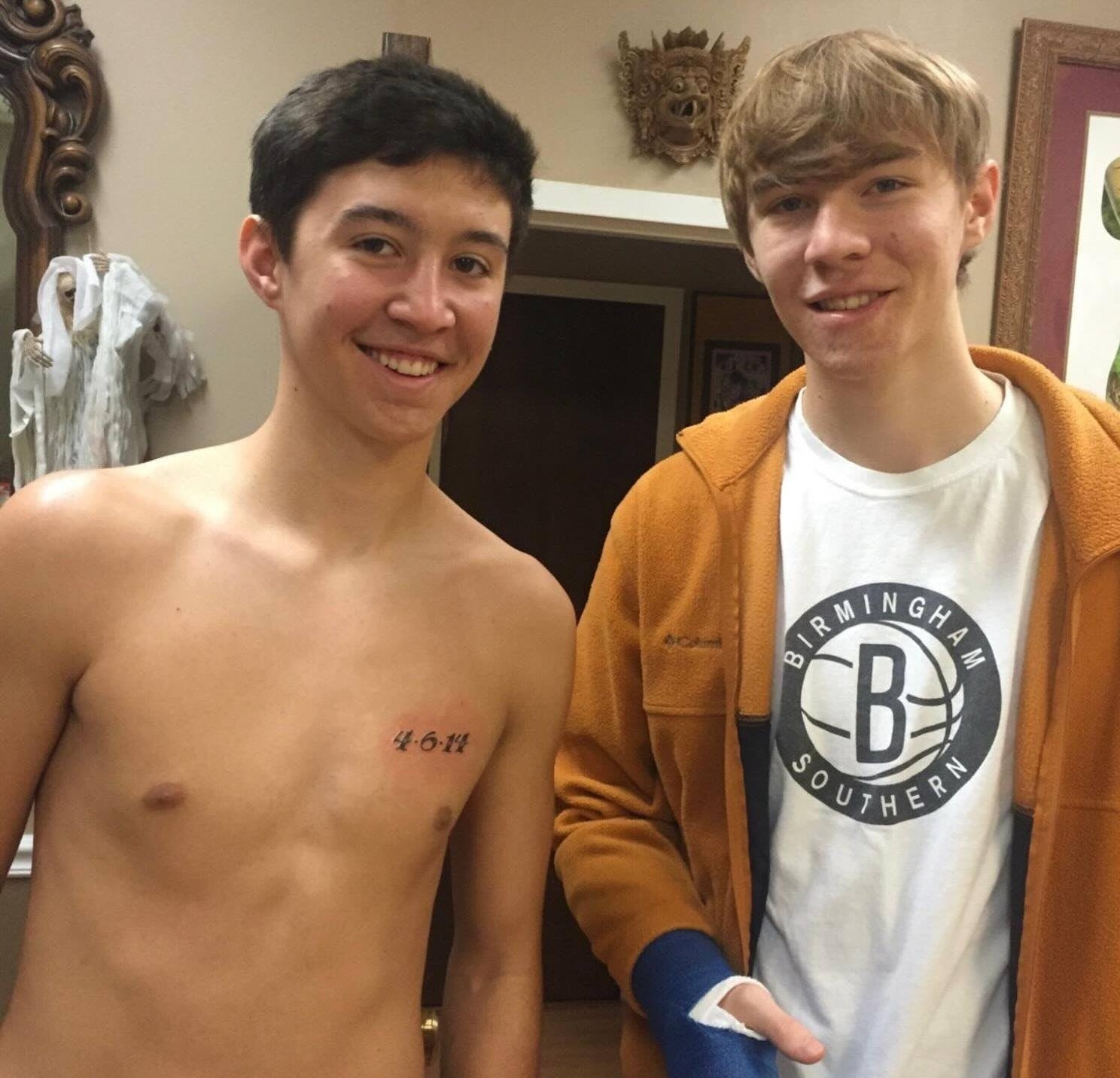
Stephen considered getting a tattoo that year too, then decided against it. He ultimately settled for a tiny star tattooed on the inside of his lip—an unmistakably Stephen choice that still makes us laugh.
I chose to get a tattoo with Joseph that first Christmas. The verse Hebrews 11:1, placed on my right hip—over the place where I had carried my babies. That verse had become my anchor during those uncertain months. Faith not as certainty, but as orientation.
Four years later, again on December 23, 2019, my husband Mark, Joseph, and I returned together. We each chose mountains to represent the journey. Joseph was playing Division I basketball at the University of Denver. He was the first graduate from his high school to play Division I basketball. A tremendous journey for another day’s post.
Mark and Joseph chose to put their tattoos on their biceps. Mine went on my other hip, layered with the verse Mark 9:23. Again, over the place where my body had once carried our precious babies.
Oh, how I wish I could still carry them.
That same day, Joseph added another tattoo along his right rib cage:
I keep my eyes always on the Lord. With Him at my right hand, I will not be shaken. (Psalm 16:8)
And years later, Stephen surprised us all by getting My Brothers’ Keeper tattooed across his chest. Where his heart lies. And yes it is with “s apostrophe” vs “apostrophe s” with having four younger brothers.
No announcement.
No fanfare.
Just meaning, carried quietly.
These were not acts of tragedy.
They were acts of regulation.
Of co-regulation.
Of shared load.
Long before I had language for it, I was watching energy move between bodies. From brother to brother to brother to brother to brother – synergistically – with my loving, steadfast, committed husband holding us all.
While Stephen was losing his vision, Joseph’s body was fighting its own quiet battle.
He was diagnosed in 2013 with an aneurysmal bone cyst that required neurosurgery. Another shock layered onto an already fragile spring. We had to measure Joseph’s skull weekly to ensure the cyst was not growing. This was a condition of waiting until basketball season ended to pursue surgery. These were more reminders that this was not the story of a single family member or a single-system event.
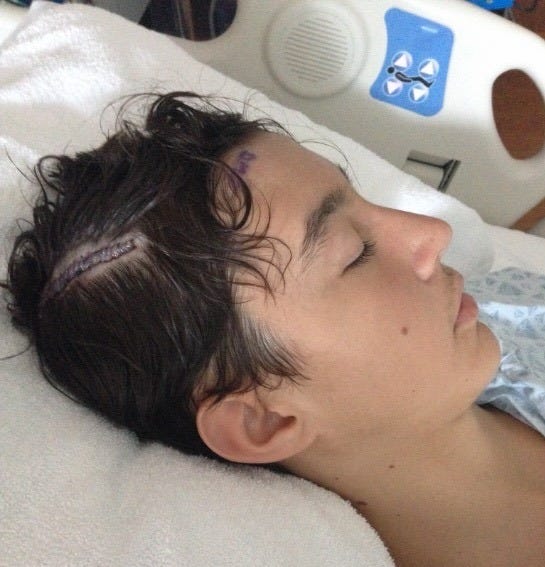
During this period, Joseph moved from being Stephen’s eyes to being the one on an operating table. Surgery. Recovery. Pain that demanded stillness from a teenager whose instinct was always to carry more than his share, just like his brothers and dad, all of whom care for each other so deeply.
At the time, we experienced these events as parallel crises. Only now do I see them as part of the same physiological constellation—stress, uncertainty, and rapid adaptation converging across bodies.
One summer. Two sons. Two entirely different manifestations of a system under extraordinary load. As life unfolds, the energetic cost to our bodies, whether brother, father, mother, grandmother, friend, becomes abundantly clear.
What It Means to Live With LHON
For many years, I did not have language for what we were living.
We knew the name—Leber Hereditary Optic Neuropathy.
But names are thin things.
LHON did not arrive as a diagnosis so much as a condition of living. A way the air felt in our home. A vigilance that settled into our bodies. It meant loving someone whose energy system could fail without warning.
LHON is a mitochondrial condition. It is not confined to one organ or one symptom.
It lives at the level of energy.
And energy, we came to learn, is not just about fuel. It is about adaptability. Resilience. The capacity to respond. To thrive. To regulate. To flourish.
What makes LHON especially difficult is not only what it takes—but what it might take.
Many people carry the mutation and never lose vision. Others do. There is no clear line. No timetable. No certainty.
Living in a family with LHON can feel like a coin toss whose flip you never see—but whose weight you feel every day.
Stress mattered.
Rest mattered.
Relationships mattered.
Ease was not indulgence.
It was regulatory.
Our bodies were teaching us this long before the science caught up.
There is something else that lives inside LHON. It lives in the mother who passed it on. I did not know I carried this mutation. I did not choose it. And when that knowledge arrived, I needed to find a way to carry it with grace rather than grief for myself, for my sons, for my husband, my mother, my brother, the 17 family members on my maternal side of the family who are carriers.
What I have come to understand—slowly, iteratively, and with the help of faith, family, friends, science, time—is that this has made me more present. More attuned. More regulated. More committed to understanding what wellness and energy and flourishing actually mean for our family.
Being a carrier focused me.
And the work I do now—the frameworks, the tools, the science—is part of how I have metabolized that knowledge into something that might help not just our sons, but hopefully others walking a similar road.
Meaning Emerges
There would be many moments like this—small decisions shaped by uncertainty, care, and attention to energy—before any of us could name what was happening.
And then, one night while Stephen and Joseph were quietly talking before they fell asleep, Stephen said something that Joseph thought was Tweet worthy. This is saying a lot for a sixteen-year-old high school athlete in 2015. Stephen said:
“People are not afraid of dying.
They are afraid of living a life not fully lived.”
Stephen was just seventeen years old when he said that. Joseph was right. It was Tweet worthy. So Tweet worthy.
Mark later had Stephen’s words tattooed over his heart, in Italian.
It would take me years to understand how profoundly energetically real that moment was.
Note: For readers who want to understand more about Stephen’s early journey and the days when our lives first began to reorganize around uncertainty, his story has also been shared here.
When My Body Decided Otherwise
Three weeks postpartum, after giving birth to our fifth son—five children in nine years with three miscarriages—my body shut down in a way that could not be ignored or negotiated.
I was an assistant professor at Georgetown University at the time, scheduled to return to teaching Research in Health Care on Monday, October 1, 2007. I had done what I had always done: planned to push through.
Early morning the day before—Sunday, September 30—I told my husband that I couldn’t catch my breath. I dismissed it almost immediately. I told myself I was just really tired. Of course I was tired. Our newborn, Anthony, had experienced myoclonic seizures during his first week of life. He spent three days at Children’s Hospital for observation. My husband had knee surgery during Anthony’s second week of life. I was three weeks postpartum. We had four other children, five total, all nine years old and younger.
This was what life looked like. You keep going.
That night, as I often did in those early months, I slept downstairs with our baby so the rest of the family could sleep. I lay there telling myself I would rest, that my breath would settle. It didn’t.
In the middle of the night, I realized I still could not breathe when I woke up. I went upstairs, brought Anthony with me, and got into bed next to my husband, hoping proximity and stillness would help. Instead, I kept waking up—again and again—gasping, unable to catch my breath.
In 2007, there was no AI. No symptom checker at your fingertips. No quiet reassurance from a search engine. There was only the unmistakable knowledge that something was wrong. I had no language yet to name it. All I knew was that I could not breathe.
At five o’clock on that Sunday morning, with five very small children and no one to care for them, my husband dropped me off at the Fairfax Hospital emergency room and went home to get help with our precious babies.
Mark returned to find that I had suffered a pulmonary embolism.
I was told later that he was instructed to immediately call family members to come say their goodbyes. Mark’s family flew in from Alabama and my family drove up from Richmond. Our priest came in to give me my last rites.
The medical team could not fully explain how I survived the night or the next day. My doctors remarked that my survival defied what they would have expected, given my vital signs and presentation, and they suggested my case merited publishing as a case report. I remember none of the physiology from that moment. What I remember—what I knew with absolute clarity—was that I needed to survive. I needed to be here. Not for my career. Not for my plans. For my family.
My body had decided otherwise.
It had decided that pushing through was no longer an option. Survival required stopping.
The Pandemic, the Run, and the Illusion of Pushing Through
Years later, in the middle of the COVID-19 pandemic, I found myself once again trying to outrun circumstances.
Like many people, running became my outlet. It was one that I loved as a former collegiate basketball player. A way to maintain control when the world felt unrecognizable. A way to metabolize stress, movement by movement.
Until one run went wrong.
I injured my sciatic nerve—sharply, decisively. What followed was not just pain, but neurological consequence: foot drop palsy. Peripheral neuropathy. A fundamental disruption in how my body communicated with itself. I was essentially on crutches for 11 months. I still drive with my car accommodated for me to drive with my hands only.
Once again, I tried to push through.
Once again, my body refused.
I could no longer pretend that willpower was enough. I could not override biology with discipline. Walking required attention. Balance could not be assumed. Every step carried information.
This injury forced a kind of slowing that no amount of professional obligation or personal identity could bypass. I was no longer moving through space unconsciously. My body demanded presence.
And with that presence came recognition.
This was not bad luck.
It was a pattern.
My body had been signaling for years—postpartum, under chronic caregiving strain, through cumulative stress—that energy systems have limits. That regulation matters. That adaptation requires respect, not domination.
I had missed the lesson before.
This time, I could not.
When Our Children’s Bodies Carry the Stress
A decade after Stephen lost his vision, another moment brought this truth crashing back into our lives with such urgency.
Anthony was seventeen when he had his first stress induced grand mal seizure.
It happened two days after the funeral of a close friend. Sunday, November 3, 2024… Dates that stick…
There had been anticipatory stress leading up to it. Shock. Grief. The emotional labor of showing up for others while barely holding yourself together. His body absorbed far more than he spoke of.
It was a fall Sunday morning—the kind of morning where schedules usually provide a sense of order. Anthony had just arrived at school for football practice and was in the locker room, moving through the familiar rhythm of getting ready for football practice, when his body decided it could no longer carry the weight of what it was being asked of it.
The hospital room was stark. The beeping monitors were loud. The uncertainty was familiar in a way that made my chest tighten.
And then it happened again. Three months later to the day. February 3, 2025. And then March 14, 2025.
Two more stress-induced grand mal seizures, each following major life events that overwhelmed his capacity to metabolize what was being asked of him. Once again, there was no simple answer. No clean explanation. Just a body that collapsed under cumulative load.
Anthony had never had seizures before [except the myoclonic seizures as a one-week-old that I didn’t even think about then].
But his nervous system had been keeping score.
What we were witnessing was not randomness. It was the same story, expressed through a different system. Stress that had nowhere to go was forcing an emergency stop. Energy was diverted into survival.
Watching Anthony recover—confused, frightened, vulnerable—I understood something with painful clarity.
This is what it looks like when bodies carry what minds cannot.
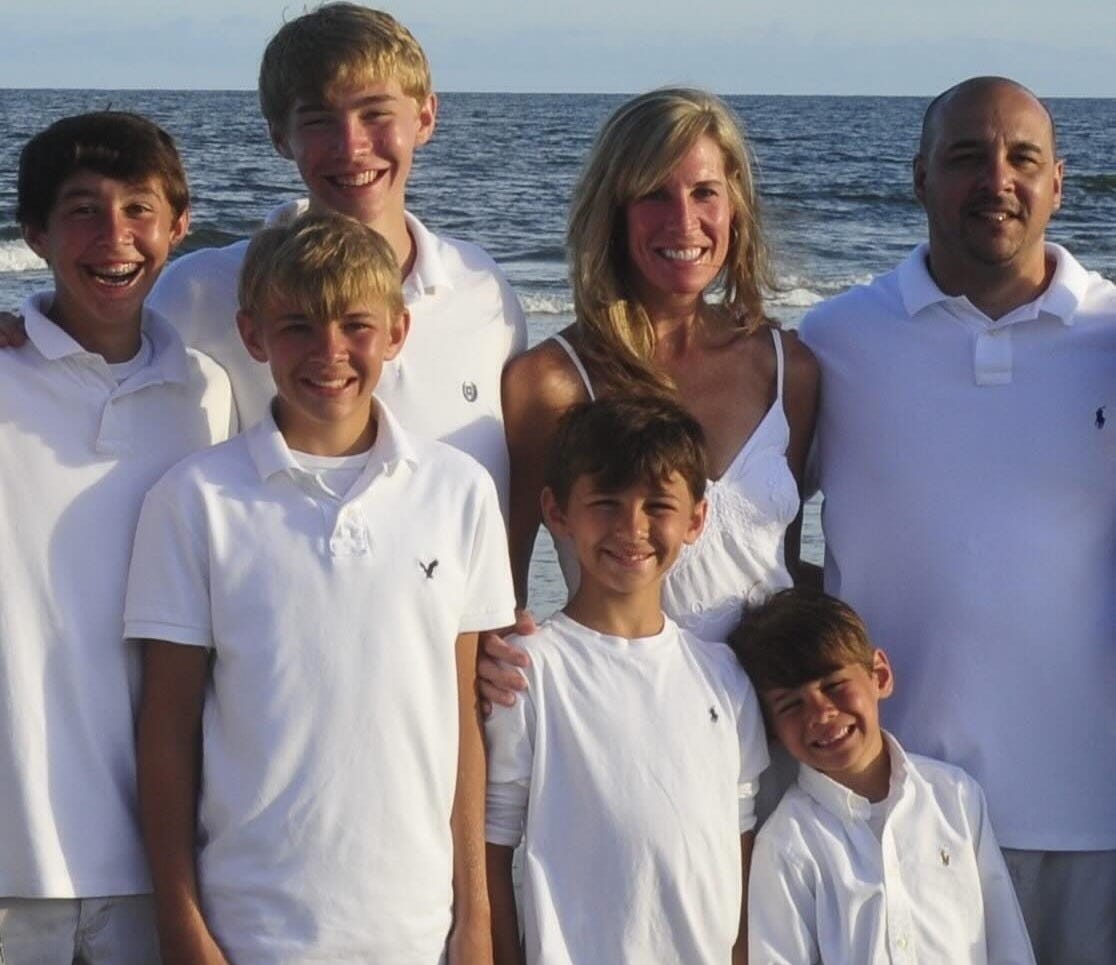
Stephen’s mitochondria expressed vulnerability through vision.
Anthony’s through neurological storms.
Mine through collapse, injury, and enforced slowing.
Different outcomes.
Same underlying truth.
Matthew—our middle son, the peacemaker—carried this season differently. His stress did not announce itself loudly. It settled instead into his body, quietly and persistently.
For years, he held tension in his stomach. Knots that we normalized. Discomfort that was easy to dismiss in a household already managing so much. Only later did we understand this as accumulated stress that was absorbed rather than expressed.
At twenty-two, Matthew required hernia repair surgery. Young. Otherwise healthy. Another body signaling that the cost of holding things together does not disappear simply because it goes unnamed.
Matthew’s physiology reminded us that stress does not require alarms to be real. Sometimes it lives in endurance. In compliance. In the instinct to keep everyone else calm.
And then there is Paulie—our fourth son—whose gift has always been attunement. He is the one who feels responsible for everyone else’s happiness. The one who tries to smooth every edge, lighten every mood, and absorb every ripple.
We see the stress he carries. The pressure to please. The weight of reading the room and responding before being asked. His body holds vigilance differently—but it holds it nonetheless.
Watching Paulie has taught us that care, when internalized too early, comes with a cost. That being “easy” for others is not the same as being at ease within oneself.
When I look back now, I do not see isolated diagnoses or individual crises. I see a family system responding again and again to extraordinary stress—each body translating load in its own language, each response forcing some form of slowing, listening, and care.
Each wondering, is today the day the coin flips and I, too, lose my vision?
But this has never been just about themselves, worrying about themselves and their own health. They are always watching out for one another, perpetually attuned, wanting more than anything for their brothers to be okay, carrying a profound desire for their brothers to be okay—holding that wish quietly, constantly-and, if they could, take each other’s pain. My loving husband models daily. How blessed we are to have my sweet love, leading our family.
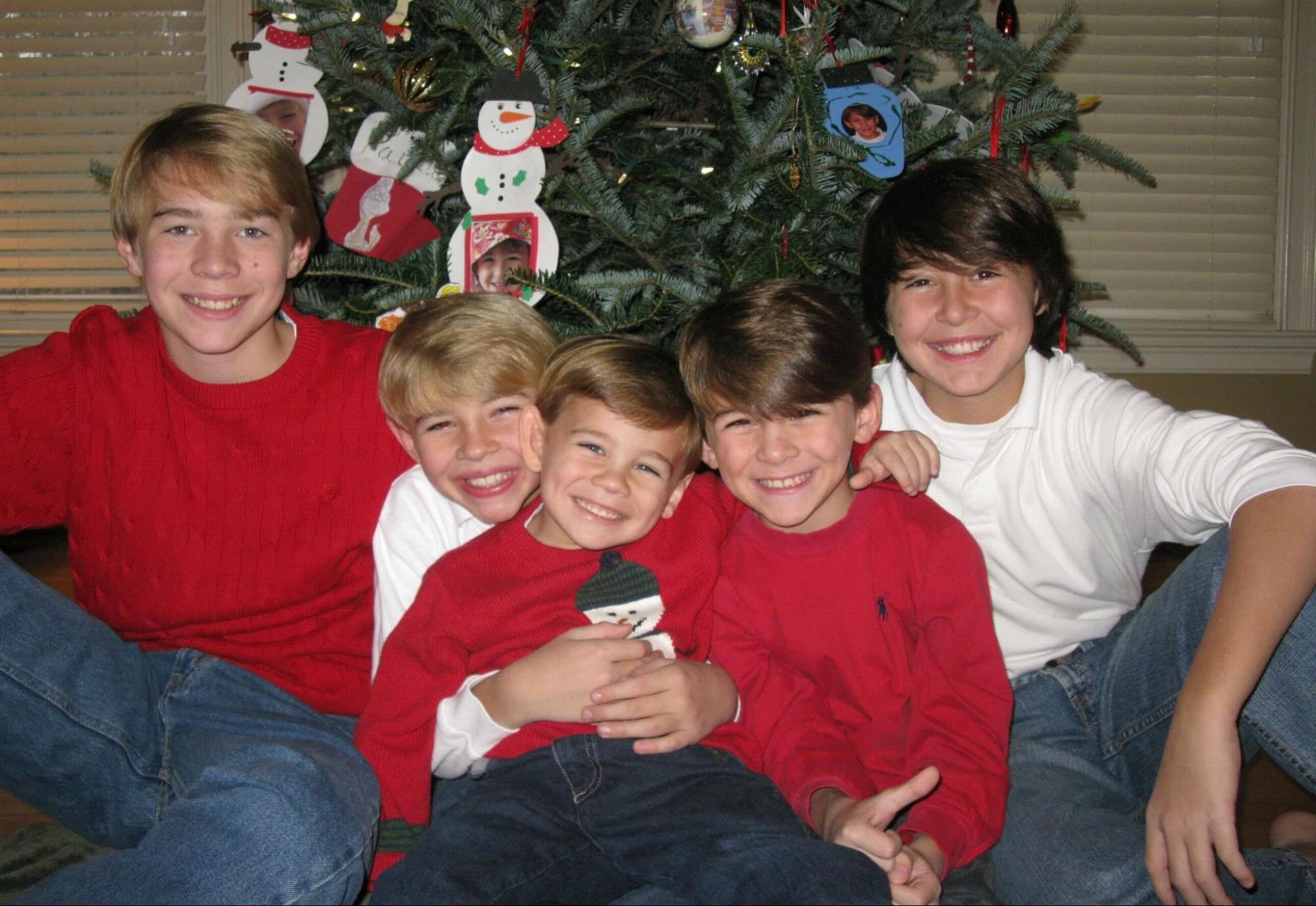
As a mother, witnessing this is both tender and remarkable-observing the ways they navigate this journey together, moving not merely as brothers, but as synergistic circles of best friends.
The Lesson Our Bodies Keep Teaching
Only now, with the language of mitochondrial psychobiology, do these experiences form a coherent picture.
The body does not betray us.
It protects us.
When energy expenditure chronically outpaces repair—when stress is unrelenting and adaptation is demanded without permission to recover—biology intervenes.
Not kindly.
But decisively.
Postpartum collapse.
Foot drop.
Seizures.
These are not failures of character.
They are signals.
And if we ignore them long enough, they become events we can no longer dismiss.
Our family has learned this lesson repeatedly—across generations, across bodies, and across roles as parents, professionals, children, and caregivers.
We did not learn it by reading about mitochondria.
We learned it by living inside their limits.
Recognition Through Science
When I encountered Martin Picard’s work on mitochondrial psychobiology, it did not feel like learning something new.
It felt like recognition.
What stopped me was not the complexity of the science.
It was one idea, stated plainly: mitochondria do not just respond to fuel.
They respond to experience. To threat. To safety. To the felt sense of whether the world is asking more of you than you have left to give.
Cortisol crosses the mitochondrial membrane. Chronic stress reshapes mitochondrial structure. The body does not separate what happens to you from what is happening inside your cells.
That was not a metaphor.
That was my family.
Here was language for what we had already lived: mitochondria not as static powerhouses, but as dynamic systems coordinating stress, emotion, and adaptation across the whole person—and across families.
Biology that did not separate mind from body.
Emotion from metabolism.
Experience from health.
Stephen’s steadiness was not stoicism.
It was regulation.
Joseph’s vigilance was not burden.
It was embodied care.
Matthew’s endurance was not just strength,
It was the quiet holding of stress.
Paulie’s attunement was not just sensitivity,
It was deep awareness of others.
Anthony’s seizures were not randomness,
They were a nervous system reaching its limit-releasing what could no longer be held.
My own hyper-attunement was not pathology.
It was a nervous system doing exactly what it was designed to do under uncertainty.
And my husband’s presence was not simply strength.
It was consistency. A steady anchor for all of us. Creating safety and steadiness even as everything else was shifting, while quietly carrying his own weight.
This was not a collection of individual responses. It was a family system, living, adapting, and moving energy together, bound by love, holding each other through it in ways that were and still are both instinctive and beautiful.
It also clarified why small moments carried outsized weight.
Why unloading the dishwasher could restore energy.
Why ease could reopen capacity.
Why contribution without depletion mattered.
That moment—it’s easy—was a mini ”aha moment.”
Not as inspiration.
As biology. Connected.
Agency restores perceived control—and shifts the body out of threat response. Hope regulates how energy is allocated forward. Action translates that regulated state into participation, contribution, and meaning.
The AHA Implementation Science Framework for Mitochondrial-Metabolic-Mental Health Promotion had already been taking shape—born from years of living this, studying this, and slowly finding language for what our family’s bodies had been teaching us all along.
That morning at the kitchen counter, I was not watching a framework be born.
I was watching it be confirmed.
From Lived Experience to Frameworks and Tools
At the MiSBIE Symposium—hosted by Martin Picard and dedicated to advancing mitochondrial psychobiology—I shared an early version of this thinking (AHA Implementation Science Framework) as a poster presentation. It was the first time I placed my family’s lived experience alongside my work as a behavioral and implementation scientist.
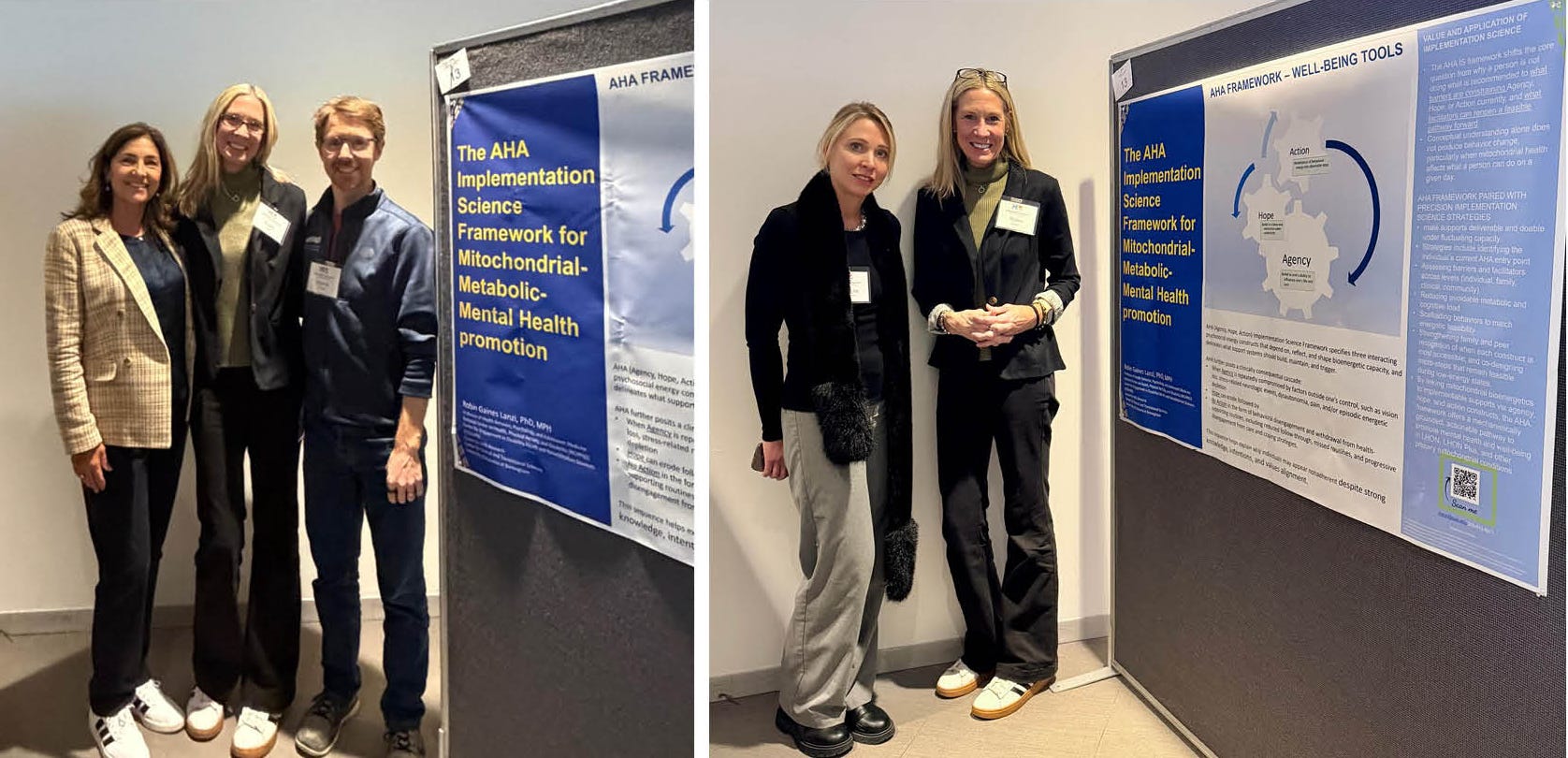
What that poster articulated took years to metabolize:
Supporting wellbeing in mitochondrial conditions requires more than explanation or education. It requires frameworks that respect fluctuating energy, preserve well-being, and help people remain engaged in their lives even when capacity is uncertain.
Out of that work emerged my AHA Implementation Science Framework.
Agency.
Hope.
Action.
Not to optimize performance.
Not to demand resilience.
But to make living possible when energy is fragile.
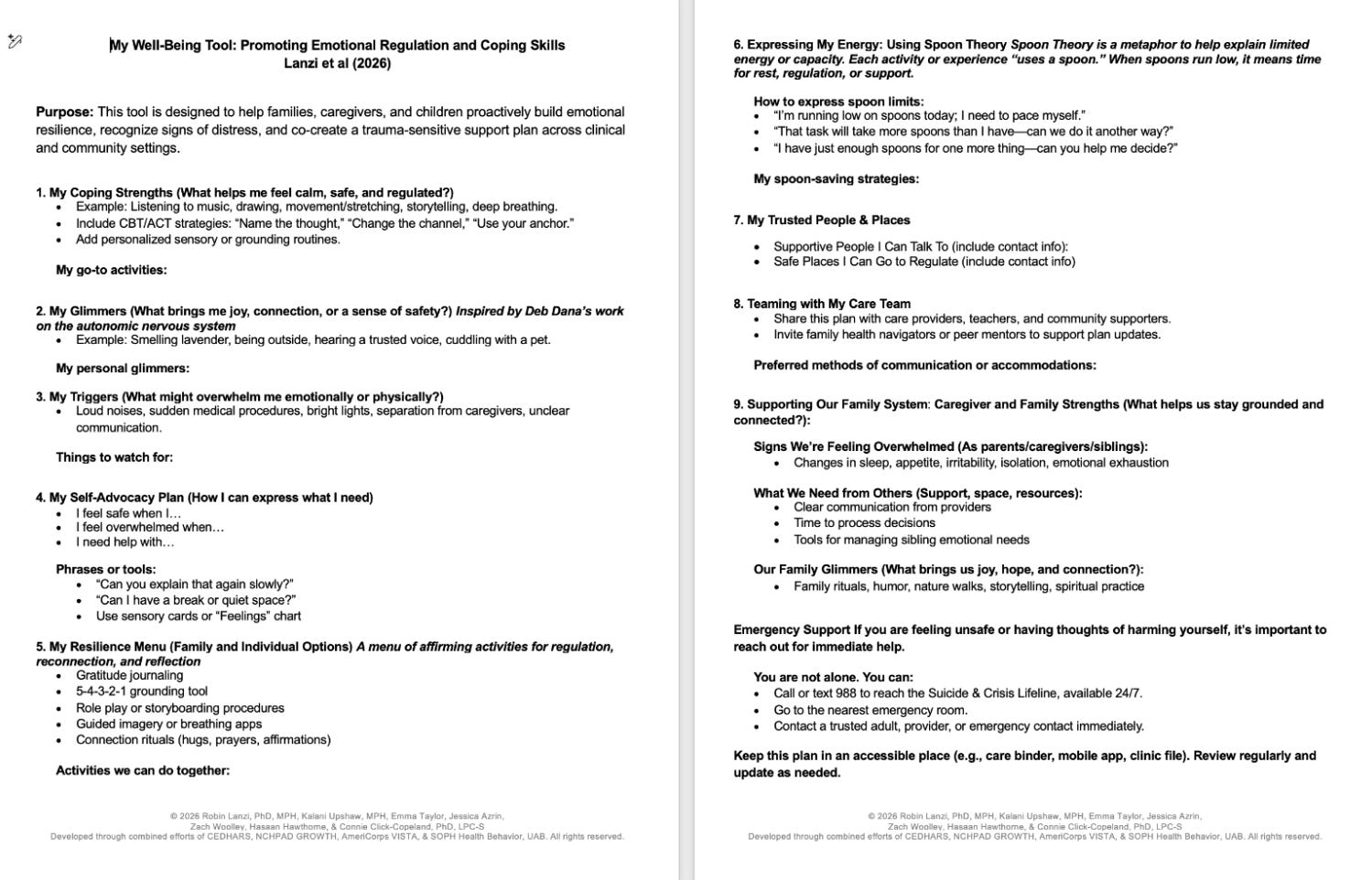
Out of that same commitment, we developed a simple Well-Being Tool for practitioners, parents, caregivers, and providers, called “My Well-Being Tool: Promoting Emotional Regulation and Coping Skills.” A tool to help people name what supports regulation, recognize glimmers (in Deb Dana’s words), anticipate triggers, express limits, and communicate needs when words or energy run low.
It does not ask people to push.
It asks systems to listen.
Living Fully Is an Energetic Act
Today, Stephen is thriving. Stephen is doing remarkably well—not because loss disappeared, but because regulation, accommodation, and meaning were allowed to take root.
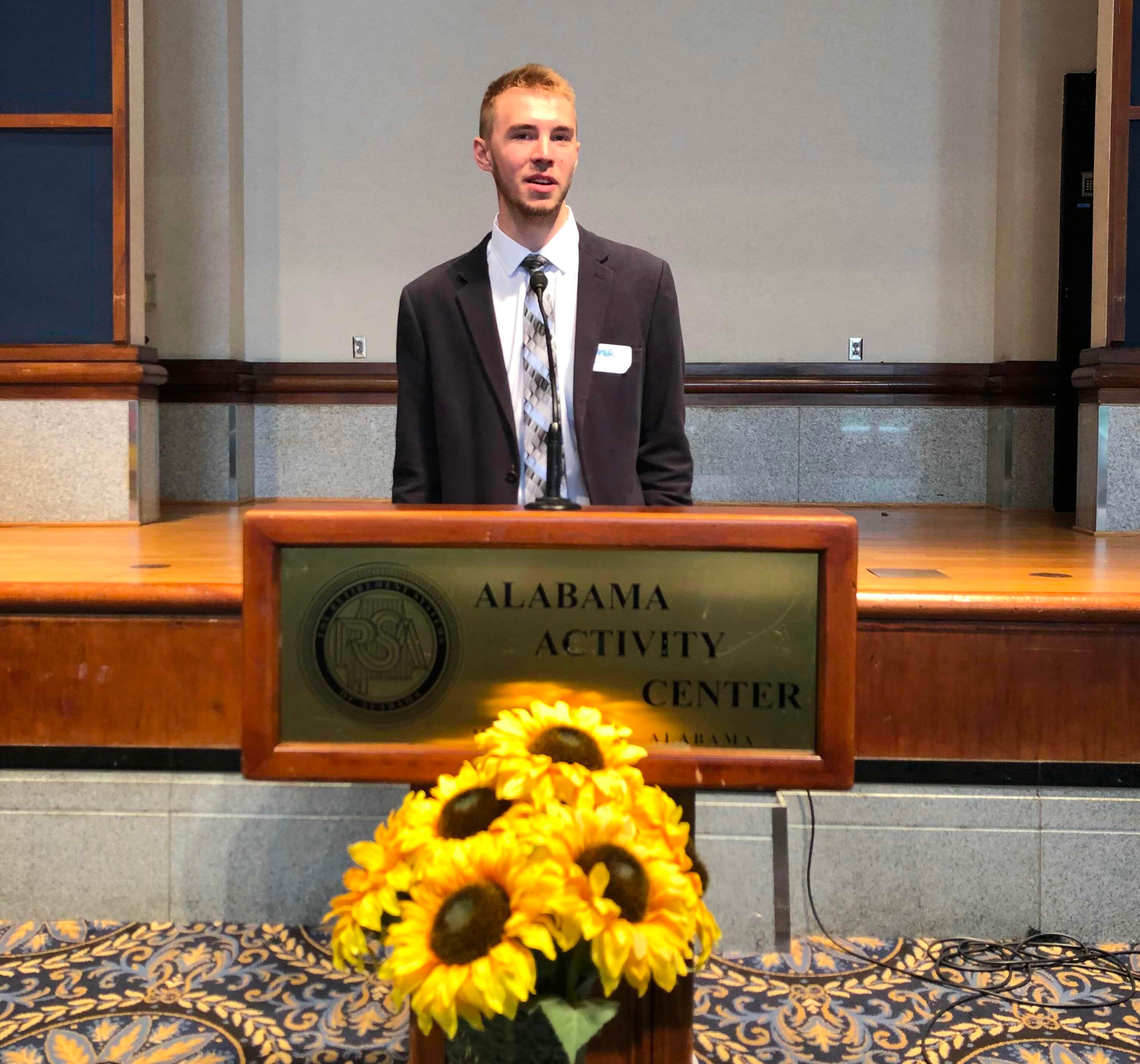
He graduated from Auburn University’s Honors College in 2020 with a Bachelor of Arts in both journalism and political science, a minor in Spanish, and induction into the Phi Beta Kappa academic honor society. He served as editor-in-chief of The Auburn Plainsman, the university’s nationally recognized, student-run newspaper, and he held multiple leadership roles within the Honors College.
That year, Stephen was awarded the Edward Gentle III Award—the highest honor given to a graduating Honors College student—recognizing outstanding scholarship, leadership, and character across the full honors curriculum. Listening to the ceremony now, it is impossible to miss how much of what was celebrated was not just academic excellence, but steadiness, service, and presence.
For those interested, the Auburn University Honors College Award Ceremony is available here, including the remarks honoring Stephen’s journey and leadership:
Stephen Lanzi – Edward Gentle III Award (2020).
He traveled.
He spent a month vacationing in Thailand with his best friend from high school, Brook Araya, who was on break from medical school. There, he met Emma Weaver, his future fiancé, not through sight, but through presence, connection, conversation.
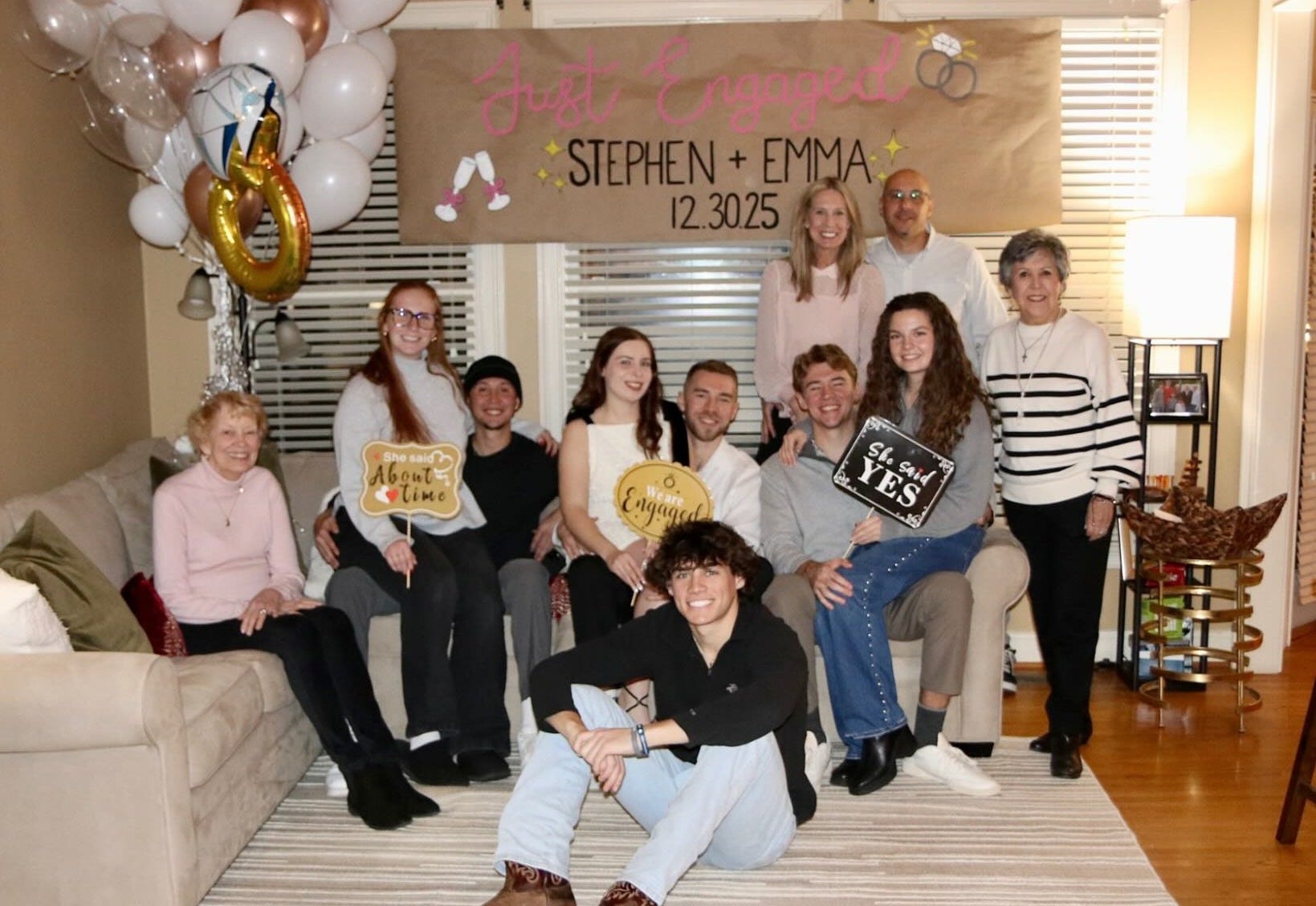
He is living the truth of the words he spoke at seventeen.
Not without loss.
Not without limits.
But with presence.
LHON, our rare genetic mitochondrial condition, did not take that from him.
What it changed—irreversibly—was how our family understands health, healing, well-being, thriving, and flourishing.
Health is no longer the absence of disease.
It is the presence of energy that allows for participation, relationship, and meaning.
Health is energy.
Energy is healing.
It is knowing when to push.
And when to pause.
It is recognizing that care moves not only through medicine, but through attunement, rhythm, and shared strength.
This is where mitochondrial psychobiology and implementation science meet.
Not in theory.
But in the everyday work of helping people live fully. Even when energy is uncertain.
And if mitochondria help us understand how energy is shaped—by stress, by care, by connection—then this science is not just about cells.
It is about families.
It is about love.
It is about how we go far—together.
If you or someone you love is living with LHON, LHON Plus, or another mitochondrial condition—whether you are navigating vision loss, uncertainty, or the invisible weight of caregiving—please know that you are not alone.
This work is being built with and for you.
I welcome connection, collaboration, and shared learning as we continue developing the AHA Translational Platform to support agency, hope, and action in mitochondrial-metabolic-mental health and well-being.
Thank you, Martin and Nirosha, for helping me see my next step for healing, well-being, and for being. For welcoming me so generously into your team and your work. I could not be more excited for what is next.
An energetically pleasing path forward.
Resources and Further Reading
2. Stephen Lanzi: Auburn University Honors College Award Ceremony 2020: Edward Gentle III Award
3. Robin’s Well-Being Tool: Promoting Emotional Regulation and Coping Skills.
4. AHA Implementation Science Framework for Mitochondrial-Metabolic-Mental Health Promotion
5. Living with LHON and LHON Plus: A Resource Guide for Individuals, Families, Caregivers, and Care Teams
6. Timeline of Stephen’s visual decline
7. Relevant Scientific Research Articles
We’re excited to be assembling a community around the Science and Experience of Energy with this Substack. We hope to bring people together to reflect on how we experience energy in our everyday lives.
If this post made you take a pause or if it resonated with you,
please share with someone you love.
 | A guest post by
|
Thank you Robin for sharing your beautiful
This story is deeply touching and inspiring. Robin, you have such a keen eye for observing the subtlest nuances, and an equally beautiful way of articulating them. Thank you for sharing your experience with the world — it truly deserves to be read by many.
I shared this piece with a few friends, and each one wrote back saying how moved they were. The article helped me and them reflect - on our own relationships, health and the meaning that exists in the spaces in between.