


ENERGY SCIENCE
Our TSEE guest writer Jennifer Williams is an Assistant Professor in the Department of Kinesiology & Physical Education at Wilfrid Laurier University. She studies how the cardiovascular system is impacted by metabolic, mechanical, and psychological “challenges,” particularly in women. In this article, she describes unique considerations for cardiovascular health in women, and how measures of arterial function and stiffness could help detect early changes before disease sets in.

A Mother’s Experience with Cardiovascular Disease
About a year ago, I met a middle-aged woman we’ll call Sylvia when I was assessing her cardiovascular health in my lab. She had lost her mother a few years earlier to cardiovascular disease—a condition called MINOCA (myocardial infarction with non-obstructive coronary arteries).
This condition is a type of heart attack where there is no significant blockage in the big blood vessels (coronary arteries). Instead, the causes can include disruption of plaque, a spasm of the coronary arteries, problems with the smaller blood vessels, or a tear in one of the arteries supplying the heart.
At present, MINOCA is still poorly understood. But we know this condition is much more common in women.
Sylvia shared that her mother went through years of tests and misdiagnoses because the guidelines for MINOCA diagnosis and treatment were only just created in 2019.
Those years spent trying to get a correct diagnosis don’t just represent lost time and frustration. They also represent a missed opportunity to begin treatment earlier and take action to prevent the condition from worsening.
Sylvia noticed that her mother’s health first started to deteriorate during menopause. Menopause commonly begins in middle age (~40-55 years), when the sex hormones estrogen and progesterone fluctuate and then drop dramatically.
For many, this life stage is accompanied by hot flashes, mood swings, sleepless nights, brain fog, exhaustion…. and the list goes on. At the time, which was nearly a decade before her heart attack, Sylvia’s mother had experienced prediabetes. She later developed type 2 diabetes, a condition where blood sugar is not well regulated in the body. It is a common comorbid condition alongside cardiovascular disease.
Measuring and Understanding Cardiovascular Health
I think many of us can relate to Sylvia’s story. Cardiovascular diseases—things like heart attacks, strokes—and risk factors like high blood pressure or high blood sugars—impact most families.
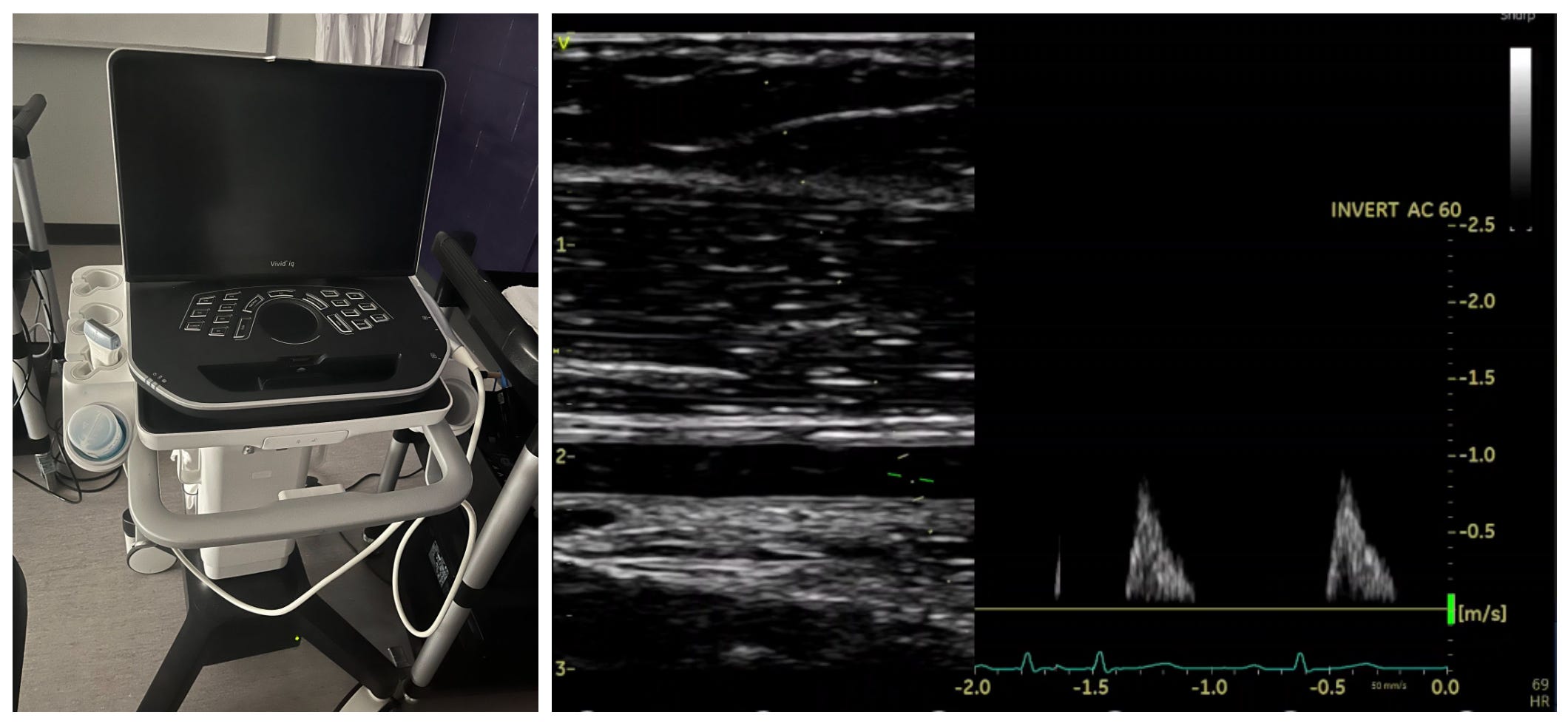
One way to better understand cardiovascular disease is to study what we call “early precursors to disease.” In my lab, we use non-invasive measures like an ultrasound and neat pen-like devices to look inside the body.
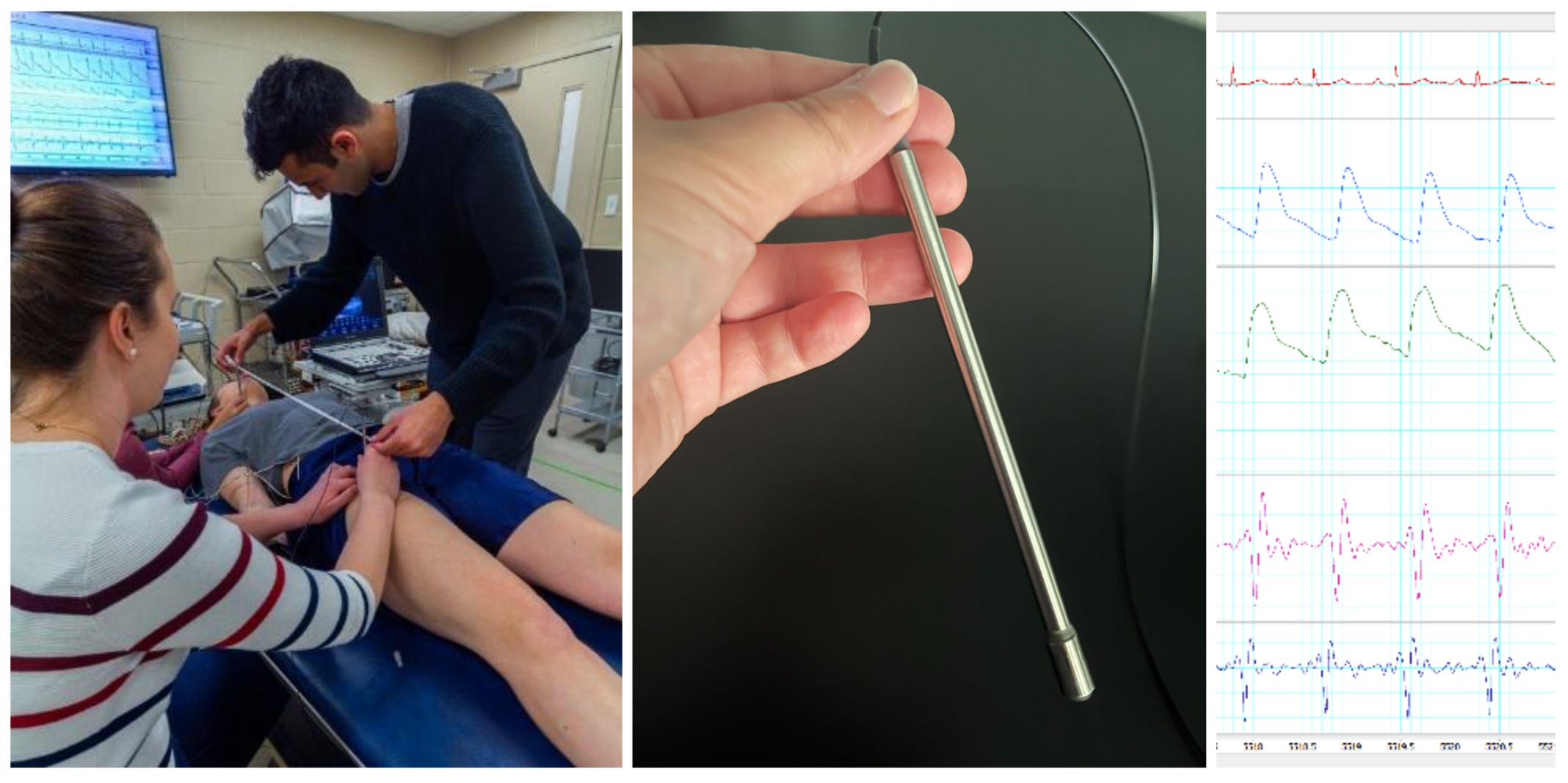
Typical clinical measures of cardiovascular function include heart rate (how fast your heart is beating), blood pressure (pressure within blood vessels), and blood sugar and fat. We use those, but we also measure the function and stiffness of the lining of arteries that take blood away from the heart to deliver nutrients and oxygen to the rest of the body. All of these measures can be considered early precursors.
However, these latter measures of function and stiffness are the early precursors that show evidence of change years before a typical clinical test would usually serve as a flag for a physician to intervene.
You can think of the cardiovascular system as the body’s transportation network. The heart is the distribution center and the blood vessels are the highways delivering oxygen and nutrients throughout the body.
When these highways function properly and adapt to changes in road conditions, your body gets the supplies it needs, including the oxygen and nutrients that fuel the transformation of energy in your mitochondria. And the heart is quite energy hungry. As a result, it’s about one-third mitochondria in volume!
But when the energy-delivery highways don’t function properly, like when there is congestion or an accident, problems arise. Without a well-functioning circulatory system, energy supply becomes an issue for your cells.
By studying these early precursors, we can have early insight into what is happening to the cardiovascular system long before disease becomes apparent. For example, as stiffness increases by 1 m/s (faster blood flow) or artery function decreases by 1%, we see a 13-15% increased risk of developing cardiovascular disease—including heart disease.
This may sound bleak… but there is good news. These early precursors can be improved before they impact the heart. If we intervene early, we can prevent a heart attack. However, stiffness and function are impacted by hormone changes in women.
Highlighting Women’s Cardiovascular Health Risks
But why are MINOCA and some other cardiovascular conditions more common in women? We don’t really know yet.
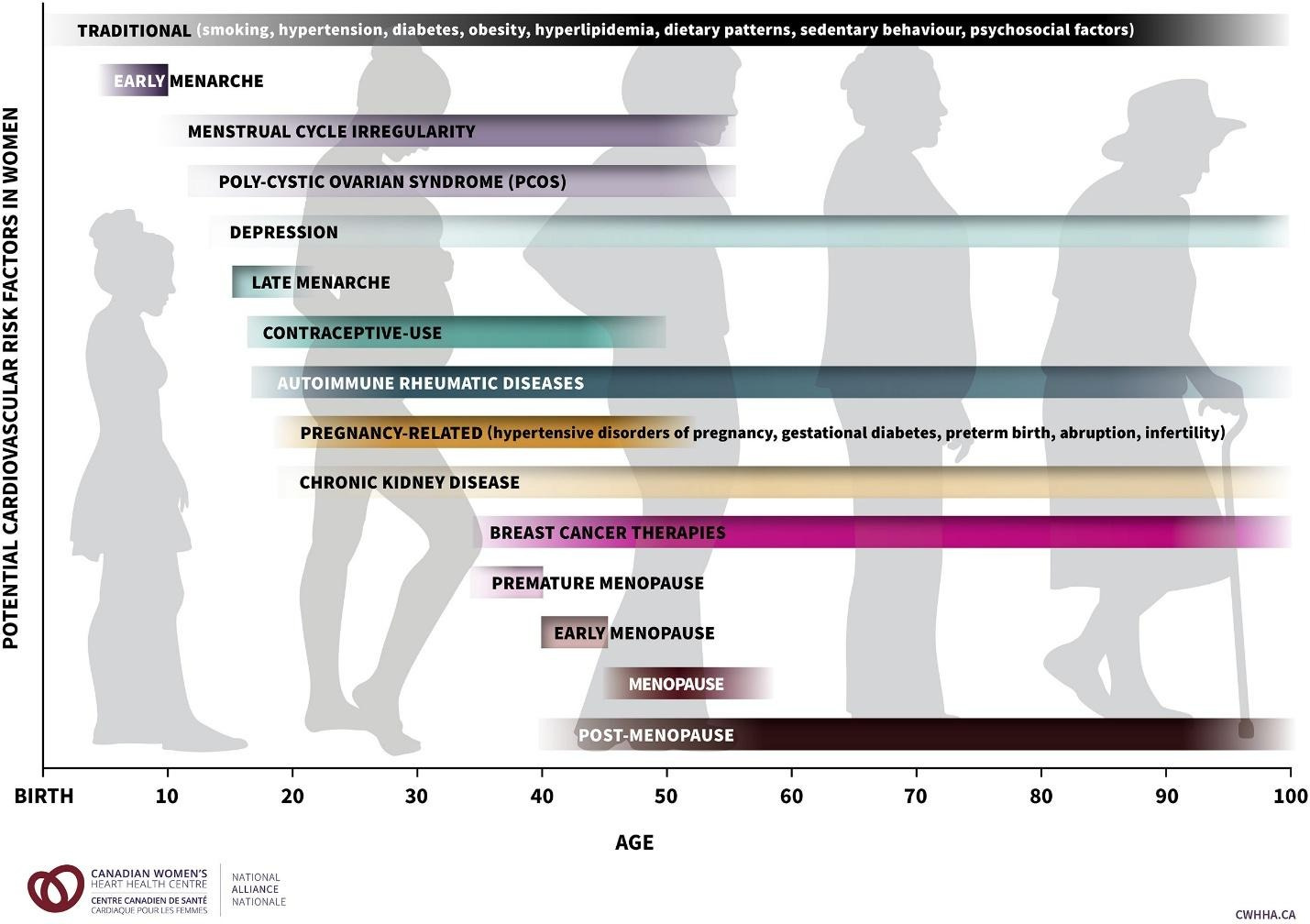
Part of why Sylvia’s story is so compelling is because it represents a growing call to action to bring attention to the unique cardiovascular health needs of women. Women have been historically understudied, underdiagnosed, and undertreated for their cardiovascular health, and there are distinct life stages and conditions that impact women.
The image below shows several women-specific risk factors that impact cardiovascular disease risk—including several hormone-related transitions.
My lab at Wilfrid Laurier University is beginning to untangle the complexities surrounding cardiovascular health in women.
Examining research studies to date, we identified that the menstrual cycle may have a small effect on the function of the inner lining of cells in large blood vessels in pre-menopausal women.
We also found that hormonal contraceptives impact the function of the inner lining of both large and small blood vessels in pre-menopausal women. Smooth muscle cells in blood vessels, arterial stiffness, and vascular structure do not seem to be affected by hormonal contraceptives.
This kind of research is essential for understanding how cardiovascular risk manifests in women and how it may change over the course of a woman’s life. In our next post, we’ll talk more about life transitions in women.
What This Means for You
So, what can you do to help prevent cardiovascular disease, regardless of your age or sex?
The cardiovascular system has the capacity to adapt based on day-to-day decisions.
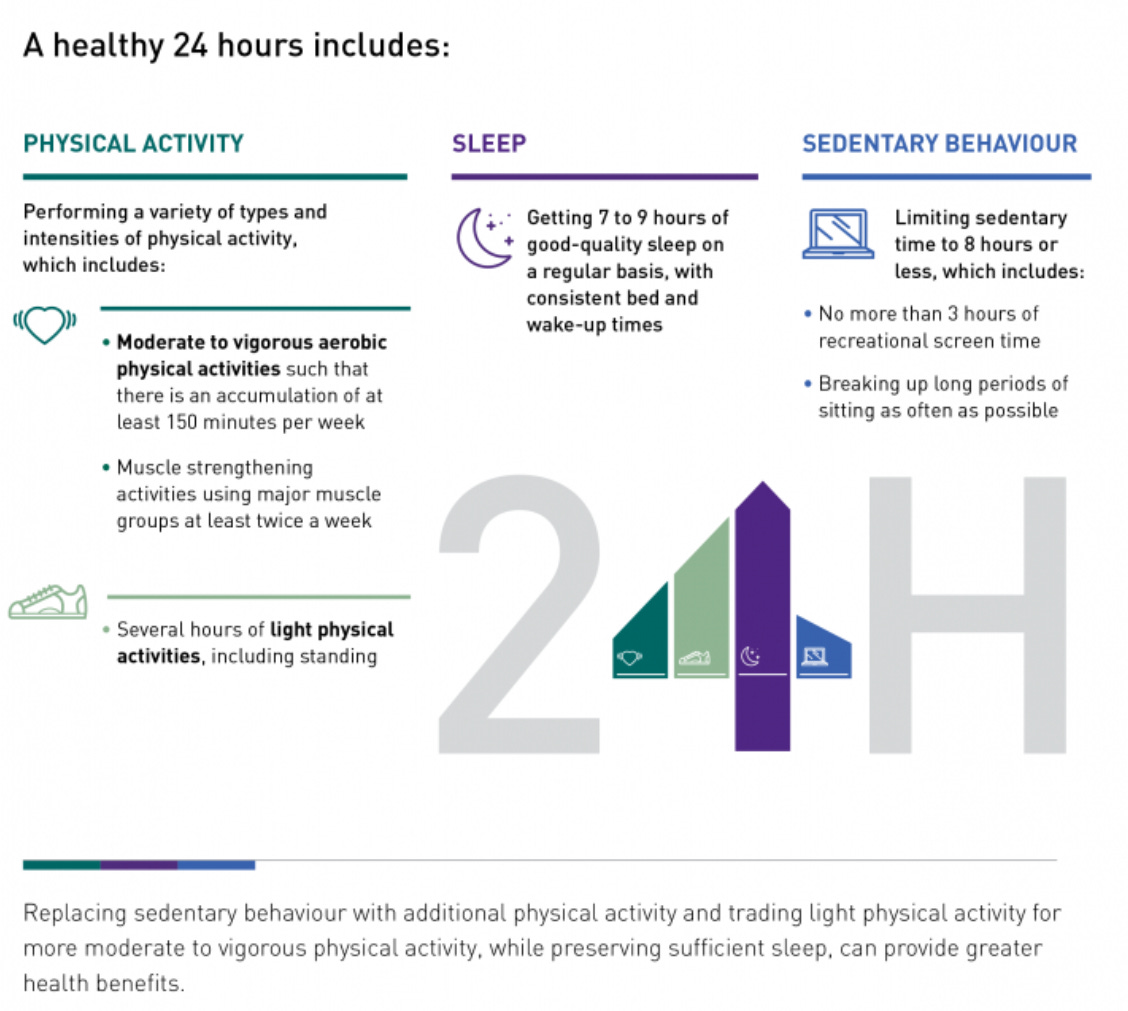
Canada’s 24h movement guidelines tell us that the whole day matters. Being active at a moderate-to-vigorous level at least 150 minutes per week and doing muscle strengthening exercises at least twice per week are key. In addition, we should reduce our time spent sitting and get enough good quality sleep.
A previous post has described in detail the energetic benefits of exercise for the body and the brain. The same is true about the cardiovascular system: exercise provides your cardiovascular system with the resilience, adaptability, and energy that it needs to thrive throughout life’s transitions and stresses.
As we explained earlier, cardiovascular disease starts long before a heart attack. The onset of changes to artery function and artery stiffness are early signals that cardiovascular disease is developing. This is particularly important for women because these changes accelerate during life transitions, like menopause, and in response to stress.
When Sylvia first came to my lab, we were interested in understanding changes that were happening in her cardiovascular system long before a heart attack, and how to prevent it.
While we cannot always control the life transitions and stresses we experience, we can impact how well our cardiovascular system can adapt.
So, how are we taking the information we shared today and applying it, both as women and as scientists?
Nirosha J. Murugan and I have been working to establish the Laurier Centre for Integrative Cardiometabolic Health (CICH) at Wilfrid Laurier University. As Co-Directors of this brand new center, we look forward to bringing women’s cardiovascular health research to the forefront and shaping the next wave of interdisciplinary research that will advance the field.
I look forward to continuing ongoing research on the impacts of exercise training programs on cardiovascular health in women of all ages, as well as breast cancer survivors. Presently, we are running studies in peri- and postmenopausal women and breast cancer survivors looking at in-person and virtual exercise training.
If you’re interested in learning more or participating in these studies, reach out to chrlab@wlu.ca.
Our cardiovascular system does more than supply oxygen and nutrients. It dynamically regulates how energetic resources are allocated across tissues in response to metabolic, biomechanical, and hormonal demands. Understanding this adaptive regulation may be especially important in women’s health, where transitions such as menopause reshape vascular function, metabolism, and the body’s capacity to maintain energetic resilience.
You can find out more about women’s cardiovascular health through the Canadian Women’s Heart Health Alliance.
If this post resonated with you, please consider sharing it with others.
Call the police.