

BEHIND THE PAPER
Full-Text Link to Primary Source
“The most exciting phrase to hear in science, the one that heralds new discoveries, is not 'Eureka!' but 'That's funny...'” — Isaac Asimov
“I’m looking for a job,” Kalpita Karan said resolutely.
She had recently completed her PhD in human molecular genetics at a top-tier research institution in Bangalore, India, and she wanted to broaden her experience with a postdoctoral position in the U.S.
I sat with Kalpita across my desk during our interview as she explained how she was fascinated by mitochondria and was really excited about my lab’s research. Specifically, she wanted to understand how mitochondrial signaling could impact immune function. It was clear that she was highly motivated, skilled, and a hard worker. So we hired her.

Thinking More Broadly About DNA
Mitochondrial signaling was completely new to Kalpita, but she was eager to learn, and her first project produced interesting insights on how patients with mitochondrial defects respond to immune challenges.
At the same time that our work in this area was progressing, I was developing a paper with my longtime colleague and friend Orian Shirihai focused on how mitochondrial signaling could regulate activities in the nucleus of a cell. The nucleus is often thought of as a cell’s control center, and importantly, it’s where the cell houses its DNA.
During my background reading, I came across some interesting studies on mobile DNA elements (also called transposable elements, transposons, or jumping genes). These are small pieces of DNA that can move from one location to another within the genome. Mobile elements are very abundant, making up about 50% of the human genome.
The presence of mobile elements made me think about the nucleus differently. It was dynamic, and our genomes could change with the insertion of these mobile elements.
The nucleus isn’t just home to the chromosomes full of DNA that we’ve inherited from both of our parents. It also contains small pieces of mitochondrial DNA (mtDNA) inherited only from our mothers. The field has generally considered these bits of mtDNA to be vestiges of our evolutionary history from events that happened in our cells thousands of years ago.
The theory sounded plausible, but we weren’t entirely convinced. We were studying aging then, and there was the tantalizing possibility that the insertion of mtDNA could occur over the course of our lifetime. This could potentially contribute to genomic instability and, thus, the process of aging.
The Catalyst for Further Investigation
The timing was perfect. As we were mulling over these ideas, a new study and a new review article by John Sedivy’s group were published in Nature, detailing how retrotransposons contribute to inflammation and aging.
You can think of transposons as using a “cut and paste” process where a piece of the DNA is cut from one spot and pasted in another spot in the genome. Retrotransposons use a “copy and paste” approach where the sequence from one spot is copied, and the copy is inserted somewhere else.
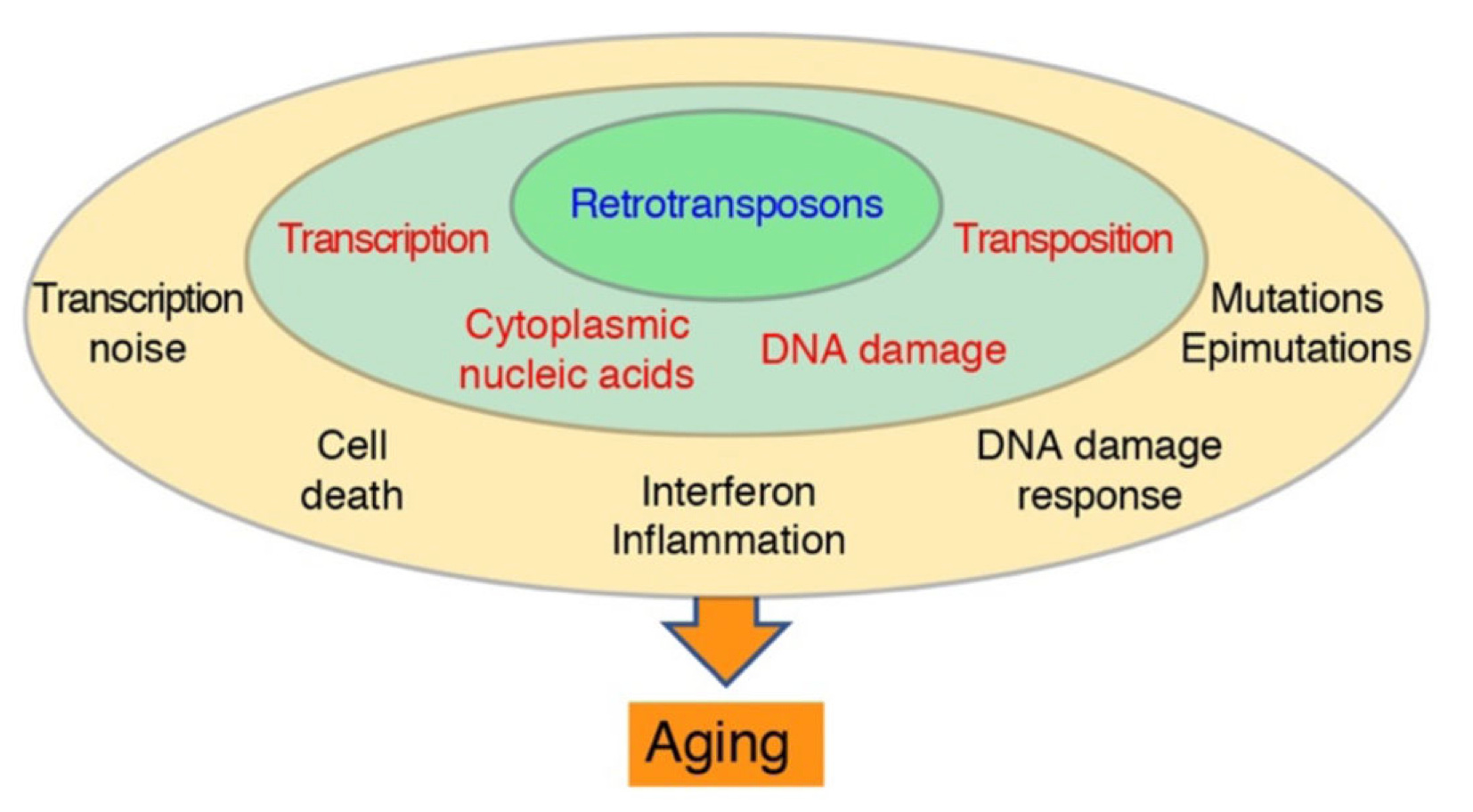
This was the push we needed to begin working in earnest to see if mtDNA was jumping into the nucleus more often than the field originally thought. We wanted to know if these insertions (called nuclear mtDNA segments or Numts, pronounced “new-mites”) contributed to aging and mitochondrial disease.
Kalpita was thrilled to work on this project, and her efforts were critical to its success. Searching through the literature, she came across work from Ryan Mills at the University of Michigan. Ryan and his team had developed an approach to identify and genotype novel Numts in human genomes using next-generation sequencing data, and Kalpita spent the next few months trying to implement it in our lab.

As we learned more, we realized that trying to find Numts in the genome was like trying to find a hay-shaped needle in an entire barn tightly packed with hay. We were going to need a sophisticated computational approach, extensive controls, and probably also a lot of luck. It quickly became clear that we needed to bring in some experts if we wanted to make progress.
When I suggested that we work with Ryan on this project, Kalpita was relieved. It made no sense to try to re-invent something from scratch—we should just work with the best people in this area.
A Key Collaboration for Discovering Numts
In December of 2020, we had our first virtual meeting with Ryan.
Ryan is a computational biology and bioinformatics enthusiast at heart, and he is passionate about using new technology to advance genome sequencing. Over the years, Ryan had contributed to multiple groundbreaking initiatives in genetics and genomics. He and his colleague Arthur Zhou agreed to join us as collaborators on the project, and this was a major turning point.


New breakthroughs in science don’t necessarily come into existence with one clear “ah-ha!” moment. Often, discoveries are borne from the dogged pursuit of unexpected findings.
Ryan and Arthur had been studying alterations of DNA in brain tissue that occur during the course of one’s lifetime, and looking at Numts in the brain was a logical and meaningful next step.
What they found was eye-opening. We describe the results in details in another post.
There were a lot of Numts in the brain, some parts of the brain had more Numts than others, and individual brains had their own unique sets of Numts. Importantly, most of the Numts they found in brain tissue were not present in the individuals’ immune cells circulating in the blood.
Oh, and by the way, having more Numts in the brain was linked to earlier death.
My first thought was, “Is this real?” I considered all the reasons why it might not be: a bug in the code, a statistical aberration, an artifact of working with post-mortem brain tissue, a human error in data collection, or a misinterpretation of the data. But seeing new Numts emerge in the repeated measures within the same person’s DNA convinced me that what we were seeing was real.
Taking a step back, what do these findings mean? First, if not all of a person’s somatic cells have the same Numts, it indicates that the Numts happened during the individual’s lifetime. Second, the link between the number of Numts and mortality suggests that Numts disrupt the genome in negative ways, potentially contributing to aging and disease.
This was big. It went against the long-held belief that these mtDNA insertions occurred at evolutionary timescales. But at what timescale were these Numts actually happening?
This is where Kalpita and I entered the picture. We wanted to confirm if mtDNA was being released from mitochondria, entering the nucleus, and being inserted into nuclear DNA throughout life. Kalpita leveraged longitudinal data from an in vitro cell model of aging (the Cellular Lifespan Study) and sent it over to Ryan and Arthur for analysis.
When they shared the results, we were amazed.
Our hypothesis was confirmed. The older the cells were, the more pieces of mtDNA they had in the genome. Not only did the data show Numts could arise within a person’s lifetime, but they made it clear that Numts accumulate relatively fast. We detected a new Numt about every 13 days.
Kalpita was excited. Ryan was intrigued, but still a little skeptical. I was growing my lab, juggling multiple projects, taking care of my young son, and trying to wrap my head around the implications of these findings for our understanding of the genome and the role of mitochondria in health and disease. A lot of great things were happening all at once.
Sharing Our Results and Thinking About the Bigger Picture
We compiled our story into a manuscript and originally sent it to the journal Nature. The reviewers were surprised by our findings, and they indicated that we should do many more experiments to shed light on the mechanisms before the paper could be published.
Ryan and I discussed the reviews, and we decided that the additional data requested wouldn’t really help tell the story of what we found. Our current data made it clear that what we observed was real. Additional related lines of inquiry could potentially be pursued in a separate project later. For now, it was critical to get the data out.
We pivoted and submitted the paper to PLOS Biology, where it was ultimately accepted. The journal editor and reviewers felt like our story was important enough to warrant a Primer article to highlight the findings and discuss them in the context of evolutionary biology as well as the implications for health and disease.
This recognition was really meaningful for us, as was the request we received from Scientific American to cover the story.
This discovery emphasizes that biology is dynamic.
The idea that different cells in our bodies don’t all have the same genome and that our genomes change often over the course of our lifetime has important implications for science and medicine. For research studies and clinical diagnostic purposes, whole genome sequencing is usually done on just one type of cells like hair, skin, blood, or saliva because we assumed that all of our different cell types had the same genome. Also, whole genome sequencing is typically only done once per person because we assumed that our genomes didn’t change.
Our data challenge these assumptions.
Pieces of mtDNA are regularly being incorporated into our nuclear DNA—mind blowing.
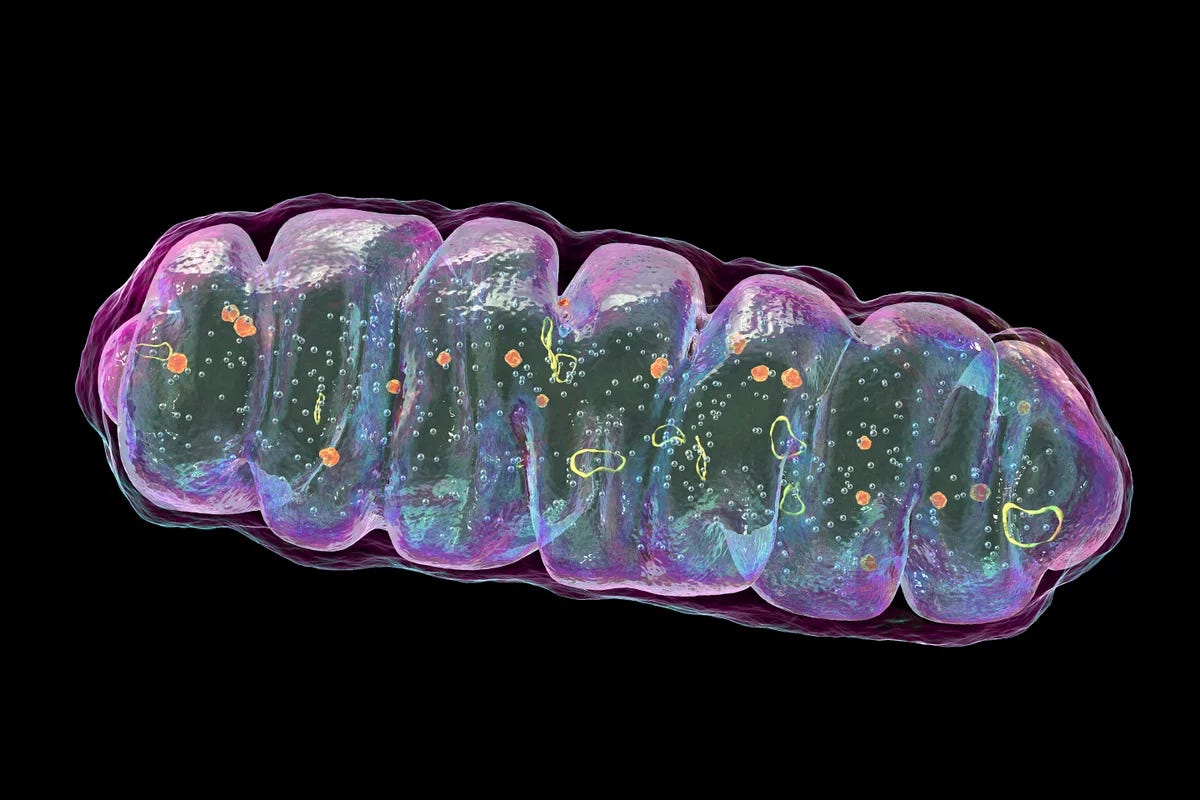
Mitochondria have the ability to send signals that can determine whether a cell lives or dies, whether it divides, and what it does. But we now know that mitochondria also have the power to change our genetic code. They can modify and disrupt the fundamental hardware of our cells.
As I reflect on this, I love that what made the discovery possible was a beautiful collaboration between experts in computational genomics, molecular genetics, mitochondrial biologists, and psychobiologists. Real teamwork!
At the beginning, we each had our own perspectives and our own language (full of field-specific jargon, acronyms, and nuances). But over the course of the project, we learned to speak each other’s language and to care about what the other team members cared about. From this synergistic collaboration, a new and more comprehensive understanding has emerged.
The genome is malleable and regulated by energetics.
Flowing energy creates opportunities for the genome to evolve, and our mitochondria are actively changing our genome throughout our lives. This has the potential to shape our health and who we are.
Perhaps part of what makes us unique as individuals is rooted in the way that energy flows, transforms, and updates the fundamental blueprints from which we are built.
To continue learning about the biology of energy, subscribe to get new stories like this once a week.
If you enjoyed this piece, consider sharing with your community.
The 13-day accumulation rate you've observed and identified creates instability in our understanding of the genome Martin, in both senses of the word 😆.
If we adopt a bioenergetic-first framework, akin to the nuclear transfer experiments highlighted by Dr. Thomas Seyfried, it suggests that the nuclear genome is not a static blueprint, but a dynamic 'sink' for mitochondrial interaction.
• In this light, post-mitotic neurons may carry a permanent biographical record of metabolic stress via somatic Numtogenesis.
Your article made me think: What if the genes governing synaptic plasticity are more susceptible to these Numt insertions because they are physically accessible during high-energy demand?
• If so we may be looking at the primary driver of E/I circuit imbalance in the aging brain.
Following your MitoBrainMap, does the 'Numt-burden' correlate with the specific bioenergetic thresholds of different cell types?
• It would be fascinating to determine if a cell's genomic decay is effectively a 'secondary' event, a failure of the mitochondria's energy coherence.
The broader implication is perhaps quite stark:
Have we spent decades mapping the 'Epigenome' while overlooking a stochastic, cumulative 'Numt-ome' that is actively rewriting the cellular code in response to a life lived under metabolic insult?
Would love to hear your thoughts on this Martin.
This was one of those “behind the paper” pieces that reminds me why good science is always a human story first. What stayed with me is the audacity of the question: we talk about the genome like a fixed blueprint, but your path into brain mitochondrial DNA insertions makes the whole thing feel more like a living document, constantly negotiating with stress, time, and cellular energy demands. That’s a paradigm shift in tone, not just a finding.
I also appreciated how you showed the texture of discovery: the initial “this can’t be real,” the methodological paranoia (as it should be), the slow accumulation of converging evidence, and then the moment where the data stops being an artifact and starts being biology. That arc is so important for readers to see, because it’s the antidote to both scientific cynicism (“it’s all noise”) and scientific naïveté (“one paper proves everything”).
And the mortality link, even as a signal rather than a conclusion, lands with gravity. Not in a doom way, more in the “we should be paying attention to mitochondria as information, not just as fuel” way. It makes the idea of aging feel less like a vague downhill slope and more like a set of measurable, mechanistic processes that connect life experience to cellular outcomes.
Thank you for writing it like this! Clear enough for non-specialists, but honest about uncertainty and the work it takes to earn a claim.