

BEHIND THE PAPER
“It is more important to know what person has a disease, than to know what disease a person has” – William Osler, Physician
Why Are We So Different From One Another?
It was 2016, a couple months after I started my faculty position at Columbia University. There was a question that lit a fire in me: do mitochondria drive inter-individual differences?

As we saw in a previous post, not all of what makes us different from one another is genetic. Genetically identical twins can exhibit distinct behaviors, like and dislike different things, get sick at different times, and die at different ages.
This is true in mice too. Genetically identical creatures who eat the same food, live in the same cage, and breathe the same air can have quite different phenotypes. Some are chill, and some are anxious. Some die at one year, while some of their buddies will live up to three years.
If not all from our genes, where do biological and behavioral differences come from?
Could what makes us so different come from our mitochondria? Could how we respond to the world around us and our resilience to stress be driven by bioenergetic processes that arise deep within our cells?
Could the way in which energy flows and transforms through our mitochondria be at the core of who we are, fundamentally?
Mitochondria as Orchestrators of Behaviors
The idea that mitochondria play a meaningful role in shaping who we are was born out of three lines of research.
The first consisted of research done in cells. It showed that mitochondria play an instructive role in deciding whether a cell lives or dies. Like the CEO of the cell, mitochondria have a veto on cell life and death. Not only that, but some subtle decisions about cell migration, stemness, differentiation, and other meaningful cell things, like turning on and off genes, are also under mitochondrial control.
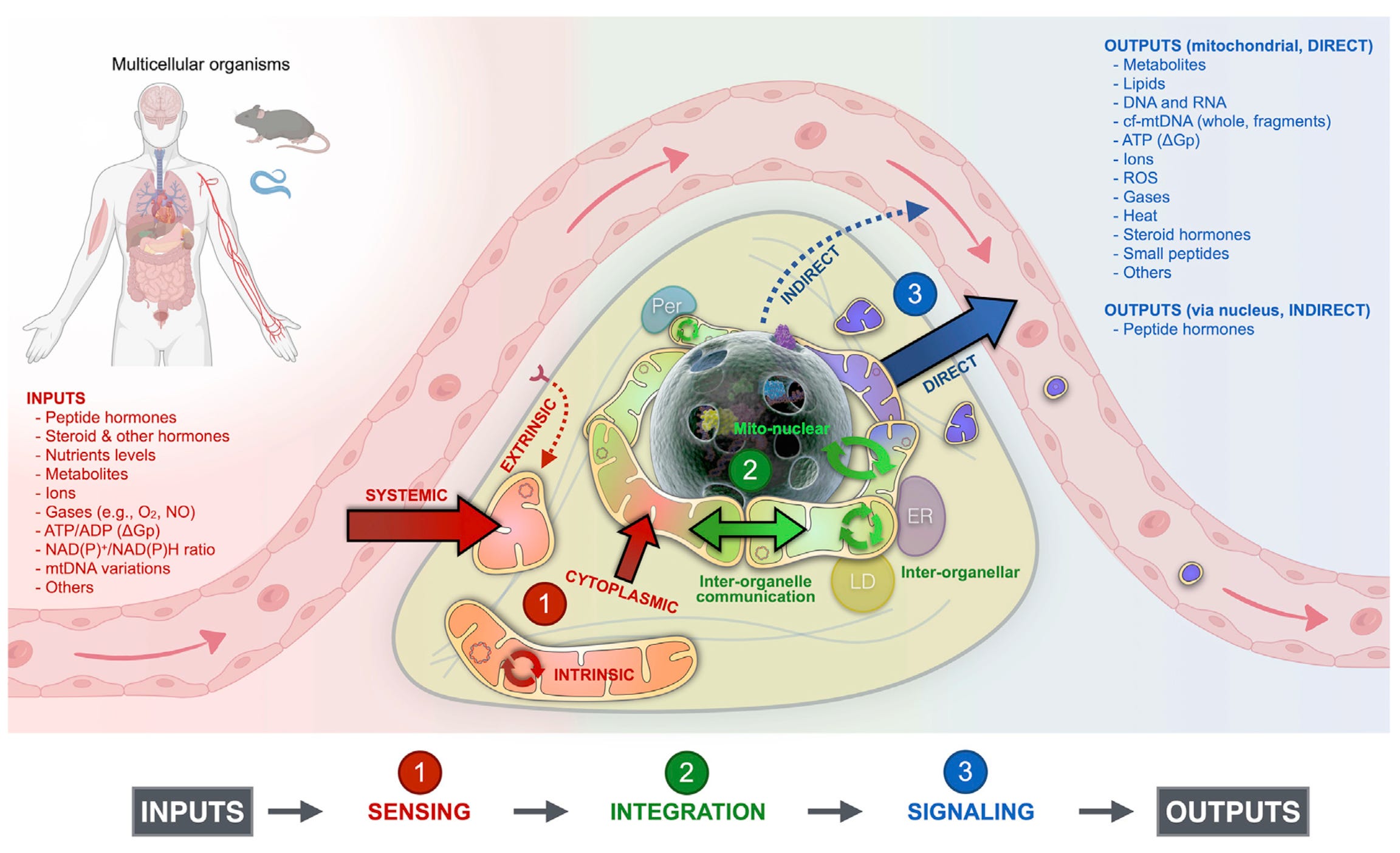
Later, dozens of studies in mice and rats showed that the ability of animals to remember, their anxiety levels, their developmental trajectories, how long they live, and their risk of diseases like heart failure and cancer were all influenced by mitochondrial biology.
Mitochondria, it seemed, don’t just keep the lights on. They orchestrate function and behavior over time in cells and whole organisms.
Several of these discoveries were made in Philadelphia in Doug Wallace’s lab between the 1980s and 2010. As a postdoc in Doug’s lab, I had the opportunity to ask a special question in this line of research: do mitochondria influence how animals perceive and respond to mental stress?
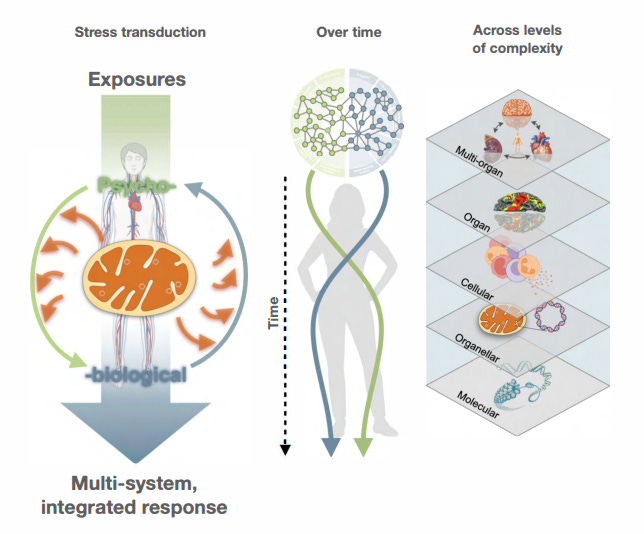
I had always been interested in the crosstalk that happens between physical structures and bodily processes to influence behavior and thought, and how this connects our subjective experiences with our physiology.
This had been extensively studied in the context of stress responses in humans.
Stress—every component of the stress response in cells, organs, and the whole body, costs energy. An energetic perspective of stress leaves little doubt that the stress response is in fact an energetic response. And stress hormones are, in fact, metabolic hormones co-opted by the mind to fuel the energetic demands required for adaptation.
All roads seemed to point towards mitochondria as a meaningful regulator of stress responses.
Mitochondria Regulate Stress Responses in Mice
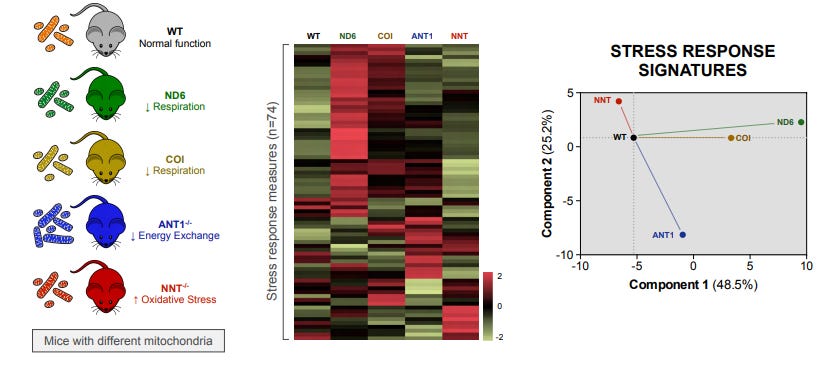
In 2013, I teamed up with Meagan McManus, then also a postdoc in Doug’s lab, to test a cool hypothesis: changing mitochondrial biology with genetic mouse models would alter the physiology and molecular changes in mice exposed to stress.
Two years later, published in 2015, we found strong evidence for that hypothesis. In fact, ALL aspects of the stress response we examined were influenced by mitochondria. This included gene expression in the hippocampus (a brain region critical in the stress response), regulation of corticosterone (the primary stress hormone in mice), circulating metabolites and cytokines (signaling proteins that can trigger inflammation), and metabolic changes like blood glucose.
When we perturbed mitochondrial biology in one way, it tweaked the stress response in a particular direction. Perturbing mitochondria in another way shifted the stress response in a systematic way in a different direction.
So it wasn’t like if you messed up mitochondria, the whole stress response went haywire. That would be an exaggeration. The effects were specific.
Mitochondria regulated stress physiology in more complex ways than we had imagined.
The Human Translation
In 2016, as I was setting up my lab and making difficult decisions about what we were going to focus on, I was dying to know if what we found in mice held up and applied to our favorite model system: homo sapiens.
Did our discovery in mice matter for humans?
There was one way to find out that was quite elegant, scientifically. If you want to know if something (mitochondria) affects something else (the response to mental stress), the best way to answer that question is to do an experiment. That means you modify something—a single thing—while controlling other things as best as you can experimentally. Then you ask whether another thing changed.
Experiments are the best tool scientists have to understand how things work.
But mice are not little humans. And humans can’t be genetically manipulated like mice to create the perfect experiment where mitochondria are changed in one specific way.
The closest we can get, I thought, was to compare people who have a specific mutation in their mitochondrial DNA (mtDNA) to matched controls who have otherwise healthy mitochondria to see how they differ.
In science jargon, that’s known as a “quasi-experimental” study design. We’re not manipulating a variable per se, but we can isolate a known, specific molecular defect in a couple dozen people and see how they are different from the control group.
So we did just that.
Being at Columbia University, we were lucky to have the chance to partner with a great mitochondrial disease clinician, Michio Hirano—my colleague in the Department of Neurology. Michio has been a clinician and researcher since the heyday of mitochondrial medicine.

Over 40 years between the 1960s and 2000s, Italian-born Billy (Salvatore) DiMauro and New Yorker Eric Schon at Columbia, alongside others around the world, were discovering new mitochondrial diseases and mapping some of the molecular biology involved. Michio became a world leader in mitochondrial medicine.
“Could we recruit 40 patients with mitochondrial diseases who have the same mtDNA mutation?” I asked Michio. “It would be challenging, but we can try,” he said.
That was enough optimism to get to work on the human translation of our earlier stress reactivity study in mice.
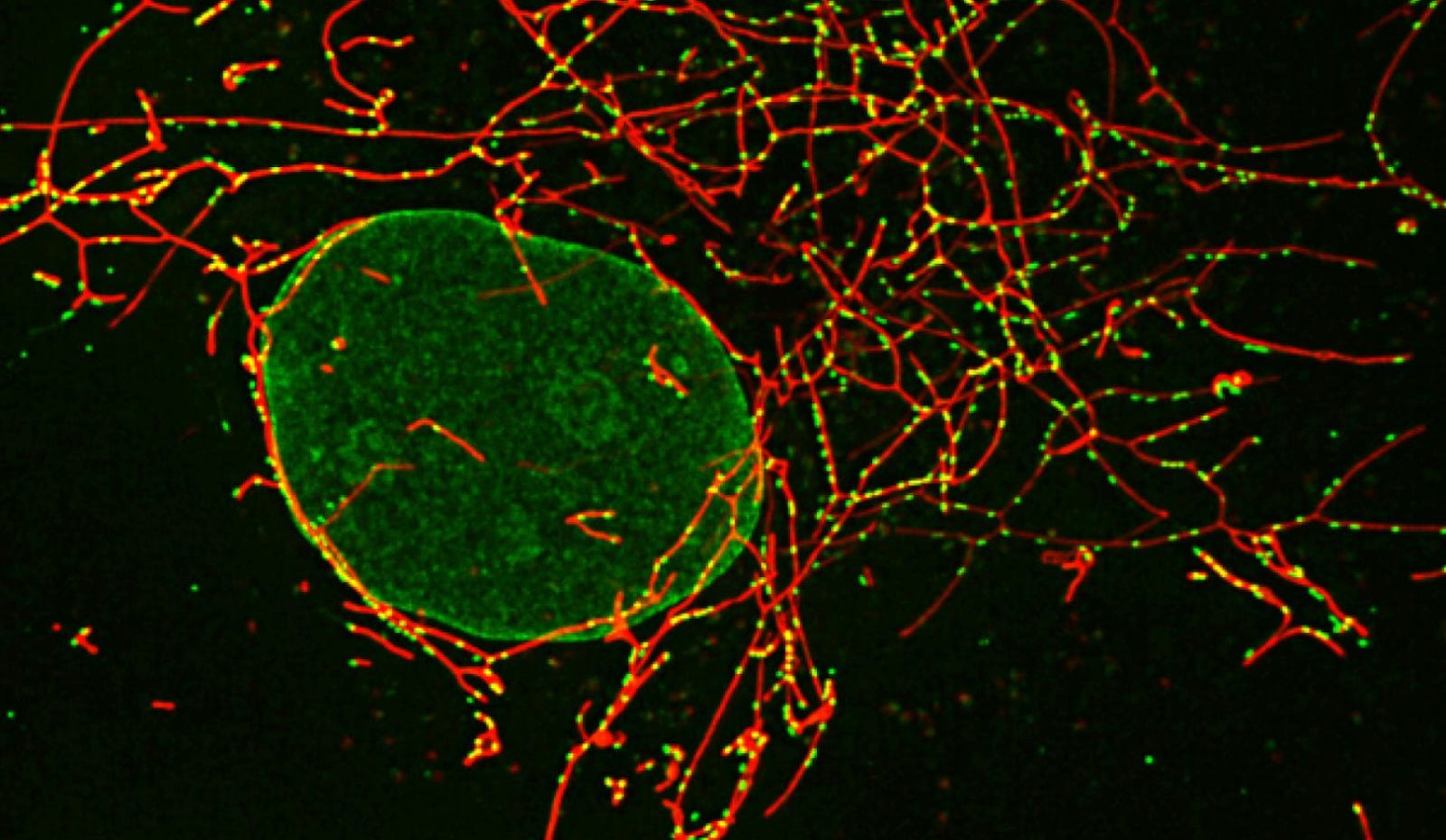
Investing My Startup On MiSBIE
When you start a lab as a new faculty, you are typically given a lump sum of money to get things started. In academia, this is known as “a startup.” I had a pretty good startup fund of around $1.5M to help me survive until I got federal grants.
Excited about the opportunity to translate our mouse study into humans, a barrage of questions was running through my mind. How could we elicit a robust stress response in people?How could we profile metabolic and molecular signals in their blood? Would we be able to look at their brain structure and function while they rest, and while they stress? There were dozens of factors and logistics to consider.
One night, while then postdoc Robert-Paul Juster was working in the lab and helping to design part of the study, we came up with the name MiSBIE. The Mitochondrial Stress, Brain Imaging, and Epigenetics study.

Over the next year, colleagues said things like “that’s much too ambitious for someone at your stage of career,” “you’ll burn all of your startup on a massive study you’re not even sure you can run and find patients for,” and “best to wait a few years when your lab and career is better established.”
“Everything you do needs to be in the name of tenure,” advised a senior member of my career advisory committee. What!? Given the timeline, MiSBIE was most likely not going to help me get tenure, but it was so important.
After doing some math, I realized that the study personnel, clinical lab assays, magnetic resonance imaging (MRI), mitochondrial profiling, and all other molecular assays would cost around $4-5M. This was by far more than my startup could cover.
So without a successful grant, I’d exhaust my startup fund, go academically bankrupt, and have an unfinished study on my hands. Should we do it?
Yes, We Shall
This question was too important to not at least try to answer it. And we needed to do it now.
That was my attitude—fueled by a sense of necessity and urgency. I deeply wanted to find out how mitochondria control stress perception and reactivity in humans. Because if that hypothesis ended up being true, it would say a lot about the role of energy in general, and mitochondria in particular, in our health.
We had to find out.
I wrote a lot of grants. Many were unsuccessful (because they were deemed too ambitious). But some were successful, and we got the study funded over the next six years.
Along the way, my Division Chief, Richard Sloan, helped provide the infrastructure to make the stress psychophysiology experiments possible. Caroline Trumpff, who joined us as a postdoc and later became an assistant professor in our Mitochondrial Psychobiology group, also helped design the MiSBIE questionnaire package and organize the database.
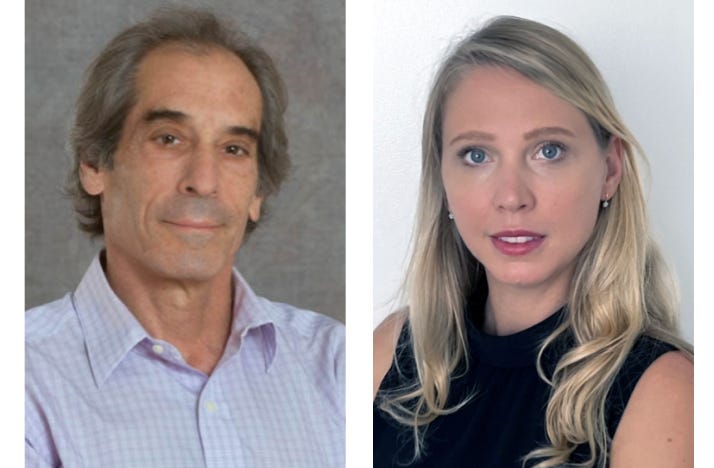
MiSBIE ended up being funded by my startup funds from the Wharton Fund, a pilot grant from the Irving Institute at Columbia and grants from the National Institute of Mental Health (NIMH—first an R21 and then an R01 grant).
More recently, Baszucki Group came to the table with the Baszucki Prize in Science, which helped us make the most of the study.
For every participant that walked through the door for the study, our fantastic study coordinators told them “We want to understand you as a person.” We didn’t just want to get blood, saliva, hair, poop, urine, breath, and other parts of their bodies. We wanted to understand how each person felt, behaved, and responded to what we were presenting them with during the study.
We wanted to understand each person as a human being with different mitochondria, lived experiences, and stress response phenotypes.
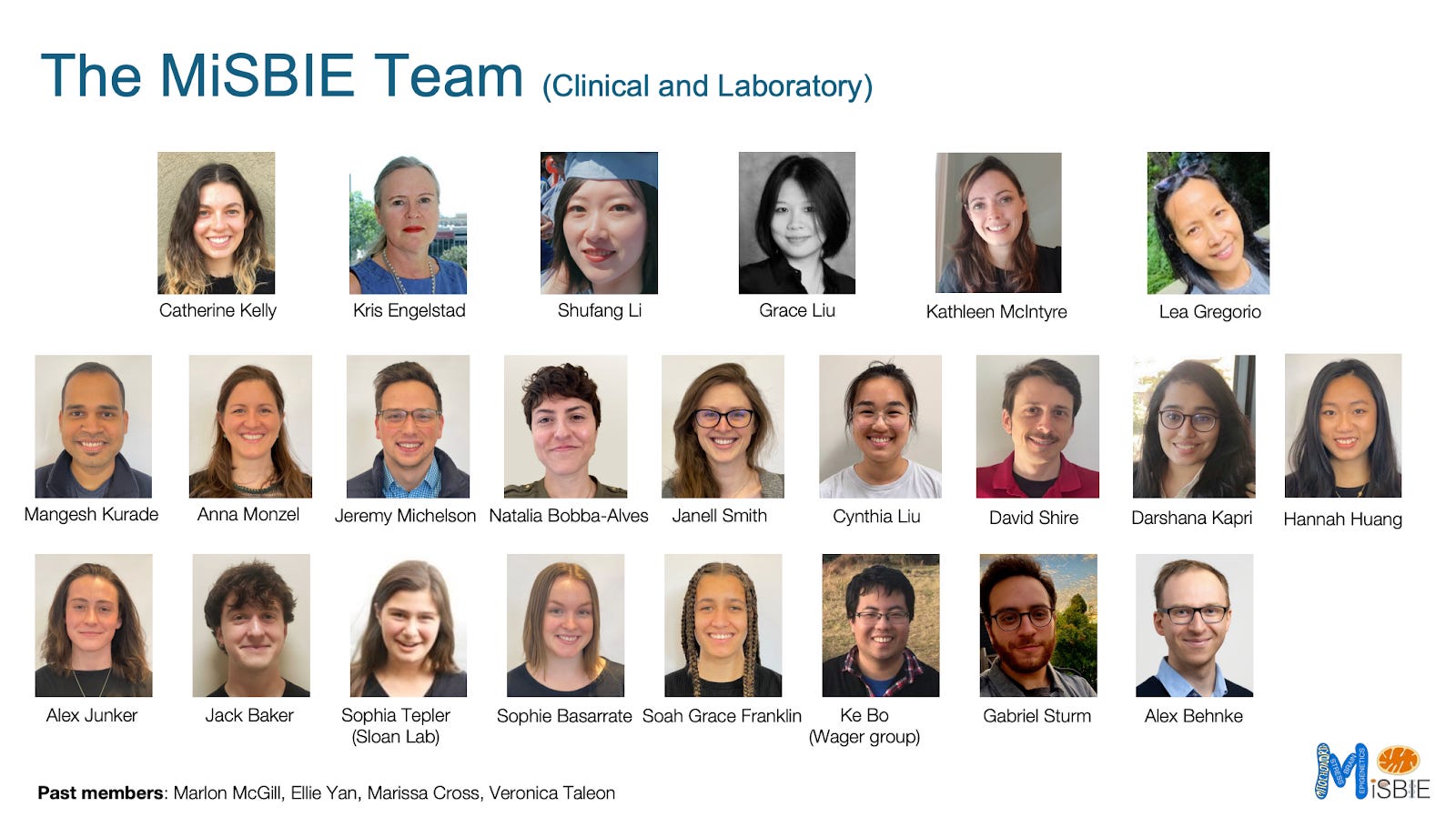
The study ran from 2018 to 2023. Two wonderful study coordinators cared for our participants along the way: Marissa Cross and Catherine Kelly. Two gems without whom the study could not have happened.
In the lab, we had an amazing team. About 20 trainees and staff contributed to different parts of the clinical research process over the years. The dedication and stamina demonstrated by several of our team members was impressive. Running a study over a 5+ year period is no joke. But I’m so glad we did it.
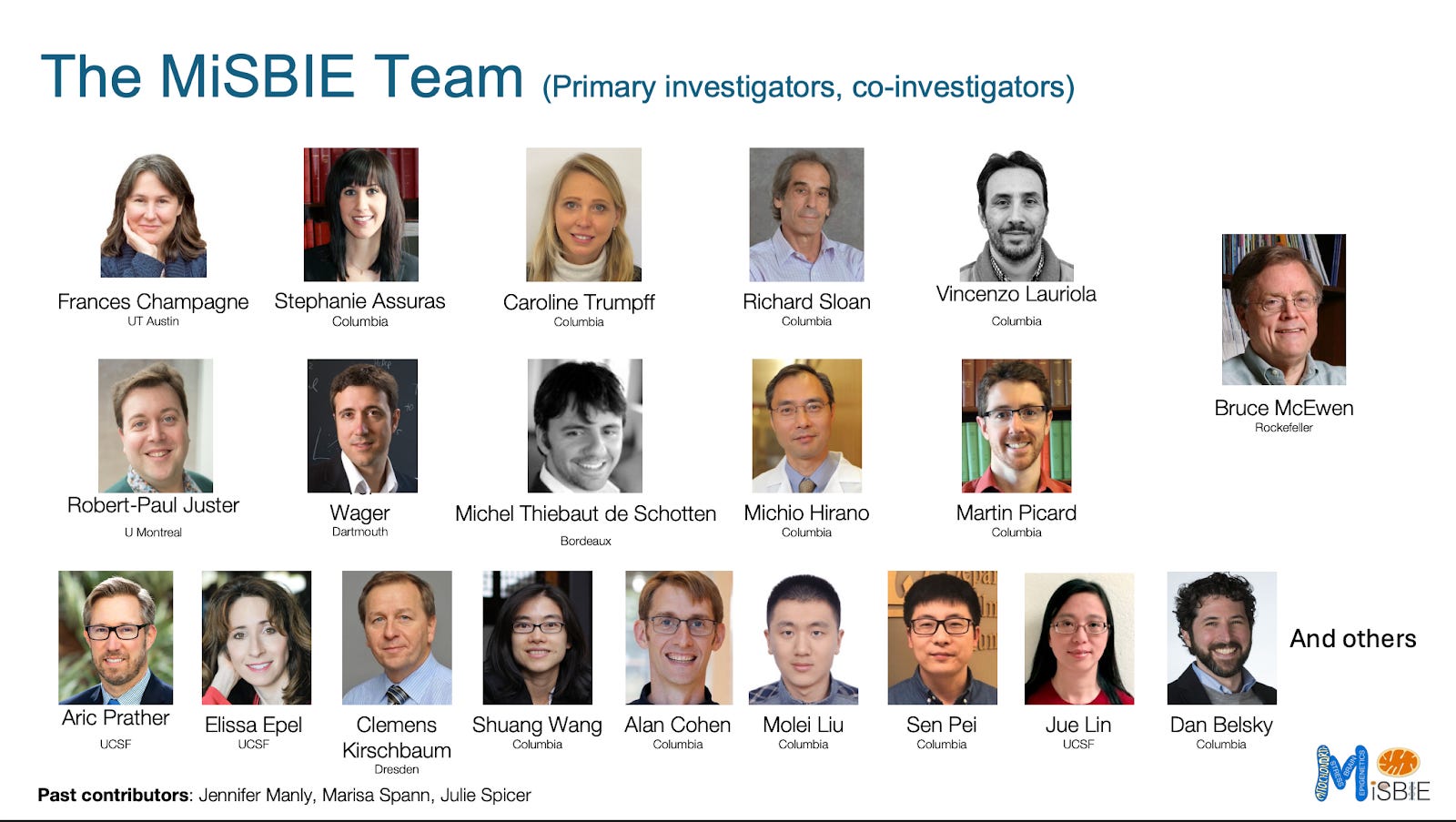
And about a dozen investigators and collaborators contributed to the study design, analysis plan, and other aspects of the study. My loving mentor Bruce McEwen was one of the initial study investigators—I am so grateful.
The Next Steps
We’re now three years past study closure. We’ve learned so much, and we still have so much to learn.
In December 2025, we held the first MiSBIE Symposium. We’ll share more about it in our next post. Over 600 people from around the world tuned in to learn about the role of mitochondria in human health.
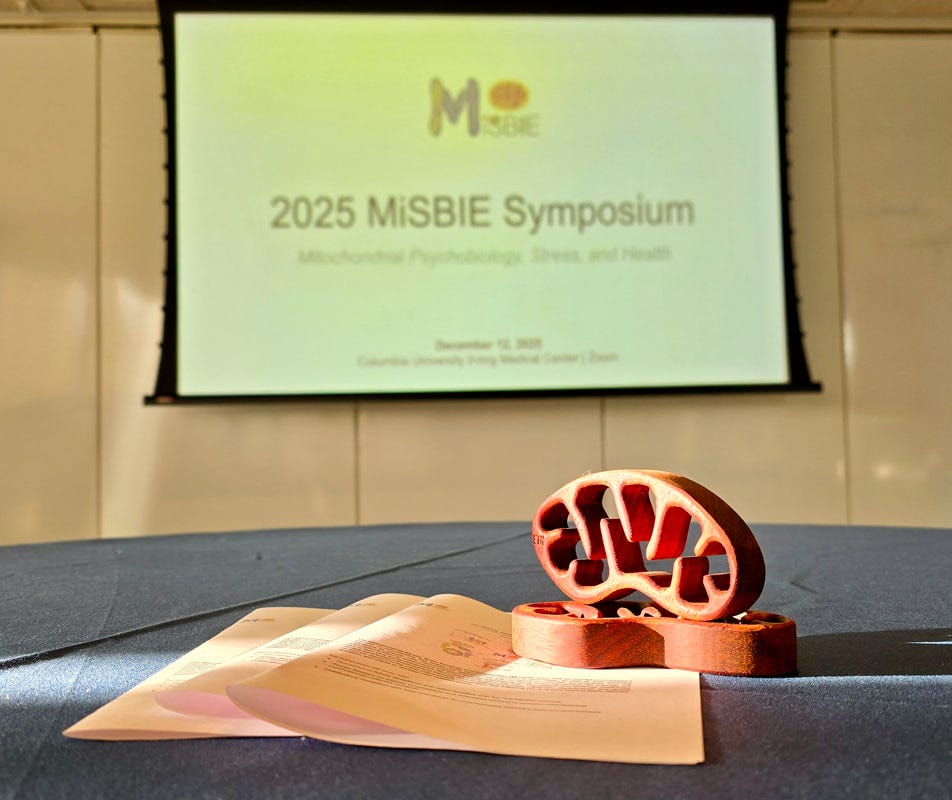
You can see the initial papers that resulted from MiSBIE and learn more about the project here: www.PicardLab.org/MiSBIE
To learn about the theory and what MiSBIE might teach us in the long run, the MiSBIE Mother Paper is the best resource. It is the mother of all MiSBIE papers that will come in the future. It includes details about how every portion of the study was conducted. The database has 3,000+ measurements collected from each person—to understand them as people.
We are also making the data from the MiSBIE study available to those who want to ask questions and test their own hypotheses. We talk more about this in our last post.
Reflecting back onto where we started with a discovery in mice, I’m so glad we embarked on this exciting project. We’ve already learnt some important things that are helping to build an energetic perspective of health—and there is much more to come.
To too MiSBIE participants and to the MiSBIE Team, thank you!
If this work at the intersection of the science and experience of energy resonates with you, please share this Substack with your community.
If you want to learn more about energetic principles of life, visit our website.
I can’t wait to read this one
The direction of this research is fascinating. Congratulations to everyone involved!
The fundamental question we must ask is: Who is the CEO of mitochondrial reactions? Is it the mind (the brain), the Observer (in quantum terminology), or perhaps the environment and our interactions?
The intriguing answers may be deeply correlated with our consistent thoughts and feelings, as well as the decisions we make and act upon. These eventually transform into acquired and inherited habits—our memories! This aligns with the foundational theory of superatom formation!?