
Sunlight and Mitochondria
The Emerging Science Linking Mitochondrial Biology to Light Energy


ENERGY SCIENCE

Sunlight provides a wide range of health benefits. In a recent response letter in the magazine Scientific American, we had the opportunity to explore the exciting connection between mitochondrial biology and (sun)light. Here is the unabridged discussion for our TSEE community.
Sunlight Doesn’t Stop at the Skin
About half of the solar radiation that reaches the Earth’s surface is infrared. Red and near-infrared light (∼650–950 nm), abundant in natural sunlight, fall within the body’s optical window. This means that scattering and absorption are low enough to allow these long wavelength photons to penetrate skin, muscle, and even the chest.
These wavelengths also pass through clothing more effectively than visible light. A recent study confirmed this by showing that 830–860 nm light delivered to the back of human participants improved visual performance 24 hours later, even when the eyes were shielded. This provides direct evidence that long wavelengths reach deep targets and exert systemic effects.
To better understand our health, we need to reframe what sunlight actually is.

It is not just something that lights up the world around us. Light is an environmental input that carries energy into biological systems, absorbed not just through the eyes but through skin, blood, connective tissue, nerves, and mitochondria.
The body is, in a very real sense, an energetic interface with its environment. And that interface has real consequences for how we function, recover, and age. So the question is not whether light is good or bad but which wavelength, at what dose, at what time, and in what biological state tips a given exposure toward repair and regulation or toward cellular stress.
What follows is our response to two generous readers, sharing their perspectives on the Scientific American article on a reframing of what mitochondria are, published May 2025.

Mitochondria are Well-Equipped to Respond to Light
Harold Pupko from Ontario, Canada, rightly suggested that mitochondria may play a part in the health benefits of sunshine, which were highlighted in the same issue of the magazine.

A central principle of Photobiology is that to exert biological effects, light must be absorbed by a light-sensitive molecule called a chromophore. You may be familiar with the chromophore melanin that is responsible for your unique eye, hair, and skin color.
Other chromophores are found within mitochondria, including cytochrome c (an electron shuttle in the electron transport chain), which absorbs red and near-infrared photons. Studies have shown that these wavelengths enhance mitochondrial membrane potential (the electrochemical charge that energizes mitochondria) and increase ATP synthesis, perhaps particularly when bioenergetic function is impaired by age or stress.
Using low doses of light (photons) in biological tissues to modulate (inhibit or stimulate) responses is called photobiomodulation.
For example, photobiomodulation with near-infrared light can rescue retinal function in vivo and reduce Alzheimer’s pathology in mice (multiple studies reviewed here). In humans, transcranial photobiomodulation can improve working memory. In a recent human study, just 15 minutes of 670 nm light exposure reduced glucose spikes after a meal by nearly 30%.
Mitochondria are not only responsive to diet, exercise, and social interaction, they appear to be finely tuned to environmental light.
Sunlight, then, which encompasses a wide spectrum of wavelengths, is not merely a subjective mood booster or a trigger to produce vitamin D. It is a biophysical input of energy with direct effects on mitochondrial health that shape how we feel, repair and regulate our internal systems.
Wavelength and Other Factors Matter
Longer wavelengths of sunlight can reach mitochondria and re-tune their activity across systems. How deep light can travel into your body depends on the wavelength. Blue light (405–505 nm) is strongly absorbed by melanin and acts mainly in the outer layers of your skin. Red light (∼600–800 nm) penetrates several millimeters deeper, and near-infrared light (980–1064 nm) can reach into the subcutaneous fat layer.

The longer the wavelength, the deeper the light can travel into your tissues before being fully absorbed. Mechanistic studies, including simulations and photoacoustic imaging, reveal how different wavelengths interact with chromophores, highlighting how light of varying colors may differentially modulate biology.
A study using solar simulators that match the intensity of summer sunlight demonstrated that mitochondrial responses to light are cell-type specific. Epidermal keratinocytes (the main cell type in the outer layer of your skin) showed mitochondrial damage under intense sunlight, whereas dermal fibroblasts (the main cell type in the deeper dermal layer of your skin) were more resilient. This highlights that not all cells respond equally.
Sunlight can therefore be broadly beneficial, but its effects depend strongly on wavelength, intensity, and exposure time, with ultraviolet light carrying well-known risks.
As pointed out by several readers, the broader light sensitivity of mitochondria may also help explain why time spent in nature feels restorative. Plants absorb visible light to drive photosynthesis but reflect much of the near-infrared spectrum, saturating green environments with low-energy wavelengths that may travel into our tissues and reach our mitochondria.
Being outdoors, then, is not simply about fresh air and scenery (though they have their own benefits). It is an immersion in a photonic environment rich in biologically active light, one to which life has long been attuned.
An Introduction to Mitochondrial Electric Fields
An insightful letter about electric fields from a second reader, Donald Weller from Maryland, adds another valuable dimension to this discussion.

Across all of biology, mitochondria produce some of the strongest electric fields. As food-derived electrons flow toward oxygen, the electron transport chain generates an electrochemical gradient across the inner mitochondrial membrane that hovers around -150 to -180 millivolts.
The voltage potential spans a distance of only ~5 nanometers, producing an electric field on the order of 30 million volts per meter. To put these numbers into perspective, a single human hair is about 80,000 to 100,000 nm wide, and 30 million volts per meter is comparable to the discharge of a lightning bolt.
With an estimated ~40,000 trillion mitochondria in the human body, these immense electrical fields rise and fall with metabolic demands and energy flow.
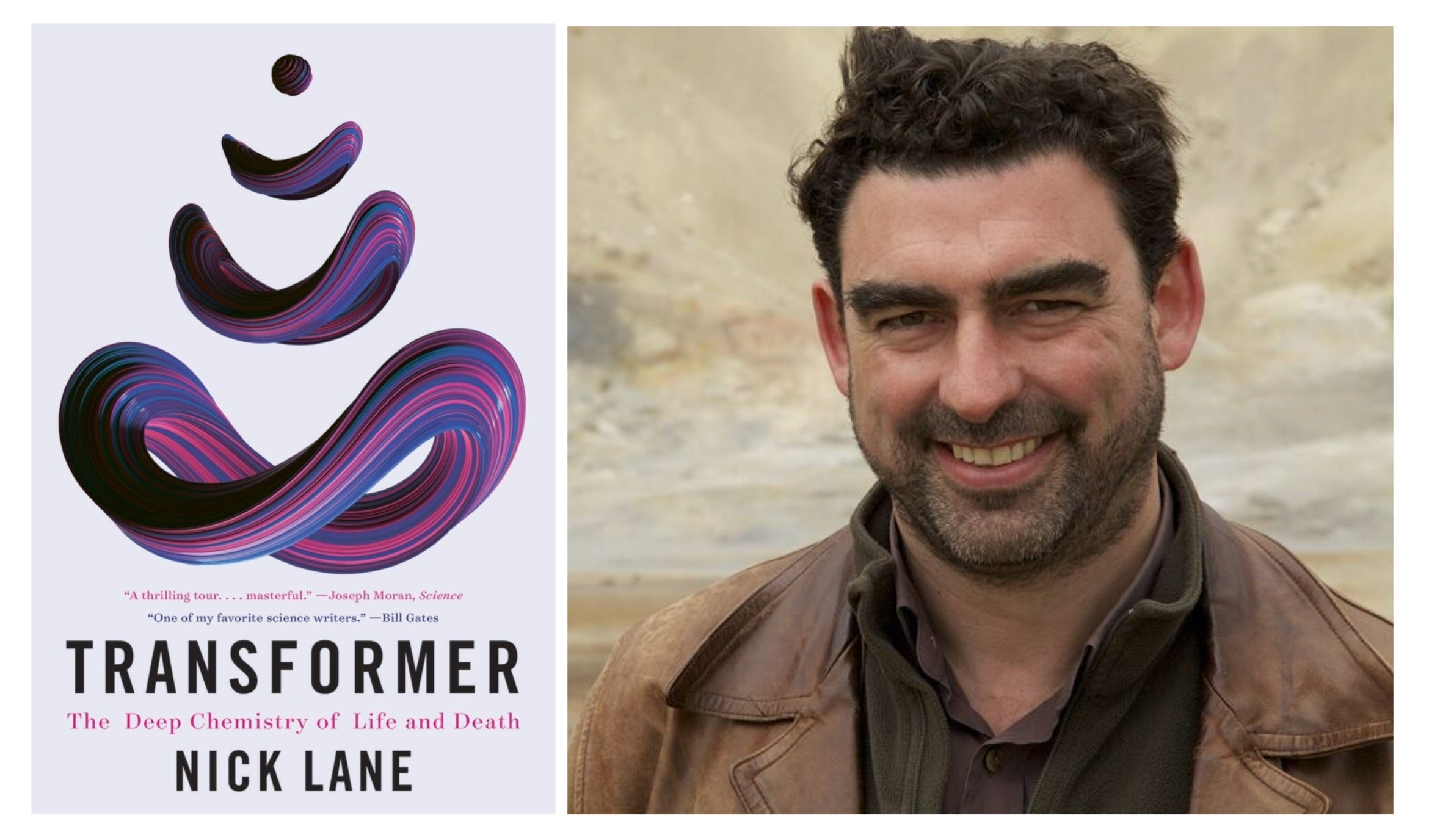
In line with fundamental principles in physics, as Nick Lane outlines in his fabulous book Transformer, these fluctuations in electric fields are expected to generate low-frequency electromagnetic signals.
Although beyond the reach of today’s instruments, detecting such signals from individual mitochondria appears to be an essential step toward fully understanding mitochondria not just as powerhouses, but as a social, energetic collective that transform and regulate energy across living systems, and may even communicate through these subtle energetic signals.
Mitochondria May Respond to Electromagnetic Fields
Mitochondrial composition also suggests they may not only generate, but also respond to, electromagnetic fields. Mitochondria contain several iron–sulfur clusters and complexes that contain heme (the red pigment in blood). These exhibit magnetic properties (including paramagnetic states), which could eventually be measured using a technique called electron paramagnetic resonance spectroscopy.
Perhaps the best direct evidence we have that biologically relevant electromagnetic fields exist at the scale of mitochondria is the phenomenon of cristae alignment between mitochondria. This occurs at intermitochondrial junctions, which are electron-dense contacts between two mitochondria.
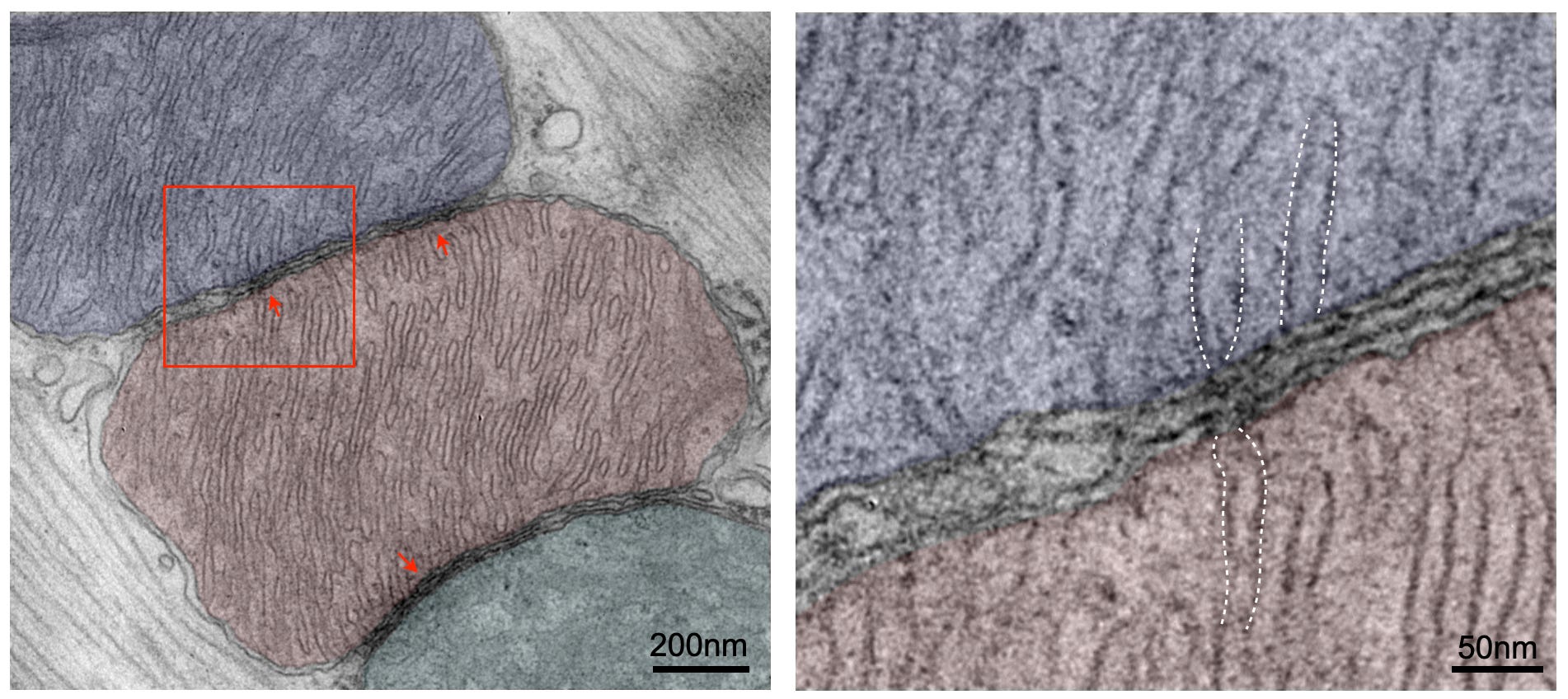
These junctions are especially common in energy-intensive tissues like the brain and heart where mitochondria are often in physical contact with each other. The alignment of cristae could enable electric field coupling and membrane potential synchronization, as previously observed in cardiac mitochondria. Nevertheless, these findings invite a broader perspective highlighted by the letters from Pupko and Weller.
What this Means for Our Understanding of Mitochondria and Energy
By bringing attention to both sunshine and electrical signaling, these readers’ responses enrich an important perspective: mitochondria are not just powerhouses, they are social organelles that are sensitive to different forms of energy in their physical environment. The emerging evidence suggests that mitochondria may function as dynamic, field-responsive hubs within and between cells that integrate photons, charges, and molecular signals—extending their “social” nature into the fundamental language of physics itself: energy.
What To Do With This
The point is not to treat sunlight as a cure, or to turn light into another health trend. It is to remember that the body is not separate from its physical environment.
We already understand this with food: what we eat becomes chemical energy. We understand it with exercise: movement changes how mitochondria burn fuel, build capacity, and respond to stress. Sleep, temperature, social connection, inflammation, and stress all send signals that mitochondria must interpret. Just as diet and exercise are not single interventions but daily relationships with energy, light may be another relationship worth recovering.
So go outside, especially in the morning, when red and near-infrared wavelengths are present and ultraviolet exposure is lower. Spend time in green spaces. Notice that the light environment you move through each day is not passive scenery. It is part of the physical world your cells are reading, translating, and responding to.
The more we understand that translation from photon to chemistry, from environment to energy, the more thoughtfully we can adjust our behaviours and develop technologies that support the mitochondria that make life possible.
We’re grateful to Pupko and Weller for their thoughtful contributions and for Scientific American for allowing us to share this exciting dialogue on the evolving science of mitochondria and various forms of energy.
Do you know anything we missed here? Please share your thoughts in the comments!
Curious about mitochondria and how they move, connect, and support our energy needs? Visit MitoLife to learn more and discover your energetic self through mitochondria.
Thank you, Martin and Nirosha, for sharing about this important topic, and the framing is spot on!!
On the chromophore point, it has been demonstrated that a fully assembled CCO is not required for some of the PBM outcomes we.
https://www.sciencedirect.com/science/article/pii/S1011134419301885
I point this out because I think the hypothesis for nanowater around ATPase being the primary chromophore is super fascinating. I think CCO still plays an essential role.
https://www.nature.com/articles/srep12029
https://pmc.ncbi.nlm.nih.gov/articles/PMC6462613/
Thank you both again for this awesome write up!! 🙏🏼
This reframing is so important: sunlight is not simply illumination. It is biological energy entering the system.
But since we spend over 90% of our time indoors, it also raises an important question for the built environment:
What happens when we replace the full-spectrum natural signal with artificial indoor light?
Indoor light is often a synthetic fragment of that signal.
We have optimised lighting for energy efficiency and visual convenience, but have barely begun to consider the biological consequences of what has been removed.
LEDs provide efficient visible light, but much less of the red, near-infrared and infrared range found in natural sunlight. Modern glazing also filters or weakens parts of the solar spectrum, especially UV and often infrared.
At the same time, many indoor lights are relatively blue-rich, especially compared with the warmer, lower-angle light the body expects in the evening. That matters because blue-weighted light at the wrong time can suppress melatonin and delay the body’s transition into repair.
Our eyes adjust, so we don’t notice. A room can look bright while the body is receiving a very different biological message.
Different wavelengths appear to carry different information. UV is not only a vitamin D story. Red and near-infrared are not merely “warm light.” Blue is not simply bad. Timing, dose, spectrum and context all matter.
This is why lighting design needs to move beyond visual comfort.
The question is not only: can we see well?
But: what light information is this space giving the body — and what has been removed?