

LIVED EXPERIENCE
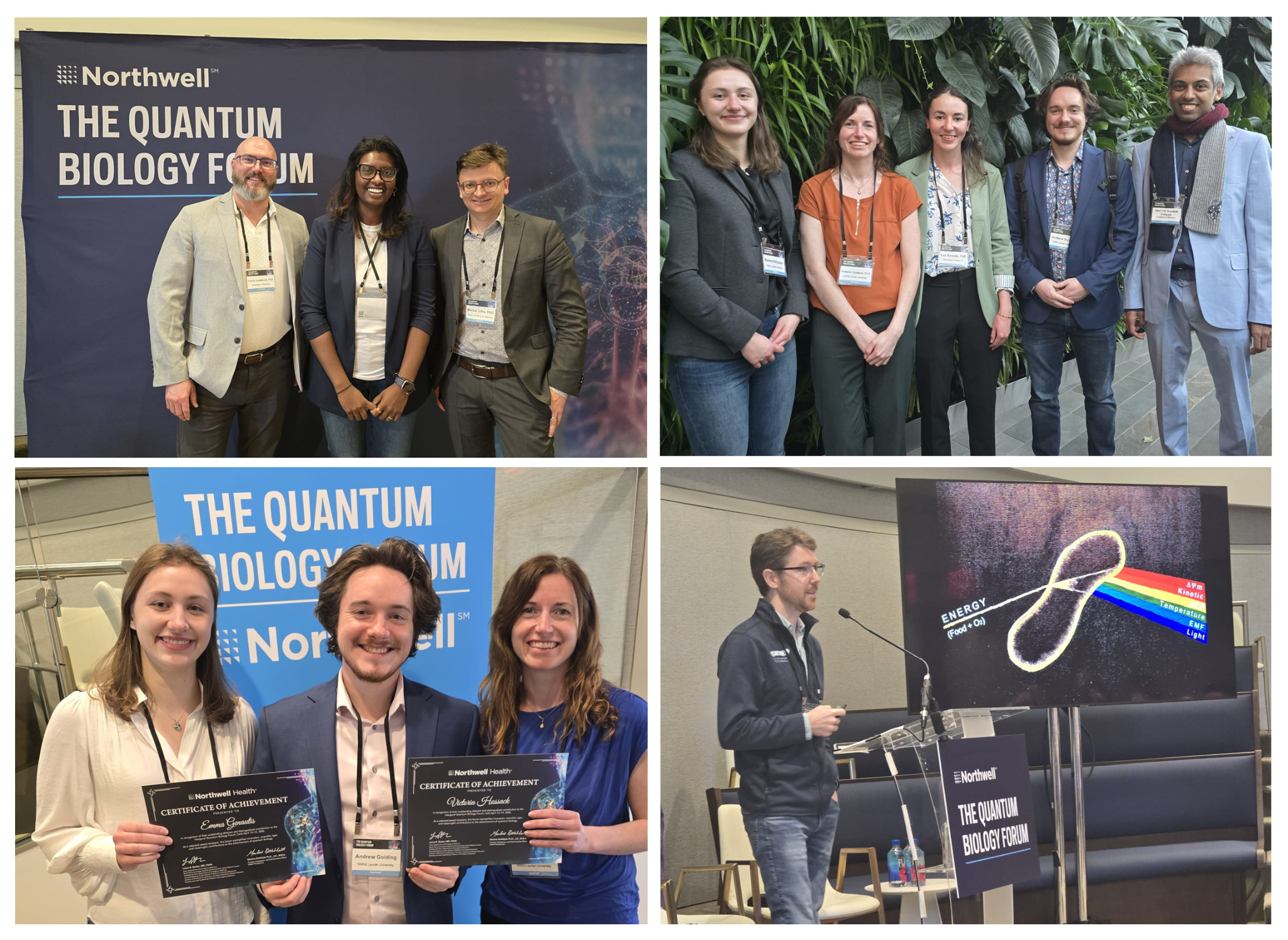
In April 2026, Martin Picard, my graduate students Andrew Golding and Emma Genautis, postdoc Victoria Hossack, and I travelled to the United Therapeutics campus in Silver Spring, Maryland, to attend the Quantum Biology Forum. The two-day event, organized by Lance Becker from Northwell Health, brought together roughly 120 scientists, clinicians, physicists, biomedical scientists and engineers working at the intersection of quantum physics and biology. It was deliberately small. The format was designed for depth, not breadth.
This post shares what we encountered, why we think the movement taking shape around quantum biology is scientifically serious, and what it could mean for how we approach health.
Setting the Stage for a More Integrated View of Biomedicine
I have attended many quantum-focused meetings in the past, but this forum was truly one-of-a-kind. With Lance Becker bringing the perspective of an emergency room physician working at the frontier of mitochondrial transplantation, and Mark Mortensen bringing a nanomedicine lens, the program was structured less around “quantum” as an abstract idea and more around what quantum biology could mean for health.
Light—Matter interactions, such as biophotons and photobiomodulation
Quantum effects in biology, including mitochondria and microtubules
Applications of electrons, fields, and resonance in biophysical therapies and diagnostics
Advances in technology with the potential to shape future research and healthcare

What struck me most was not only the emerging science but the feeling that a field long scattered across disciplines is beginning to materialize, especially within the Health domain. The diversity of voices and community-building was unparalleled. Together in one room were people from different areas—clinicians, physicists, biologists, engineers, technologists, entrepreneurs, patients, philanthropists, policy experts, skeptics, and other people who have spent decades asking whether life can really be understood if we leave out energy, fields, light, charge, and the quantum scale.
This interdisciplinary collective is critical for us to make new changes to understanding our health because biomedicine has become extraordinarily powerful at cataloguing molecules. We can sequence genomes, measure thousands of proteins, map metabolites, and image tissues at extraordinary resolution. But the living body is not only a molecular inventory. It is a physical system that continuously transforms energy across scales. The same body that expresses genes also moves electrons, separates charge, emits photons, responds to electromagnetic fields, and maintains gradients that make life possible.
This is the deeper reason the Quantum Biology Forum felt important. It was not a rejection of molecular biology. It was a call from an interdisciplinary, health-focused community to expand it. The next stage of health science may depend on our understanding of how molecules behave within energetic, electrodynamic, quantum-sensitive living systems.
Over the course of two days, the conversations in that room confirmed something I had been thinking about for a long time: the move toward an energy-centric view of biology is not stopping at the cellular or physiological scale.
As a community, we’re now asking: do quantum-scale interactions help inform and steer health-specific states.
A Very Short Introduction to Quantum Biology
Classical biology treats life as molecules interacting in predictable, deterministic ways. In this model, DNA makes RNA, RNA makes proteins, drugs bind receptors, diseases arise from disrupted biochemistry. That framework has been extraordinarily productive.
But the Quantum Biology Forum described it pretty clearly: the classical view is incomplete. It misses a deeper understanding of energy and fields that underpin every living process.
Quantum biology is a rapidly emerging field that is field that explores how quantum phenomena, usually associated with atoms, electrons, photons, spins, and molecular vibrations, play functional roles in biological systems.
These phenomena include quantum tunneling, spin-dependent chemistry, coherence, delocalized excitation, and light-matter interactions.

We won’t go into all the details, but some of these mechanisms are already well established in specific biological contexts.
Quantum tunneling, for example, facilitates electron “transport” in the mitochondrial electron transport chain (ETC). See below for more details on this.
Coherence, the ability of quantum states to exist in superposition before collapsing into a single outcome, has been shown to enable efficient energy transfer in photosynthetic light-harvesting complexes.
Resonance plays a role in enzyme catalysis and protein folding.
And biophotons—the ultra-weak emissions of light from cells—may enable cell-to-cell communication in ways that biochemical signaling alone does not capture.
These are not speculative ideas. They have published experimental support, and they are advanced enough to have led to some clinical applications.
In each case, an important question is whether the laws of physics continue to matter inside warm, wet biology in ways we have not yet fully measured.
Embracing the role of quantum biology doesn’t mean every mystery is now quantum in nature. If a quantum effect exists, we must determine whether it persists under physiological conditions, whether it changes biological function, and whether it scales from molecular events to cells, tissues, organs, or behavior. The hard challenge is the problem of scaling: how do we show that effects that occur at the quantum scale manifest at measurable scales?
The most honest thing I can say about quantum biology right now is that the field faces a genuine and unresolved challenge: how do quantum effects that occur at the nanometer scale, in timeframes lasting only about one quadrillionth of a second, at physiological temperatures, produce measurable consequences at the scale of cells, tissues, organs, and whole-body health?
It is one thing to show that a proton tunnels across an energy barrier. It is another to show how such events shape inflammation, cognition, healing, fatigue, aging, or the felt experience of energy.
In this recent preprint, we discussed this in greater detail and decided that the field should be organized into three complementary directions:
Quantum in biology, where quantum effects are part of living processes;
Quantum for biology, where quantum technologies are used to measure or manipulate biological systems; and
Biology for quantum, where biological materials or design principles inspire quantum technologies.

I find this perspective useful because it separates different kinds of claims. It helps us ask whether we are studying a mechanism inside life, building a tool for biology, or learning from biology to engineer new physical systems.
Why Does an Energy-Centric View at the Quantum Scale Matter for Health?
Quantum biology will not replace current medicine. But it may reveal a deeper level of regulation that current medicine often cannot see.
Many diseases are not simply the result of a single broken molecule or a chemical imbalance, as we’ve highlighted in a previous post. Many diseases and disorders involve disrupted energy flow, altered redox state, impaired mitochondrial energy transformation (increased energy resistance, éR), inflammation, excitability, repair failure, and changes in communication across cells and tissues.
These processes are both molecular and physical.
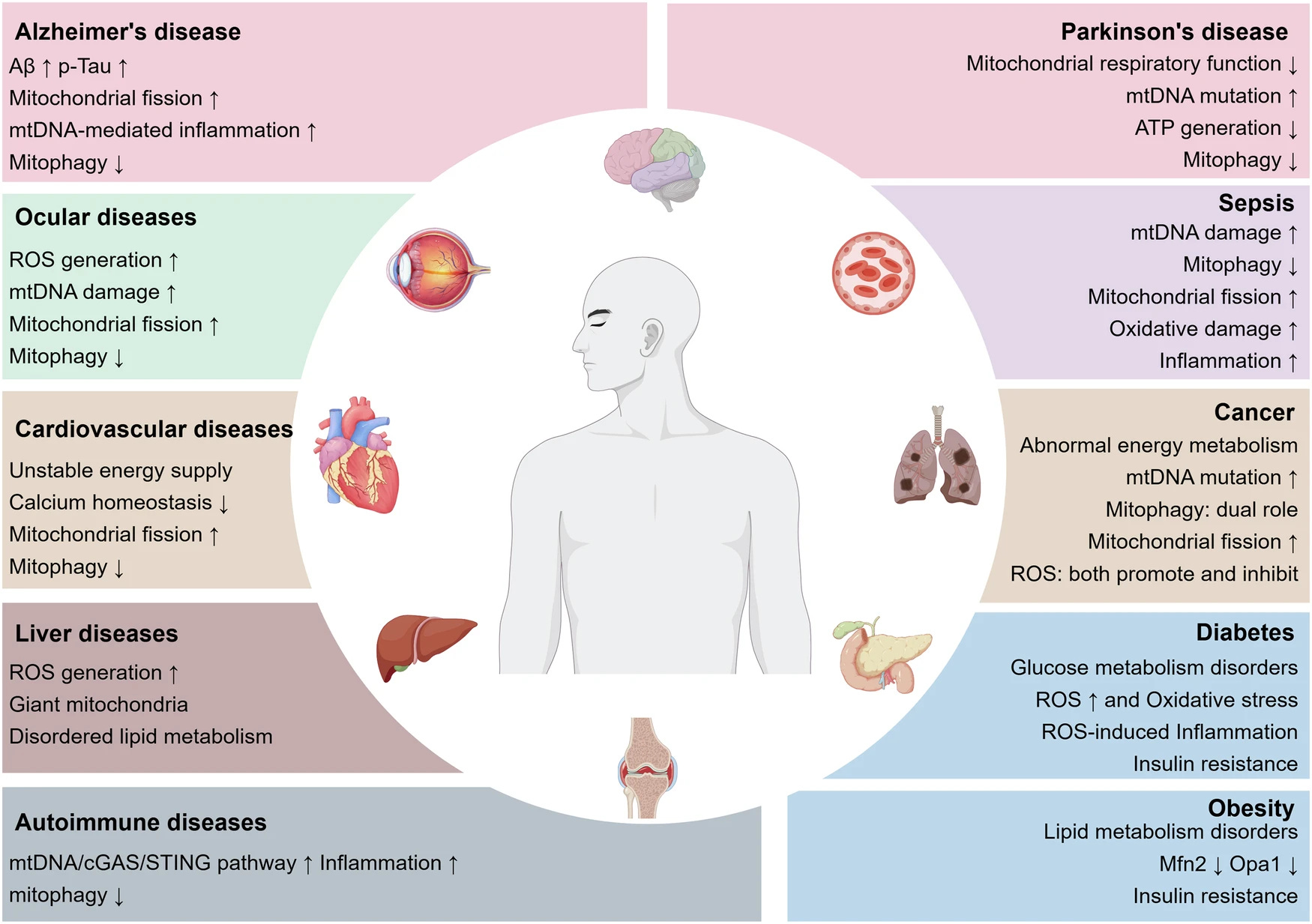
This is where an energy-centric view becomes insightful. In previous TSEE posts, we have argued that energy is not only something that only keeps the lights on. Energy shapes what cells can do, what tissues can repair, what the brain can sustain, and how the body allocates resources under stress.
The energy constraint framework makes this tangible: every process in the body has an energetic cost. When stress, inflammation, infection, aging, or mitochondrial damage consume too much of the body’s energy budget, less may be available for growth, maintenance, and repair.
Quantum biology adds another scale to this picture.
If energy flow depends on electron transfer, proton gradients, spin states, photon absorption, redox chemistry, and membrane potentials, then health cannot be fully understood as a static molecular state. Health becomes a dynamic state of organized energy transformation. Disease may emerge not only when parts are damaged, but when the physical conditions that allow energy to move, coordinate, and be transformed become constrained or mispatterned.
Quantum biology adds a dimension below even the mitochondrial scale. With what we know about quantum effects, it’s clear the energy story begins much further down the physical scale than the molecular scale we’ve learnt to consider.
The Mitochondria-Quantum Connection
The conventional description of mitochondria as ATP factories is accurate at one level of analysis, but it omits most of what is actually happening.
In the inner mitochondrial membrane, electrons flow through a series of protein complexes via quantum tunneling.

The rate and efficiency of this tunneling affects how much ATP is produced, how much heat is generated, and how many reactive oxygen species are released as byproducts. Douglas Wallace, who presented at the forum, has spent decades building the case that mitochondrial DNA variation is not incidental to disease, but causal. The quantum mechanics of electron transport are part of that story.

We covered the evolutionary and genetic dimensions of mitochondria previously. Mitochondria and mtDNA are active participants in evolution, shaping traits, fitness, and inheritance across species. The quantum biology lens adds a mechanistic explanation for why mitochondria vary so widely across individuals, tissues, and states: the quantum properties of electron and proton transport are sensitive to temperature, fields, and molecular environment in ways that classical biochemistry does not fully model.
Jonathan Brestoff‘s work on immunometabolism, also presented at the forum, expanded our energy-allocation framework to the subcellular scale. His team showed how nanodiamond-based quantum sensors can measure intracellular temperature and magnetic-field fluctuations as readouts of mitochondrial energetic activity (read more about it here. This work links organism-level questions about energy allocation to nanoscale mitochondrial thermomagnetic regulation, with implications for how cells respond to stress, inflammation, and mitochondrial disease.
The mitochondrial perspective appeared again and again at the Forum: in discussions of light, mitochondrial transfer, redox signaling, neural energy dynamics, and future quantum diagnostic technologies. The 2026 agenda itself framed an entire session around mitochondria as quantum organelles.
This matters because mitochondria connect the microscopic physics of electrons and protons to the macroscopic biology of health.
Mitochondria translate food, oxygen, light, stress, temperature, inflammation, movement, and social experience into energetic states that cells can use. If mitochondria are altered, the whole organism feels it. Fatigue, brain fog, immune activation, pain, mood, cognition, and recovery are not merely subjective experiences floating above biology. They are, at least in part, expressions of how energy is being transformed and allocated across the body.
The Ongoing Evolution of Biophysics
One reason this quantum biology movement is so important is that it gives us a disciplined way to revisit areas that have often been dismissed as too speculative or too close to the edges of conventional science.
Light therapies, electromagnetic fields, bioelectric signaling, biophotons, and frequency-specific interventions have all suffered from the same problem: they sit in a space where real physical mechanisms may exist, but the quality of evidence has been inconsistent, and the language has sometimes outrun the data.
Rigorous study of the biophysics of energy can change that. We can ask precise questions. What field strength reaches the target tissue? What wavelength is absorbed by which chromophore? What is the dose-response curve? What changes in membrane potential, redox state, calcium, mitochondrial activities, gene expression, or tissue behavior? What is the appropriate sham control? What is the clinical endpoint? What can be explained classically, and what genuinely requires a quantum model?
This is the space I see opening. We do not need to choose between skepticism and imagination. We need both. Skepticism protects the field from weak claims. Imagination prevents us from mistaking current instruments for the boundaries of reality.
Merging Scientific Silos
My contribution to the Forum focused on biophotons as indicators of biological state and health. The central idea is simple but technically challenging: living systems emit ultraweak photons, likely linked to redox biology, oxidative metabolism, and excited molecular states. If we can measure these signals with enough sensitivity, spatial resolution, and biological context, they may offer a new way to read the energetic and oxidative state of cells and tissues without destroying them.
Martin’s talk focused on how focusing on energy dynamics through mitochondrial biology helps widen the lens of how we look at our bodies and experiences. Brain function is more than neural firing. It is energy transformation at extraordinary speed and precision. The brain depends on mitochondrial metabolism, membrane excitability, ion gradients, thermodynamics, and patterned energy flow.
To understand the mind—and how mood, fatigue, perceptions, and complex states like resilience arise—we may need richer integration of the biophysics of energy.
Together, our perspectives point toward a larger directive. We need to bring the science of energy into biophysics, health, and the lived experience. What we are most fundamentally.
In our prior post about studying more than molecules, we argued that biology cannot be reduced to parts alone. Molecules matter, but their function depends on flows, fields, gradients, timing, constraints, and context.
Quantum biology pushes this argument further down in scale. If electrons, protons, photons, spin states, and quantum-sensitive processes shape biological function, then energy is not a metaphor. It is the physical substrate through which life organizes itself.
What Does This Mean for Healthcare?
Healthcare is still largely organized around diagnosis after dysfunction becomes visible. We wait for symptoms, structural changes, abnormal lab values, or categorical disease labels. But using energy-centric and quantum-informed biophysics could help us detect changes earlier, when physiology is still dynamic and potentially reversible.
Imagine diagnostic tools that measure redox states, mitochondrial energy resistance, ultraweak photon emissions, bioelectric patterning, or field-sensitive molecular states. Imagine therapies designed not only to block a receptor, but to restore energy flow, improve mitochondrial efficiency, tune excitability, and support repair, or re-pattern communication across tissues.
Some of this is already emerging through photobiomodulation, bioelectronic medicine, mitochondrial transplantation, and quantum-enabled sensing.
Much of it remains early. But the direction is clear: the future of medicine may include tools that measure and alter biological energy states.
For skeptics, this is exactly why rigor matters. The goal is not to declare that every energy-based therapy works or is superior to molecular ones. The goal is to build the measurement science, causal experiments, dose-response models, and clinical trials needed to determine what works, for whom, under what conditions, and by what mechanism.
A Field with Humility and Momentum
What I appreciated most about the Forum was the sense of intellectual humility. While the concepts in quantum biology have been around for many decades, the field as a whole is starting to blossom. It is just beginning to define itself.
There are real uncertainties. How do quantum effects survive in warm biological environments? Which effects are functional versus incidental? How do molecular quantum events scale to cells, organs, behaviour, and health? How do we separate quantum mechanisms from classical biophysics? How do we prevent the language of quantum biology from being misused while still allowing the field to grow?
These uncertainties are not reasons to avoid the field. They are reasons to build it mindfully.
I particularly want to acknowledge and thank Lance Becker for creating a space where the biomedical utility of quantum biology could be seriously pressure-tested. By inviting clinicians, physicists, biologists, engineers, funders, patients, and translational thinkers into the same room, he helped make the conversation both scientifically ambitious and practically grounded.

Geoffrey Guy added an important translational perspective. As someone who has written accessibly about quantum biology and its implications for medicine, he pushed the discussion toward the real-world systems through which emerging technologies become healthcare: regulatory pathways, health administration, clinical networks, and implementation. This is where quantum biology begins to move from compelling mechanisms to responsible biomedical translation.
This is what made the Quantum Biology Forum unique. It created a space where abstract questions, emerging evidence, and clinical realities could be discussed together. The major health problems we face, from neurodegeneration and chronic fatigue to cancer, pain, aging, and mental illness, will not be solved by one discipline alone.
The Next Dimension of the Science and Experience of Energy
For The Science and Experience of Energy community, this is a natural next step. We have been exploring how energy shapes health, stress, mitochondria, repair, and lived experience. Quantum biology invites us to ask what happens when we look even deeper—below metabolism as chemistry, and into metabolism as physics.
This does not mean abandoning the macro scale of human physiology and behavior. It means connecting scales more realistically. The electron transfer events inside mitochondria, the voltage across membranes, the photons absorbed by chromophores, the redox state of cells, the energy budget of tissues, and the experience of fatigue or vitality are not distinct events. They are different levels of the same energetic process.
There is a long way to go. But the quantum biology movement is ripening.
The task now is to bring rigor to what has been intuitive, measurement to what has been invisible, and biophysics to questions of health that have too often been left at the margins.
If the twentieth century taught us to see life through genes and molecules, the next century may teach us to see life through energy, information, and the physical laws that make living systems possible.
Thank you for joining us on the journey to building the foundation for the next phase of evolution for biomedicine. Please leave a comment to share how this perspective aligns with your experience, and consider sharing this post.
How wonderful, I had no idea this Forum existed. May need to attend next time round.
very helpful thank you very much for this