

ENERGY SCIENCE
Full-Text Link to Primary Source
Our TSEE guest writer Dylan Sarver is a postdoctoral fellow in the Caltech/UCLA Integrated NIH T32 Cardiovascular Engineering Training Program. In this post, he shares new research that highlights the role of mitochondria as timekeepers within our bodies. Their findings support the presence of complex coordination of mitochondrial activity across tissues.

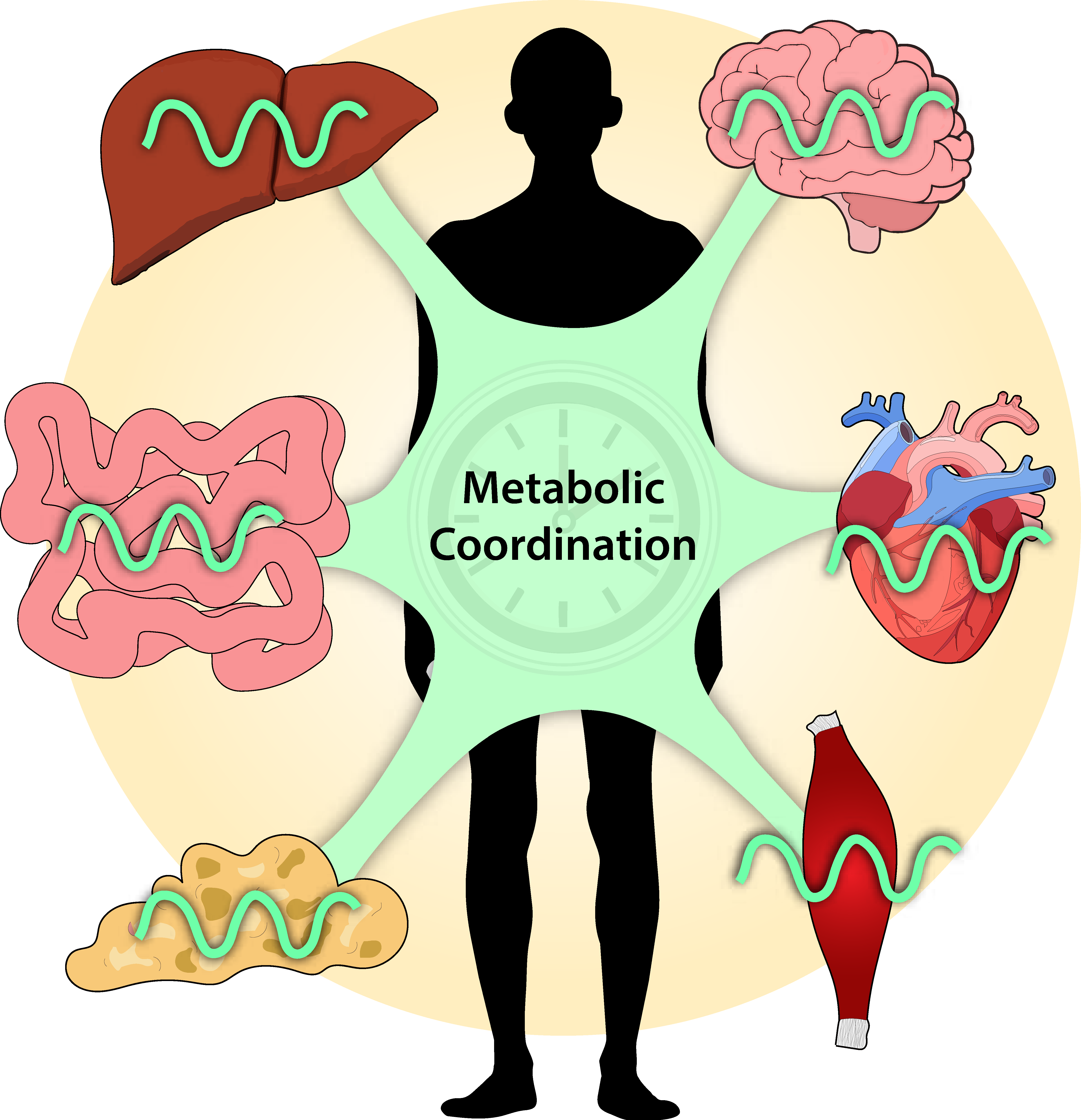
Every day, organisms transition between sleep, feeding, and activity. These transitions are not simply behavioral—they require coordinated physiological and metabolic changes across the entire body.
When an animal wakes, the brain alters firing patterns, the liver shifts glucose production, muscles increase energy utilization, the heart increases its workload, and adipose tissue changes how it stores and releases fuel. Countless processes must adjust together to support a new behavioral state.
We often think about these organs independently, but life depends on their ability to work as a coordinated system.
Tuning in to Our Bodies’ Rhythms
Circadian biology has taught us a tremendous amount about biological clocks within individual tissues. We know the liver has daily rhythms. So do the heart, skeletal muscle, adipose tissue, intestines, and brain. But much less is known about how these rhythms are coordinated across tissues to support transitions between behavioral states.
How does the body maintain metabolic coordination across dozens of organs simultaneously? This question has fascinated me for years. And because all these physiological processes ultimately require energy, I began wondering whether part of the answer might lie within one of the cell’s most important metabolic organelles: the mitochondrion.
The Role of Circadian Rhythms in Mitochondrial Biology
Most people know mitochondria as the “powerhouses of the cell.” While not entirely wrong, this description misses much of what makes mitochondria so interesting.
Mitochondria do not simply produce energy. They help cells sense nutrients, regulate metabolism, respond to stress, and adapt to changing environmental conditions. Importantly, mitochondria also keep time.
Many mitochondrial-associated genes rise and fall in predictable patterns across the day. These rhythms help coordinate cellular metabolism with recurring environmental events such as waking, feeding, fasting, and sleeping.
Over the last decade, researchers have learned a great deal about mitochondrial rhythms within individual tissues. But a question remained largely unanswered: What if the most important aspect of mitochondrial rhythms is not what happens within a single tissue, but how those rhythms are coordinated across the entire body?
Imagine an orchestra preparing for a performance. Each musician may be highly skilled. The violinists know their parts. The percussion section knows theirs. The brass section performs beautifully on its own.
But without coordination, there is no symphony. The same challenge exists within the body. Individual tissues can maintain their own metabolic rhythms, but healthy physiology requires organs to work together. This idea motivated our recent study.
Examining the Coordination of Rhythmic Activity in Mitochondria
To investigate how mitochondrial rhythms are organized across the body, we analyzed gene expression patterns from 22 different mouse tissues collected throughout the day and night.
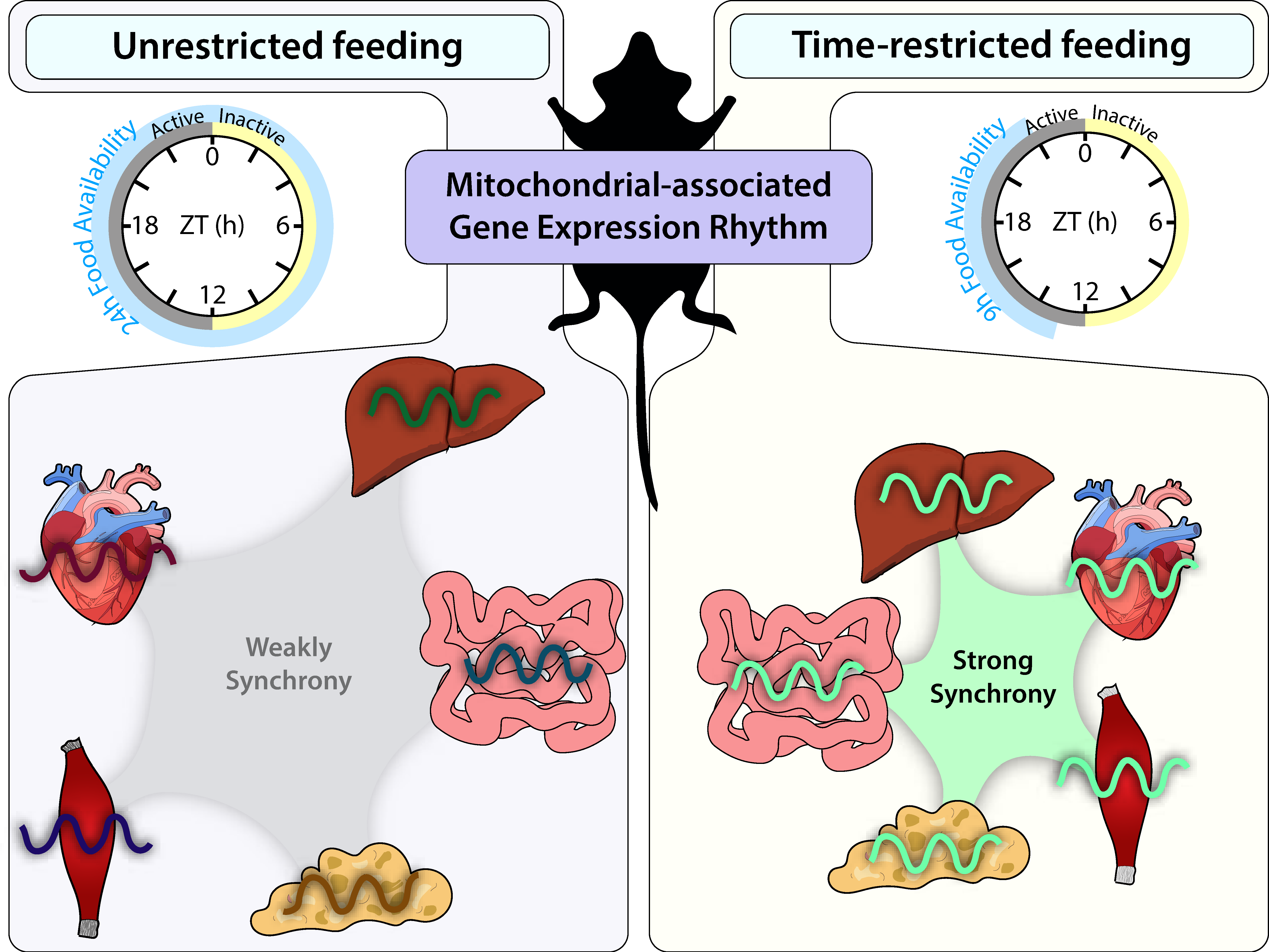
Rather than focusing on individual tissues, we asked whether mitochondrial-associated genes displayed coordinated timing across organs. We then compared two feeding schedules. In one condition, mice could eat whenever they chose. In the other condition, food access was restricted to a consistent daily window—a dietary intervention known as time-restricted feeding or time-restricted eating.
Time-restricted feeding has attracted considerable scientific interest because it often improves metabolic health, even when calorie intake remains unchanged. Most explanations have focused on what happens within individual tissues. We wanted to know whether feeding time might also influence coordination between tissues. The results revealed a striking pattern.
With unrestricted feeding conditions, many mitochondrial-associated genes displayed daily rhythms within individual tissues. However, relatively few showed synchronized timing across large portions of the body.
Under time-restricted feeding, that picture changed dramatically. Many more mitochondrial-associated genes began oscillating together across tissues.
Organs that normally appeared to operate more independently now seemed to follow a more coordinated daily schedule. It was as though the orchestra had become more synchronized, and thus, one could finally hear the symphony.
Evidence of Strategic Synchronization of Mitochondrial Activity
What fascinated me most was when this coordination occurred. Many of the strongest synchronization events appeared around major behavioral transition points—when animals moved from rest to activity, from activity to rest, or between fasting and feeding states.
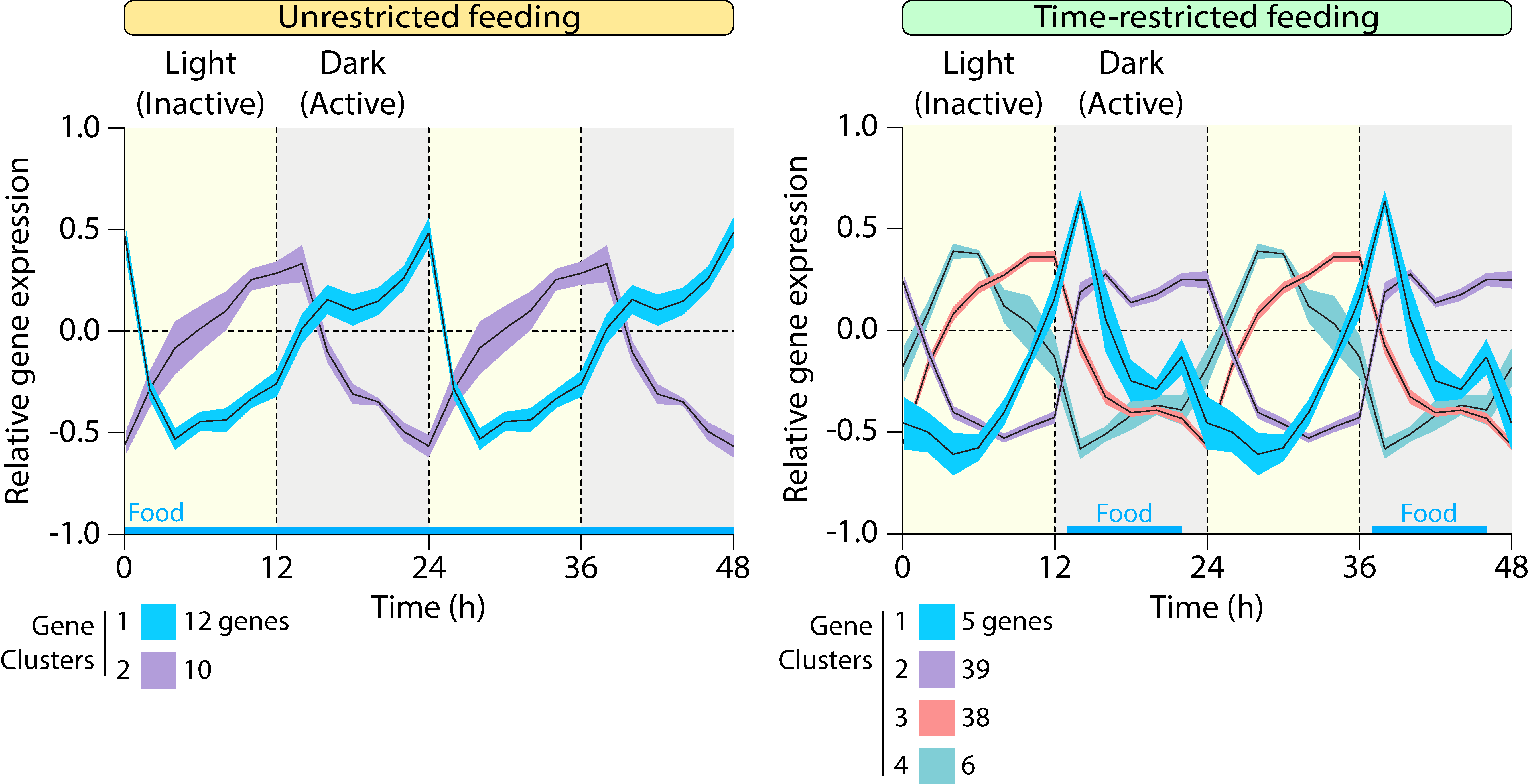
This observation suggests that mitochondrial-associated programs may be particularly important during periods when the body must rapidly reorganize itself to meet changing physiologic demands.
From an evolutionary perspective, this makes intuitive sense. Animals live in environments filled with reoccurring patterns. Food tends to arrive at predictable times. Activity and rest often follow regular cycles. Rather than constantly reacting to the world moment by moment, biological systems may benefit from anticipating what comes next.
One of the most intriguing observations from our study came from a mitochondrial-associated gene called Coq10b. Under normal conditions, expression levels of this gene were closely aligned with feeding schedules.
When feeding time was shifted, however, the rhythm of Coq10b shifted as well, regardless of whether food was provided during the animals’ active or inactive period. This suggested that the gene was highly responsive to the timing of food availability.
We then asked what would happen if food failed to arrive. Surprisingly, when mice experienced an unexpected fasting challenge, the rhythm persisted.
Rather than immediately disappearing, Coq10b continued to oscillate according to the schedule established by previous feeding patterns. This observation suggests that mitochondrial timing programs may be shaped by more than the immediate presence of nutrients.
In some cases, they may reflect an organism’s prior experience with recurring environmental events. In other words, mitochondrial-associated systems may not simply react to predictable behaviors such as feeding—they may help prepare the body for them.
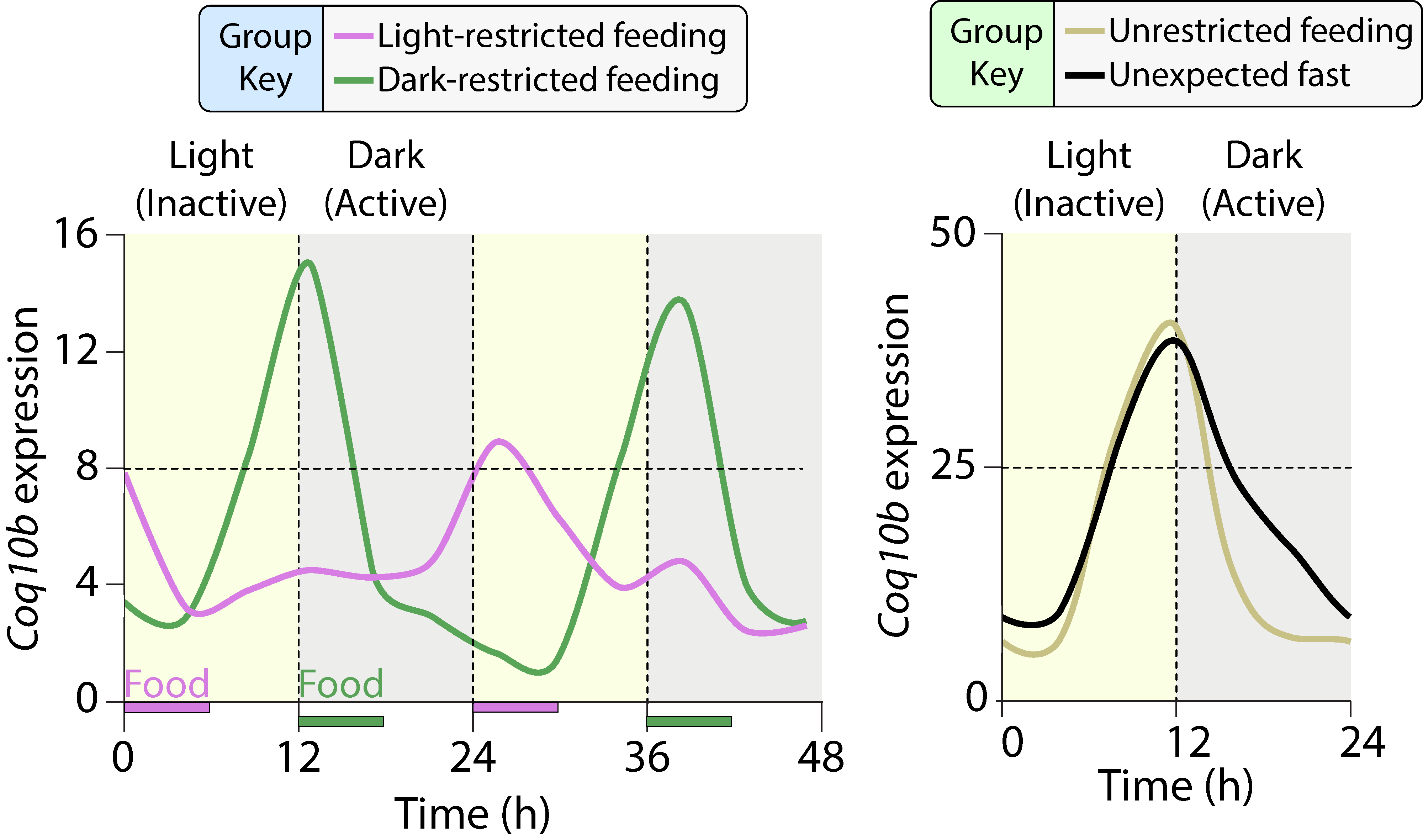
While this finding emerged from a single gene, it echoes a broader pattern observed throughout our study. Across many tissues, mitochondrial-associated programs appeared to become synchronized around major behavioral transitions, such as feeding, fasting, activity, and rest.
We do not yet know what mechanisms generate this coordination. It is possible that the synchronized patterns may arise from shared hormonal, neural, nutritional, and/or circadian signals.
It’s important to be clear that our findings in this study do not demonstrate direct communication between mitochondria in different tissues. Nevertheless, the results suggest that mitochondrial-associated programs across the body may be responding to common organizing cues.
What Our Findings Mean in the Context of Metabolism and Health
The results from our research on the coordination of the expression of mitochondria-associated genes across the body reflects a broader shift in how I think about metabolism.
Traditionally, we study organs one at a time. We ask what the liver is doing, what the heart is doing, or what the brain is doing. But organisms are not collections of isolated tissues. They are integrated systems.
Our findings suggest that understanding metabolism may require us to study not only what happens within organs, but also how organs remain coordinated with one another across time and space.
Intriguingly, the synchronized patterns we observed often emerged around major behavioral and environmental transitions—periods associated with initiating waking, feeding, fasting, or rest.
This raises the possibility that mitochondrial timing programs help align physiology not only across tissues, but also with predictable events occurring in the external world.
With this view, metabolism is not simply a collection of biochemical reactions responding to immediate demands. It is part of a larger adaptive system that prepares organisms for recurring patterns in their environment.

This study represents important progress, but many questions remain.
What signals help synchronize mitochondrial rhythms across tissues? Does aging gradually fragment these patterns of coordination? Do metabolic diseases disrupt them? And could some of the benefits of behavioral interventions—such as exercise, meal timing, or light exposure—arise because they help restore temporal organization across the body? We do not yet know.
What our work suggests is that biological energy systems may be organized not only in space, but also in time. And understanding how the body’s mitochondrial orchestra stays in tune may reveal new insights into health, disease, and the remarkable coordination that makes complex life possible.
We’re excited to be assembling a community around the Science and Experience of Energy with this Substack. We hope to bring people together to reflect on connections between energy science and the human experience.
If this post resonated with you, please consider sharing it with others.

Great piece, Dylan. Thank you!
Really interesting. We tend to think of food as fuel, but food is also information.
What fascinates me is that meal timing is just one of many environmental cues the body uses to organize itself. Light, temperature, activity, social rhythms and food all help synchronize biological processes across the day.
I increasingly find myself wondering whether the circadian system is not just a clock, but the body's primary resource-allocation system—helping decide when to digest, repair, defend, restore and perform. Meal timing may be one of the signals that helps the body anticipate when energy will arrive and prepare accordingly.
Perhaps many modern health challenges stem not only from poor inputs, but from increasingly fragmented timing signals.