

LIVED EXPERIENCE
This week’s TSEE guest writer Peggy Arnold is a speech and language therapist, mother of two, and independent systems thinker. Her curiosity and interest in physiology, metabolism, and complex biological systems connects clinical observation and personal experience around the kind of unexplained physiological instability that affects hundreds of thousands of people. In this post, she explores how energy flow, transport, and accessibility shape biological function across scales. We hope you find her perspective valuable.

I turn fifty this year. Outwardly, I appear healthy, but my body tells a different story. Seventeen years ago, a severe infection marked the beginning of a long chain of diagnostic dead ends. My laboratory values remained largely normal—apart from persistently elevated liver enzymes—even as my functional capacity steadily declined.
Seeking Answers for My Own Medical Mystery
Over the years, I immersed myself in metabolic research, searching for explanations that could reconcile my lived physiological experience with the reassuring picture presented by standard diagnostics. I explored nutritional interventions, glucose regulation, insulin resistance, fasting, ketosis, and metabolic health. Many of these frameworks offered valuable insights, yet none fully accounted for the patterns I observed.
At the onset of menopause, I followed prevailing endocrinological recommendations and began hormone replacement therapy (HRT). Rather than improving my condition, this coincided with a progressive deterioration that culminated in a profound systemic crash. This forced me to consider that the primary problem might not reside within any single hormone, signaling pathway, or organ system.
The diagnostic dead ends, metabolic experiments, and conceptual framework that emerged from these experiences have been explored elsewhere. Here, I want to focus on the observations that eventually led me toward a biophysical interpretation of metabolism.
By then, many of the pieces were already present. The framework had taken shape over several years as recurring observations, patterns, and unresolved questions. What I lacked was the language capable of connecting them.
Physics entered my life only eighteen months ago.
One evening, after an intense jump-rope session, I rushed to my husband with a sketch of a few cells and pointed to the space between them—the interstitium.
“Only here, again and again,” I told him. “Whenever I create a deep gradient between the inside and the outside, regardless of the absolute value on my CGM (Continuous Glucose Monitor), is when I feel well.”
My husband, a physicist, studied the drawing.
“Well, that sounds like diffusion,” he said.
Following that thread led me to Adolf Fick and the laws governing the passive transport of matter down concentration gradients.
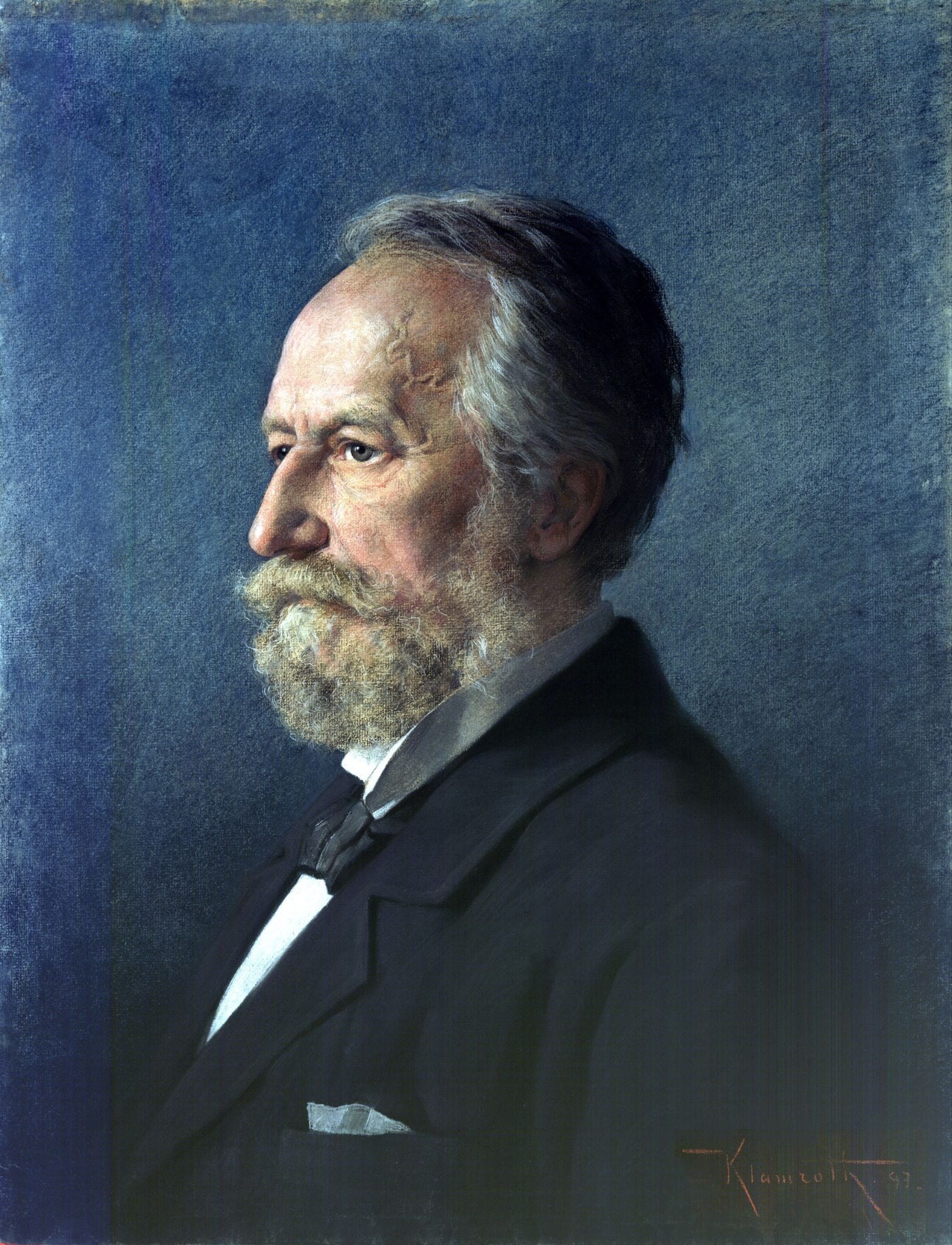
Fick’s laws of diffusion gave meaning to patterns I had been observing for months.
In the conversations that followed, I described the physiological patterns that had puzzled me for years.
My worst episodes occurred not when my CGM readings fluctuated, but when they became unusually flat. This state of physiological stasis, in which concentration gradients seemed to vanish, brought blurred vision, brain fog, overwhelming thirst, and profound energetic collapse. Eventually, the system would undergo a major physiological shift, often accompanied by intense heat.
His response was immediate.
“From what you are describing, you need to look into entropy.”
The word hung heavily in the room, but that conversation changed how I thought about biological architecture.
Biological resistance is not a static barrier but a dynamic, multiscale transport constraint determined by the physical structures through which energy and matter must travel.
No biochemical analysis of fuel selection—whether carbohydrates, ketones, or lipids—is complete without considering the transport conditions that determine whether these fuels can reach the metabolic machinery that depends upon them.
Fick explained why gradients mattered. But he did not explain why movement could repeatedly restore my sense of energy and physiological function. For that, I eventually found myself exploring the work of Peter Mitchell.
The Arnold Resonance Model (more on this in a moment) quietly took shape over roughly two years as a series of disconnected observations, recurring patterns, and unresolved questions.
The philosophical essays I published are an attempt to weave these fragments into a coherent narrative and offer them as a conversation with science about a biophysical interpretation of metabolism.
The Preclinical Corridor: Compensation Before Collapse
What became increasingly apparent to me was that disease does not begin when a biomarker crosses a clinical threshold.
Long before diagnosis, biological systems may enter what could be called a preclinical corridor—a prolonged phase in which function deteriorates while conventional measurements remain normal.
Stability, in this context, does not necessarily indicate health. It may be compensation. The organism preserves the appearance of equilibrium by expending regulatory capacity. Hormones, autonomic responses, vascular adaptations, behavioral changes, and cellular stress responses work together to maintain function despite rising resistance within the tissue microarchitecture.
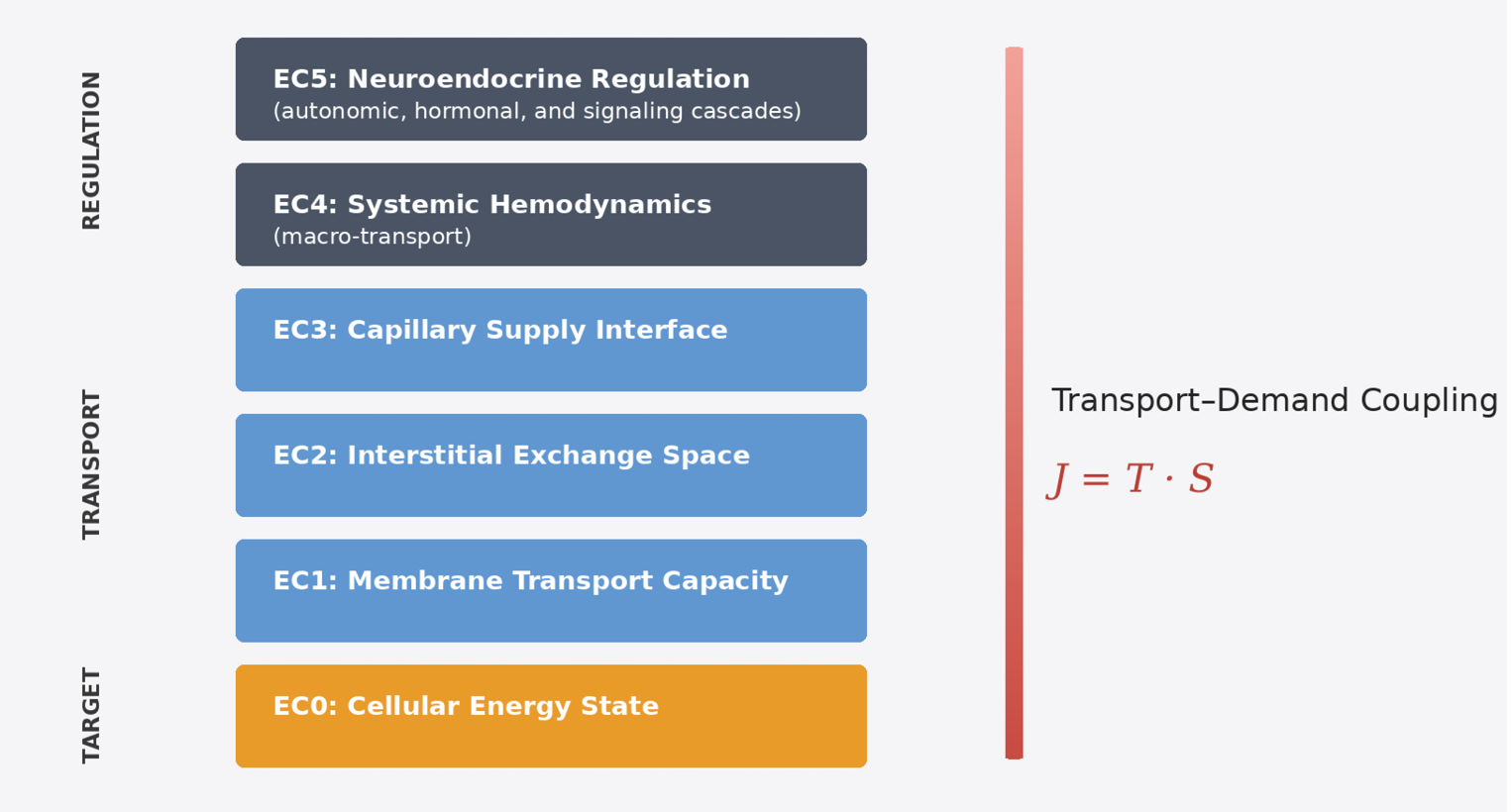
This observation led me to a question that extends beyond classical metabolism: What if many forms of dysfunction don’t primarily arise from a lack of energy, but from increasing difficulty in accessing and distributing energy where and when it is needed?
What began as an attempt to understand my own physiology gradually evolved into a broader inquiry: are living systems fundamentally organized around the continuous coupling of demand, transport, and accessible energy across scales?
The Principle of Transport–Demand Coupling Across Scales
Living systems may be defined by the dynamic coupling of transport and demand. While biology often treats supply as the primary variable of interest, organisms frequently behave as though demand helps shape supply. For example, delivery of fuel molecules and metabolic demand are reciprocally coupled, driving the continuous remodeling of the networks for transporting these molecules.
Demand is not fixed. It depends on context and arises from function.
Whether mounting an immune response, performing muscular work, adapting to cold, processing information, forming memories, repairing tissue, or responding to environmental challenges, transport systems continuously reorganize around changing metabolic requirements.
When this logic functions well, resources are directed where metabolic flow is needed, from local capillary recruitment to mitochondrial respiration. When demand declines, stasis can degrade the transport networks themselves. Our bodies are designed to address the same challenge across levels: moving matter and energy through a resistant medium.
Intracellular scale: Mitochondria and gated channels match energy production to demand, maintaining life-sustaining gradients.
Tissue scale: The architecture and fluid dynamics of the interstitial space shape nutrient access and waste removal across the capillary–interstitium–cell interface.
Hemodynamic scale: The vascular network continuously adjusts pressure, flow distribution, and exchange capacity, shaping the gradients that drive downstream transport.
From Networks to Flow Fields
Recent years have seen growing scientific interest in the interstitium, suggesting that a previously underappreciated aspect of physiology may be coming into clearer focus. Yet much of the prevailing language still reflects a structural view of interstitial spaces and fluid transport.
Classical physiology emphasizes branching pathways of fluid-filled spaces, while newer network-based descriptions focus on connectivity of these spaces throughout the body. Both perspectives may understate the variable conditions that govern exchange within an organism.
From my perspective, it may be useful to consider a different lens.
Rather than viewing the interstitium primarily as a distribution system—or even as a network of interconnected spaces—it may be more informative to think of it as a dynamic flow field shaped by gradients, geometry, and time-dependent patterns of exchange.
This shifts attention away from predefined pathways and toward the conditions that make transport possible. Movement emerges not simply from anatomical connectivity, but from the interaction of local gradients, physical constraints, and changing metabolic demands. In this view, transport, resistance, and demand are different expressions of the same underlying dynamics.
If virtually every cell exists within an immediate exchange environment, then the interstitium may be less usefully understood as a discrete anatomical compartment and more as a continuum of exchange processes across multiple levels of biological organization.
What appears structurally fragmented may function as a coordinated field emerging from countless local interactions.
Viewed through this lens, the interstitium becomes interesting not merely as a transport space, but as a possible site of physiological coordination. Gradients are continuously created and dissipated. Local demand alters energy accessibility, energy accessibility influences transport, and transport reshapes the energetic landscape from which new gradients emerge.
This perspective invites a comparison with dissipative structures.
Living systems maintain their organization through continuous flows of energy and matter while operating far from thermodynamic equilibrium. If this principle extends into the exchange environment surrounding cells, then the interstitium may participate in the formation of accessibility patterns through which energy and matter are distributed across scales.
Whether this view ultimately proves useful remains an open question. Nevertheless, it offers a framework in which the interstitium can be considered not simply as a passive space between biological structures, but as a dynamic context through which energetic and metabolic requirements may become coordinated across scales.
To visualize the shift from traditional branching networks toward a flow-field-based description, it is helpful to return to the fundamental physics of diffusion.

Resistance as a Necessary and Dangerous Property
An important insight emerging from recent work on the Energy Resistance Principle (ERP) is that resistance is not inherently pathological.
As Martin Picard and Nirosha Murugan write, living systems require a finite level of resistance because “without resistance, no work can occur.” Resistance is therefore not merely an obstacle to energy flow, but a necessary condition for biological transformation and organization.
This perspective resonates across physical systems. A river without friction cannot shape a landscape, an electrical circuit without resistance cannot perform useful computation, and a biological system without energetic constraints and thermodynamic gradients cannot generate structure or maintain order.
The question is not whether resistance exists, but whether it remains proportionate to transport capacity. When resistance exceeds a system’s ability to compensate, energy accumulates upstream while downstream regions experience functional scarcity.
This pattern appears across scales. Glucose may accumulate in the bloodstream while cells remain energetically constrained. Fluid may accumulate in tissues while local exchange deteriorates. Information may accumulate in networks while effective communication declines.
In each case, abundance and scarcity coexist within the same system, separated not by supply, but by resistance to flow.
From this perspective, health may depend not on eliminating resistance, but on maintaining a dynamic balance between resistance, transport capacity, and demand. Too little resistance permits no meaningful transformation. Too much impairs flow and fragments access to resources. The challenge for living systems is the continuous regulation of resistance across scales.
Beyond Biology: A Different Way to Think About Disease
At a certain point in my journey, I began to wonder whether my diverse symptoms might reflect a common underlying problem rather than multiple unrelated dysfunctions. By comparing CGM patterns with my subjective sense of energy and well-being, I gradually developed an intuitive picture of fluctuating accessibility within the system. In my mental model, this often appeared as changing degrees of openness and resistance at the level of my cells.
Because the symptoms affected many functions and organ systems, I eventually stopped thinking in terms of isolated organs and began thinking in terms of architecture. The question was no longer which organ was failing, but whether a common transport problem might manifest differently across the entire system.
Only later did I discover that others had explored similar ideas from very different directions. Reading the work of Philip Ball, I had a surprising moment of recognition.
Concepts that had emerged from my personal observations seemed to resonate with broader discussions of pattern formation, physical organization, and emergent order in living systems.
The most unexpected consequence of this journey was not a new way of looking at disease, but a new way of looking at the world. The actors, materials, and scales differ, yet the underlying challenge remains similar: how can complex systems maintain coherence while energy, matter, and information move through constrained pathways?
As evidence accumulates, many chronic disorders—from diabetes and cardiovascular disease to neurodegeneration, menopausal symptoms, Long Covid, and cancer—appear to converge on disturbances of metabolism and energy regulation.
This raises the possibility that health and resilience reflect a common organizational principle: the continuous coupling of demand, transport, and accessible energy across scales.
If so, many medical specialties may be observing different manifestations of the same underlying challenge. Rather than beginning by looking for problems with individual structures or physiological systems with the usual diagnostic categories (e.g. hormonal, mitochondrial, inflammatory, vascular), perhaps we should start with a more general question. Are energy and resources able to reach the right place, at the right time, in amounts sufficient to meet demand? The familiar categories do not disappear; they become possible explanations for why our adaptive capacity succeeds or fails.
Viewed through this lens, the challenge for medicine may be not only to discover isolated mechanisms, but also to consider the recurring architecture that connects them.
This framework does not attempt to specify the molecular mechanisms underlying every transport constraint. Instead, it begins with observable patterns of gradients, accessibility, compensation, and flow, and asks whether these patterns reveal common organizational principles across biological scales. The underlying mechanisms remain an empirical question.
What fascinates me most about this perspective is its simplicity. In everyday life, especially while learning to navigate insulin therapy, my task is often reduced to a surprisingly simple goal: restoring flow and accessibility.
In that sense, it is striking that concepts of flow have existed for centuries in many Asian traditions, expressed in a language that is intuitive and directly observable. Whether these traditions describe the same phenomena remains an open question. Yet they remind us that complex systems are often experienced long before they are fully explained.
Perhaps most importantly, this perspective invites dialogue between disciplines that rarely speak to one another. Physiology, metabolism, systems biology, ecology, physics, and even the social sciences may be asking related questions from different vantage points.
Rather than a conclusion, this perspective is best understood as an invitation.
Subscribe to Peggy’s Substack sugar2cell to read more about metabolism beyond markers. Her posts discuss energy gradients, access, and lived physiology.

Peggy, thank you. This was a very interesting read, and I think I am arriving at a very similar hypothesis with regard to mental health.
My sense is that mental wellbeing also depends on a kind of equilibrium between our internal models and external reality. When change threatens those internal models, resistance arises in an attempt to resolve the stressor. This resistance can be adaptive if it actually helps us respond to what is happening and return to equilibrium.
But if resistance becomes maladaptive, we may keep expending energy trying to resolve something that cannot be resolved in that way. This depletes our reserves, while also deepening the disequilibrium between internal models and external reality. Eventually this may appear as disorder: distress and/or dysfunction. But the misdirected resistance begins well before pathology becomes apparent. By the time pathology is visible, the system may already be depleted.
I wonder whether this partly relates to findings around metabolic factors in mental health. In the example I am describing, metabolic dysfunction may be secondary: the result of prolonged misdirected resistance and energetic expenditure. But it could also be primary in some cases, where the system never had the regulatory capacity available to resolve the stressor and return to equilibrium in the first place.
I would be really fascinated to hear your thoughts.
I have written about this in my essays on “The Thermodynamics of Distress” and “When Suffering Becomes Pathology,” and I think you and the team at Energy Science may be uncovering the physical/biological correlates of what I am trying to describe more conceptually.
“Resistance is therefore not merely an obstacle to energy flow, but a necessary condition for biological transformation and organization.
This perspective resonates across physical systems” not to butt in, but I’ve been following you with extreme interest as I work with resistance as a psychoanalyst, and predominantly a drive theorist. I mostly work clinically with presenting resistance, and I’m considering your theories both psychologically/ physiologically as well. I believe your modeling is cutting edge on so many levels, for what it’s worth.