


BEHIND THE PAPER
Full-Text Link to Primary Source

The Energy Resistance Principle (ERP) has changed how we think about life, biological energy, and the human experience. In this post, we share with the TSEE Community what inspired the ERP and a new video about how it applies to health, disease, and to our everyday lives.
The Missing Variable
Nothing is free in biology. Everything costs energy.
To stay alive and thrive, cells require the continuous flow of electrons towards oxygen—the ultimate electron acceptor in your mitochondria.
The food you eat provides the electrons. Your metabolism sequentially rips them off the carbon backbone of fats, carbs, and proteins one by one. And it’s in your mitochondria that the final step takes place: electrons meet with oxygen, turning into water.
Yes, your mitochondria ooze water. Cooling down the fire of metabolism that burns within you.
When energy—here, electrons—flows efficiently, biological systems function efficiently. But when energy flow becomes constrained, the organisms experience stress, dysfunction sets in, disease risk increases, and aging accelerates.

People living with mitochondrial diseases illustrate this clearly. For example, when someone’s mitochondria can’t keep up with energy demand, electrons accumulate in the body (called reductive stress), people tend to experience debilitating fatigue, and to die earlier than people whose mitochondria flow energy efficiently.
Science has brought us to a place where we understand that energy isn’t just a nice-to-have thing. Any scientist would agree that energy flow is fundamental to life. It’s not like a vitamin you can skip eating for a few days while you fast. Energy flow and transformation is a vital process that takes place every second.
Your metabolism burns like an uninterrupted flame. It’s been passed on from generation to generation, since the beginning of life.
That’s why you must breathe continuously. It’s why your life started with a first breath. And why it will end with a last one.
Every breath we take ultimately serves one purpose: precious oxygen rushes through your cells, drawn by an irresistible concentration gradient, descending into your mitochondria to keep those electrons coursing through the metabolic circuitry of your body.
All this flow to keep life going.
That uninterrupted process has sustained life on Earth for billions of years.
Yet despite decades of research into metabolism, we have lacked a simple framework for thinking about how energy behaves inside living systems. How is the balance between energetic demand and energetic supply maintained?
And what happens when that balance is lost—not only in cells and organs, but across the organism as a whole?
The Energy Resistance Principle, or ERP, was developed to explore those questions.
The Energy Resistance Principle (ERP)
At its most fundamental level, energy is the potential for change.
For energy to be transferred or transformed in a system, it needs to flow through some sort of conductive material. Think about how electrical energy flows through conductive copper wires to power the lights in your home.
What is the equivalent conductive media in your body?
Our bodies are a network of about 5,000 trillion metabolically-connected mitochondria. Our breathing mitochondria and other metabolic enzymes bridge your digestive tube to cytochrome c oxidase—the final enzyme in the mitochondrial electron transport chain. This is what enables energy metabolism.
Metabolism is your body’s conductive media—like the copper wire in electrical circuits—that allows energy to flow and transform in your cells.
Ultimately, we are fleshy energetic circuits with electrons flowing through our metabolism. That diagram from the ERP paper illustrates this:
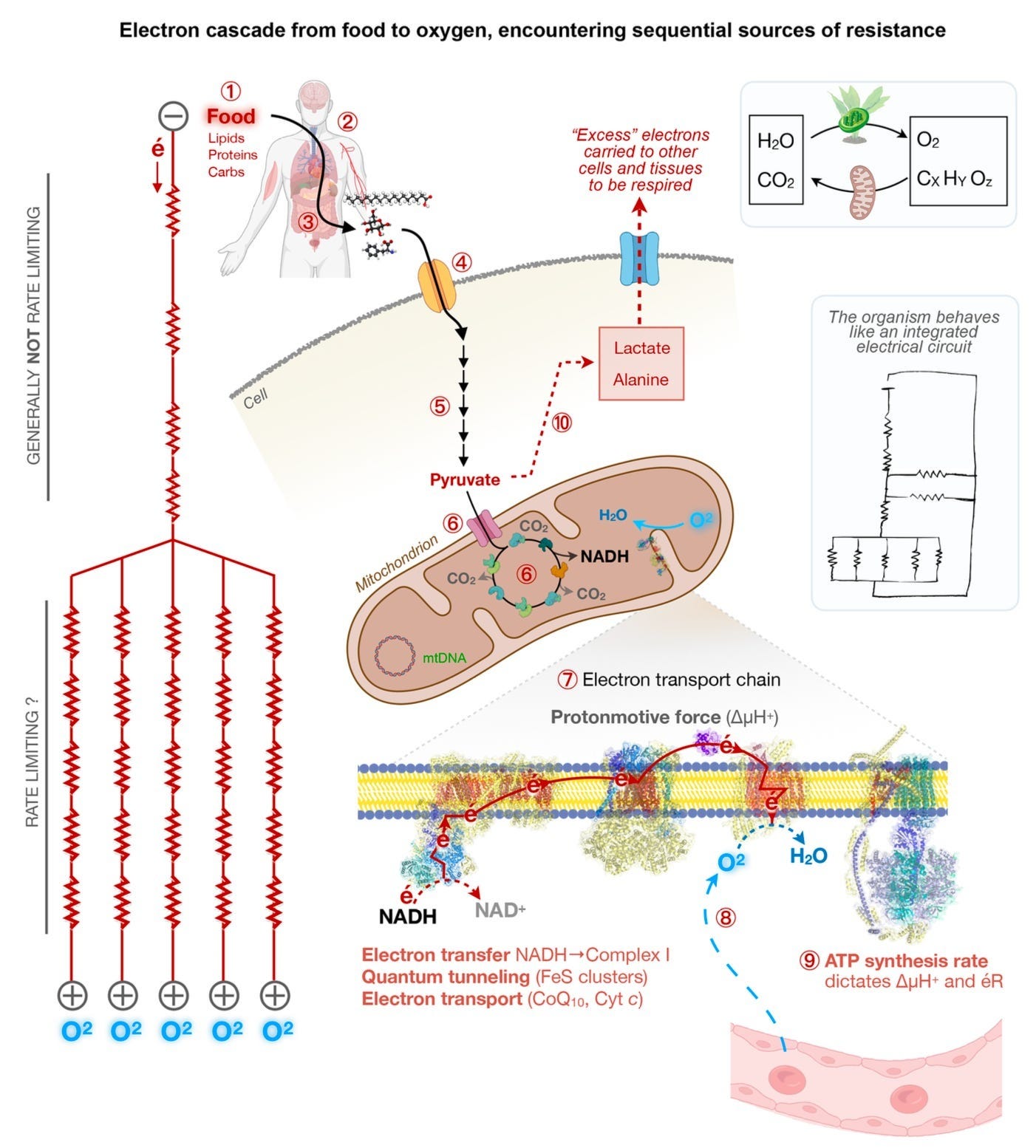
The Circuit Analogy, Thinking Beyond Molecules
Typical conductive materials don’t just offer a path for energy to flow, they also provide resistance. That’s true of simple electrical circuits.
In simple, resistive electrical circuits, if resistance is zero, it doesn’t matter how many electrons flow, the power is going to be zero. There are two simple formula predicting this, called Ohm’s Law and the Power Law.
And by tweaking resistance in more complex circuits, you can direct where electrons flow.
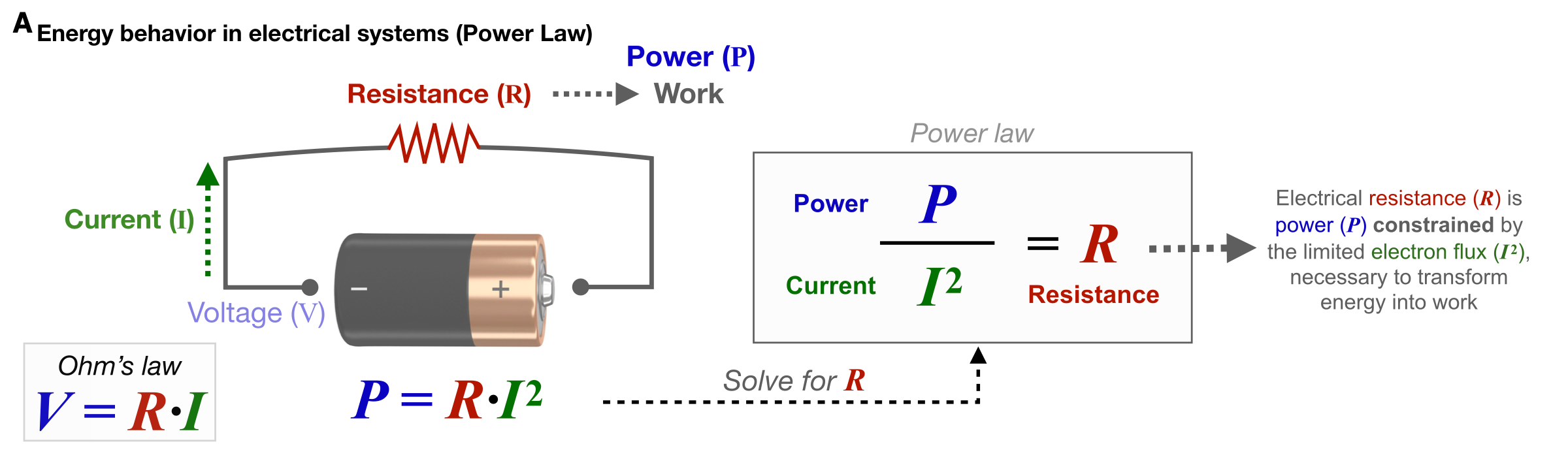
It turns out that biological systems also use resistance to direct energy, for example, the energy carried by your blood. If the body wants to send more blood or energy to your muscles when you run, it closes off (i.e., increase vascular resistance) the arteries to your gut, and loosens off (i.e., decrease vascular resistance) to those of your legs.
And voilà! Energy diverted from one place to another, by tweaking vascular resistance.
From this idea, we began to conceive of a generalizable principle—one that reframes energy metabolism not simply as molecular process with enzymes and metabolites, but one where electrons flow from food to oxygen—as if in a circuit, also regulated by resistance.
For more details about the underlying science behind the ERP, check out our prior post. But the central idea was applying the Power law in the context of energy metabolism.
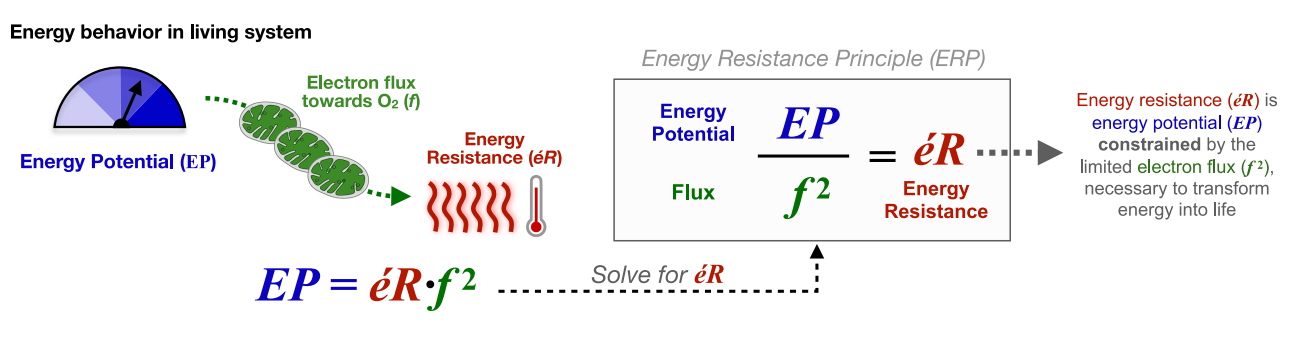
In a funny way, we also noticed in discussion with our good friend Judyann McNamara that the Power Law and consequently the ERP matched in structure the simplified version of Einstein’s famous mass-energy equivalence principle: E=mc2.

This is likely a meaningless coincidence. But it helped us think about the general principle—it was useful food for thought. So we included it in the paper in case it sparked something useful.
The basic ERP-inspired equation EP/f2=éR isn’t meant to be an all-encompassing explanation of exactly what is happening in biological systems. Instead, it’s meant to be an accessible heuristic—a useful starting point for people to think about biological energy in a dynamic way.
The Energy Resistance Principle and the formula it inspired need to be further tested and refined. For now, it provides a coherent, unifying structure grounded in physical laws and in what we know of biology.
It serves as a springboard for scientists and any of us to start testing and exploring the science and experience of energy.
What Does Energy Resistance (éR) Feel Like?
A few common situations illustrate what it might feel like when energy resistance creeps up in our bodies.
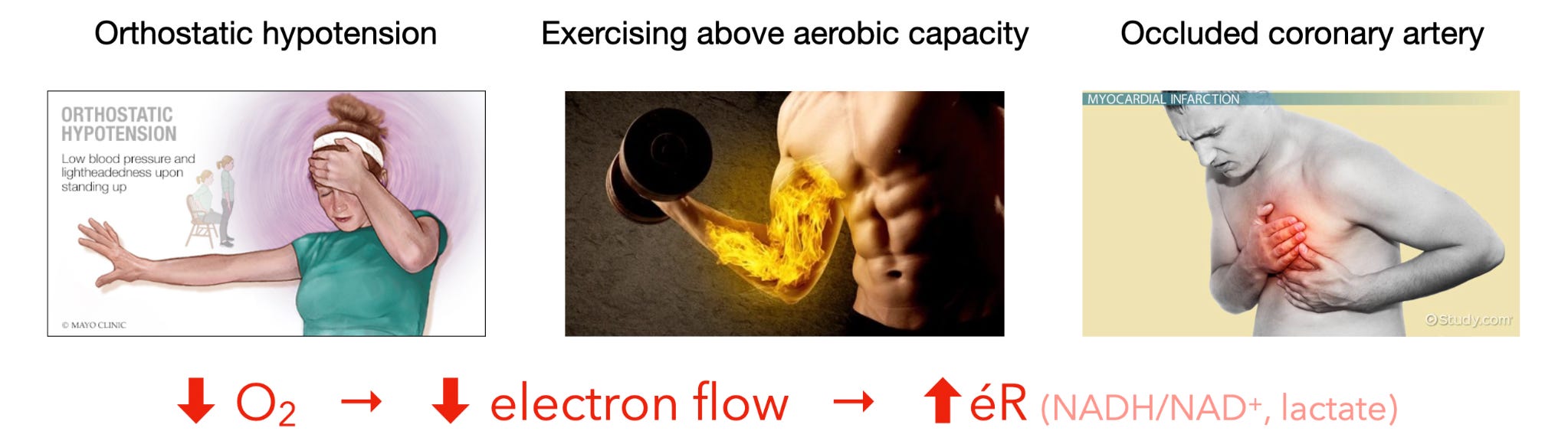
Brain fog
The first is when blood flow to your brain decreases. Have you ever experienced getting up too fast and feeling light-headedness, or feeling faint?
What happens in this situation is that blood flow to your brain decreases. Less blood flow, less oxygen for your mitochondria to flow electrons, so electrons quickly start to stall—flux, the denominator in the ERP-inspired formula, drops.
So in this case, decreased blood flow (lowers f) despite sustained work (EP, given the brain’s constantly high metabolic rate), which rapidly increases éR. The light-headedness could be many things.
The ERP suggests that the brain fog or light-headedness you experience may be the experience of elevated brain éR.
Burning muscles
Another situation where éR increases is during strenuous exercise.
Here, the contracting muscle increases EP. If the contraction is intense enough, and in particular if blood flow is occluded, the increase in workload isn’t followed by a proportional increase in oxygen and electron flux (f).
The result is a rapid increase in éR. And this might feel, or be experienced as discomfort—in the worse cases, if you don’t let up, that burning sensation of the last few reps in the gym.
Angina (chest pain)
And perhaps the worse, most acute we know of, when the heart mitochondria are oxygen deprived.
An analogous situation to the brain and muscles occurs when a coronary artery becomes partially occluded by a narrowing of coronary arteries, or a blood clot.
In this case, blood flow (f) stops to it cannot sustain the metabolic cost of cardiac tissue (EP). Again, éR must then increase precipitously.
The resulting sensation in the ischemic heart here is one of pain, pressure, and deep discomfort. Not because of some mechanical injury or damage—simply, it seems, because energy can no longer flow.
The ERP helps us think about a new possibility: might we experience the flow of energy directly? Or rather, the resistance or blockages to energy flow?
Do we experience energy resistance (éR) directly?
Why Temporary Resistance Helps Us Adapt
Another generally accessible experience of high éR is running out of breath.
Consider what happens when you hold your breath for an extended period of time. Try it now, if you wish.
At first nothing happens. Then a gradual dreadful feeling emerges. Where is the sensation? This time, the sensation is more diffuse than that in the oxygen-deprived brain, contracting muscle, or starving heart—it is generally in the chest area.
Running low on oxygen (and high on carbon dioxide, CO2) directly increases the resistance to flowing electrons in mitochondria. This drives éR up. And because we evolved to dislike and avoid excess éR, our animal instinct is to breathe.
Breathing relieves the discomfort of energy resistance.
If you’ve been holding your breath throughout this paragraph—breathe! Feel the relief of lower éR. Enjoy breath and the release of resistance in your mitochondria.
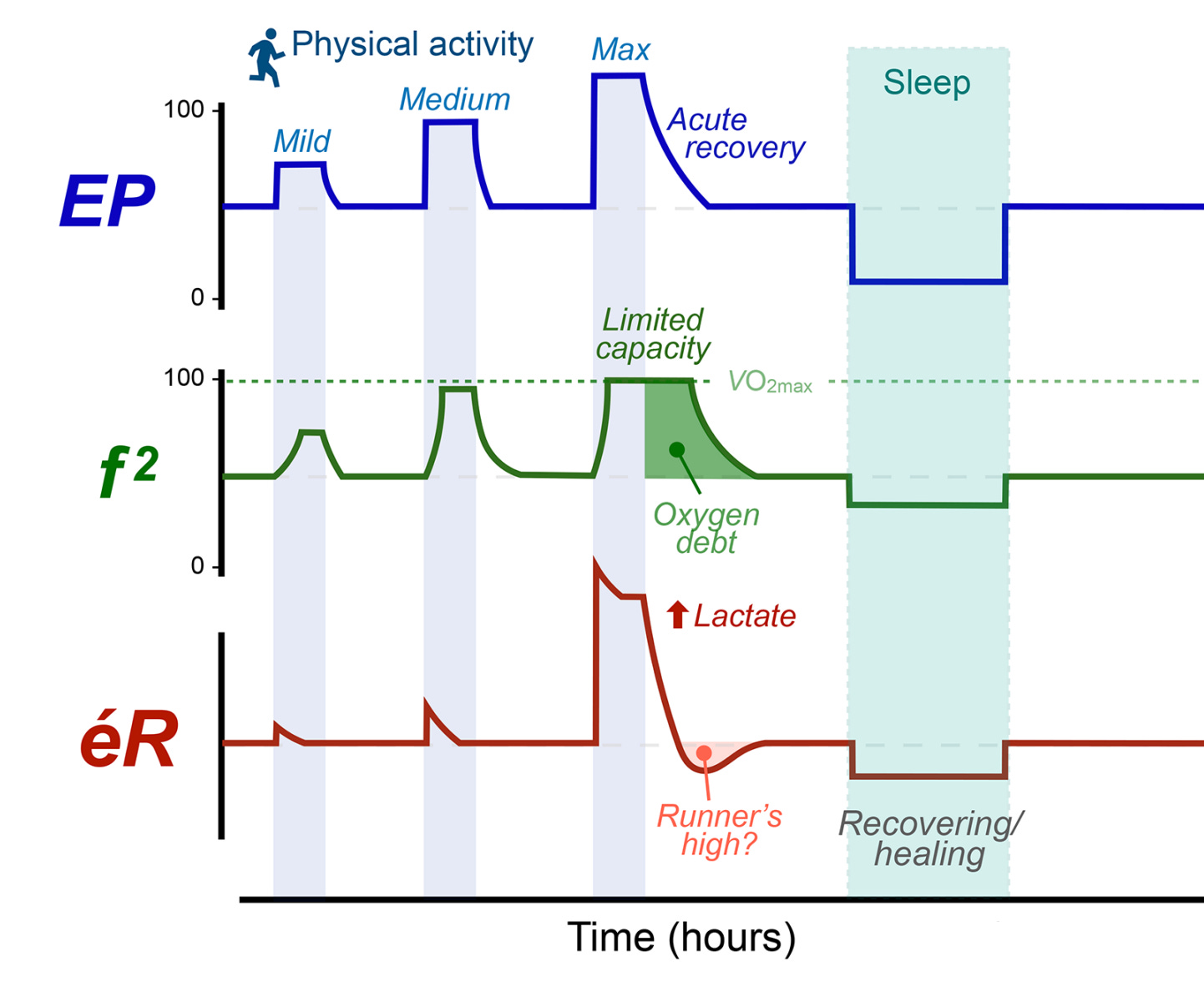
The schematic below is pulled from the paper. It shows what happens to the three terms of the ERP-inspired formula over time, as someone exercises at a mild, medium, and maximal intensity.
Notice that skeletal muscle éR only creeps up to uncomfortable level during the maximal intensity, as the mild and medium intensities didn’t overwhelm the system’s capacity to flux oxygen.
Sleep, on the other hand, evidence suggests although we still need to confirm this, likely lowers energy resistance across different organs and tissues.
Diseases as Consequences of Excess éR
We have decades of research showing how certain things increase disease risk, while others decrease risk. The ERP provides a framework to help us think about this.
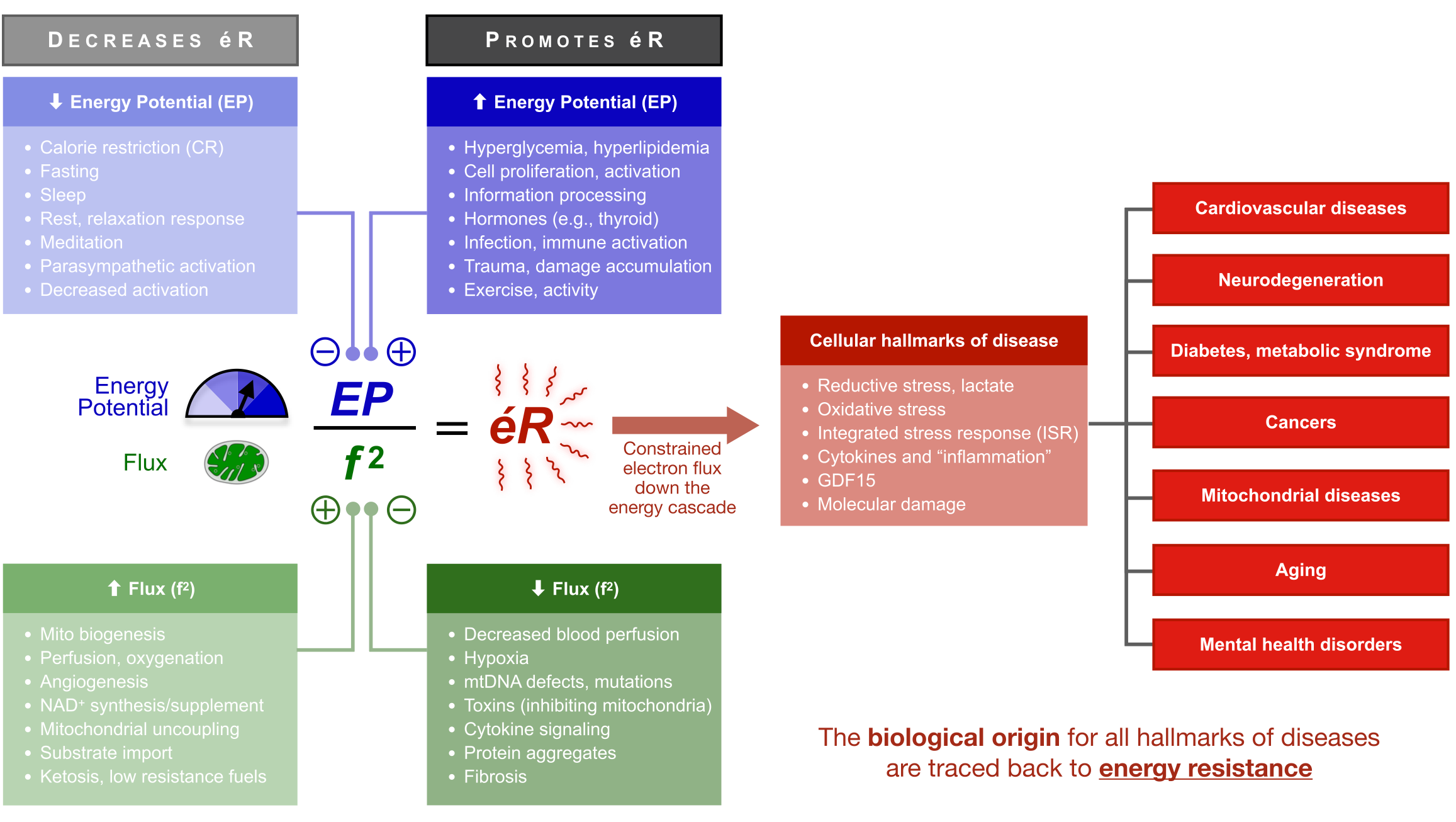
Based on several factors converging on either energy demand or supply, behaviors like eating less, sleeping, resting, relaxing, and meditation are predicted to reduce éR by decreasing energy potential (EP).
Based on factors converging on oxygen and electron flow through our metabolism, increasing the number of mitochondria, increasing oxygenation, growth of new blood vessels, ketosis, and other factors reduce éR by increasing flux (f).
Conversely, risk factors like hyperglycemia, immune activation, infection, trauma, damage accumulation, cell proliferation, and exercise are predicted to increase éR by increasing EP. While decreased blood flow, low oxygen, toxins, mitochondrial defects and mutations, protein aggregates, and other factors increase éR by reducing flux.
Evidence from clinical and epidemiological studies of the proposed energy resistance and reductive stress marker GDF15 (Growth Differentiation Factor 15) support these connections.
In the previous post introducing the ERP, we discussed what happens when energy resistance is too high for too long. Your body adapts to protect itself during brief increases in éR, but sustained high levels of energy resistance without sufficient recovery leads to degradation and disease.
All of the cellular hallmarks of disease appear to be mechanistically linked to energy resistance. Excess energy resistance could be a major upstream driver of disease and aging.
What Changes When We Think in Terms of Energy Resistance?
Every disease has its own molecular signature, so we’ve been thought to understand through a molecular-centric view. Cancer is not Alzheimer’s disease, and depression is not diabetes.
Yet many seemingly unrelated diseases share common energetic challenges: altered metabolism, impaired mitochondrial energy transformation capacity, inflammation, impaired perfusion, or increased energy demand. What is going on?
The Energy Resistance Principle does not replace genetics or molecular biology. It provides another level of description—one that asks how different biological processes ultimately influence the balance between energetic demand and the body’s capacity to transform energy.
Viewed through this lens, molecularly unrelated diseases become connected by a common feature: energy constraints and energy resistance.
Disease Snapshots
CANCER is often described as a disease of mutated genes and uncontrolled cell growth. From the perspective of ERP, those mutations also create an energetic problem. Rapidly dividing cells dramatically increase the work being performed by a tissue, often (but not always) raising energy demand.
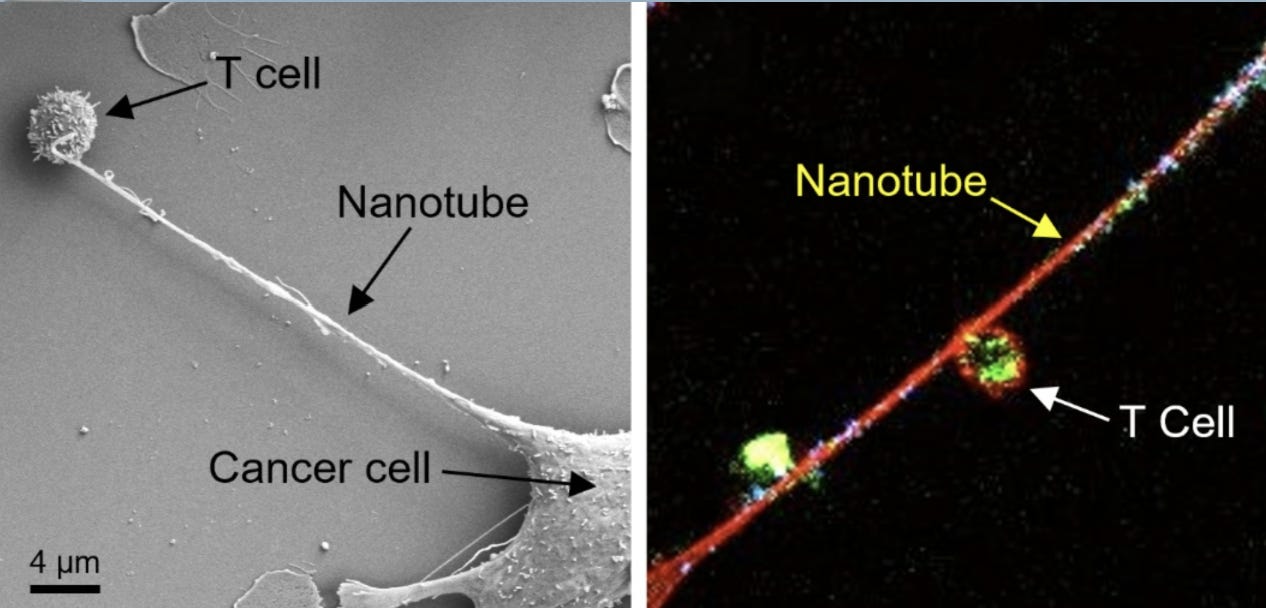
Tumors respond by rewiring their metabolism, recruiting new blood vessels, and competing aggressively for nutrients and oxygen. Recent studies suggest this competition may extend even further, showing that cancer cells can physically acquire mitochondria from neighboring immune cells through tunneling nanotubes, effectively drawing energetic resources away from the very cells attempting to eliminate them.
These are familiar hallmarks of cancer. The ERP simply frames them as different ways of managing the elevated energy resistance. GDF15 is also commonly elevated in people with cancer.
DIABETES is traditionally viewed through glucose and insulin signaling. ERP reframes diabetes as a problem of energy resistance.
Overly abundant blood glucose (hyperglycemia) pushes electrons onto the delicate biological circuitry of the body, increasing EP beyond what f can support, chronically increasing éR.
As a protective mechanism, muscle and other cell become “resistant” to taking in glucose, which is stimulated by insulin. Cells become insulin resistant. Insulin resistance is a protective mechanism against excess éR.
The result is not simply high blood sugar. It is a progressive increase in éR across all organs, which accelerates damage accumulation in vulnerable tissues.
NEURODEGENERATION is the progressive loss of brain structures and function. The brain has one of the highest energetic demand in the body. The demented brain seems to engage in excess protein synthesis, activates stress response pathways, and sustains neuroinflammation (activated microglia)—all converging on increasing energy demand, or EP. In parallel, long before neurons die in Alzheimer’s disease, researchers observe a decline in glucose metabolism, impaired blood flow, and impaired mitochondrial energy transformation capacity—indicating decreased flux f.
If the brain increases EP but decreases f, that’s bad news because it increases éR.
The ERP suggests that these brain changes represent different paths toward the same energetic state: increasing resistance. New studies show that GDF15 isn’t only elevated in Alzheimer's, but that it predicts Alzheimer’s disease over a decade ahead of time.
Excess energy resistance is bad news for the brain.
SEVERE MENTAL ILLNESSES are among the most biologically complex conditions we know. No single molecular pathway explains depression, bipolar disorder, or schizophrenia.
Yet many of these disorders are associated with altered mitochondrial energy transformation capacity, inflammation, oxidative stress, and changes in brain metabolism. In particular, recent studies demonstrate the existence of excess éR in the brain of people with schizophrenia and bipolar disorder. There is superb work by my colleagues Virginie-Anne Chouinard and Dost Ongur on this topic.
Many more studies of mental illnesses show elevated GDF15 in these diseases. And we recently found that acute mental stress increases blood and saliva GDF15.
The ERP does not reduce mental illness to energy alone. It suggests that diverse biological disturbances may converge on a shared energetic landscape that influences how the brain functions, and how we feel and experience life.
HYPERTENSION illustrates elevated resistance in perhaps its most literal form. Tighter blood vessels that make it harder for blood to flow increase the hydraulic resistance against which the heart must pump—every beat.
The cardiovascular system compensates by performing more work (EP), increasing energetic demand while simultaneously altering tissue perfusion. Over years, this imbalance contributes to damage throughout the body.
From an energetic perspective, hypertension is not only a disease of blood pressure—it is a disease of altered energy distribution, driven by excess resistance to flow.
Bridge to Therapeutics
One of the most interesting implications of ERP is that therapies that have different molecular targets may nevertheless converge on a common energetic outcome.
Exercise, meditation, sleep, ketogenic diets, psychedelic-assisted therapy, photobiomodulation, vagus nerve stimulation and patterned electromagnetic stimulation certainly act through distinct biological pathways.
Yet many appear to improve metabolic efficiency, tissue perfusion, inflammation, and/or enhance mitochondrial energy transformation capacity.
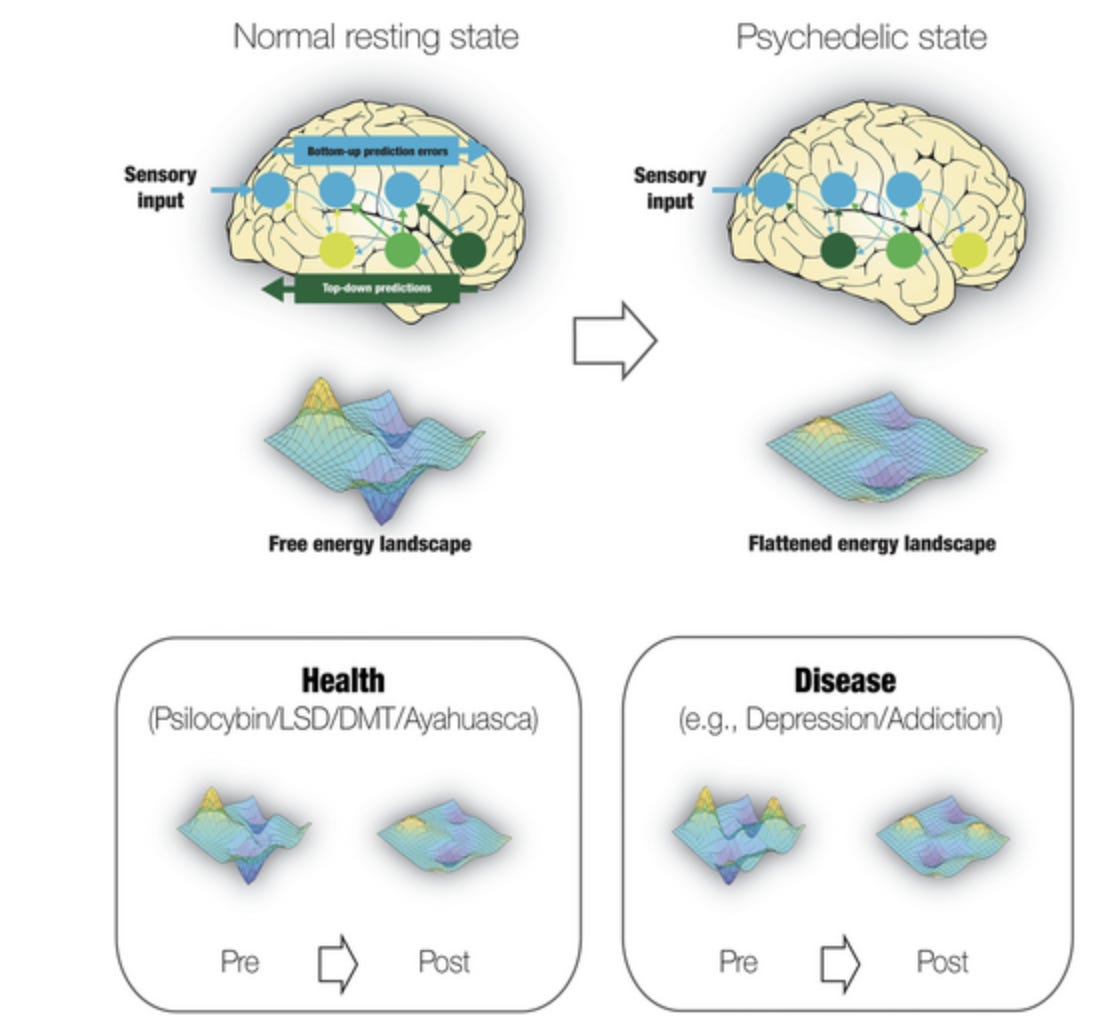
Rather than investigating whether these interventions share the same molecular mechanism, leveraging the ERP may help us explore whether they ultimately reduce energy resistance by lowering energetic demand, increasing energetic flux, or both.
This principle provides a framework for comparing therapies that have traditionally been studied in isolation and may help explain why interventions with very different mechanisms can produce overlapping or potentially new clinical benefits.
How the Energy Resistance Principle Can Inspire Future Research
Since the ERP paper was published in November 2025, we’ve heard from other dozens of scientists and clinicians interested in applying the principle to their own work.
This principle provides a new way for people to think about how health and disease emerge. What if diseases like cancer or diabetes, and even poor mental health were driven by excess energy resistance?
What if biophysical treatments can help restore the balance of energy resistance to improve health?
Perhaps, then, interventions of behaviors that decrease energy resistance—like exercise training, not eating too much and/or cutting sugars, and learning to relax with meditation—could have broad trans diagnostic effects.
Different biophysical therapies can also be explored through the lens of the ERP. That may help us better understand how they work, and how they can be optimized for each individual based on their unique energy status.
Some interventions work well for some people, some not so much. The ERP could become a fruitful path to design and evaluate personalized health-promoting interventions.
This framework may also inspire new technologies and therapeutics designed to modulate energy flow more directly, from ionic potentials, electromagnetic patterning, to mitochondrial flux and tissue-level transport.
By making connections between the physical energetic perspective and a biological view of health and disease, the Energy Resistance Principle has sparked interdisciplinary conversations that are already inspiring new research projects.
At its very core, this principle is rooted in connection.
We hope the ERP continues to bring people from different backgrounds together with the goal of advancing our understanding of the science of human health and flourishing.
Want to hear more on this topic?
We shared some thoughts in the video below from the TSEE YouTube channel.
If this work at the intersection of the science and experience of energy resonates with you, please share this Substack with your community.
If you want to learn more about energetic principles of life, visit our website.
Fascinating framework. As a physician-scientist, I think the concept of energy resistance captures an important but often underappreciated aspect of modern metabolic disease: the problem is not simply a lack of energy, but a disruption in how cells sense, process, and utilize energy.
At the cellular level, metabolism is a highly coordinated network involving mitochondria, nutrient sensing pathways, insulin signaling, inflammation, and redox balance. When these systems become dysregulated, cells can experience a paradoxical state where energy substrates are abundant but metabolic flexibility is impaired. This concept helps explain why conditions such as insulin resistance, obesity, neurodegeneration, and cardiometabolic disease share overlapping biological pathways.
What is particularly interesting is that mitochondrial dysfunction is rarely an isolated defect. It is often intertwined with chronic inflammation, impaired autophagy, altered circadian rhythms, sedentary behavior, and nutrient excess. The solution is therefore unlikely to be a single mitochondrial booster, but rather restoring the signals that maintain metabolic adaptability.
Exercise is a powerful example because it acts as a biological stressor that improves mitochondrial quality control, insulin sensitivity, and cellular energy regulation. Similarly, adequate sleep, protein intake, resistance training, and periods of metabolic challenge can help preserve the ability to switch between fuel sources.
The future of metabolic medicine will likely focus less on simply measuring energy abundance and more on understanding energy communication; how cells sense, distribute, and respond to energetic demands. Health is not just having more energy; it is maintaining the flexibility to use energy appropriately.
What are potential solutions to brain fog?