

ENERGY SCIENCE
Full-Text Link to Primary Source
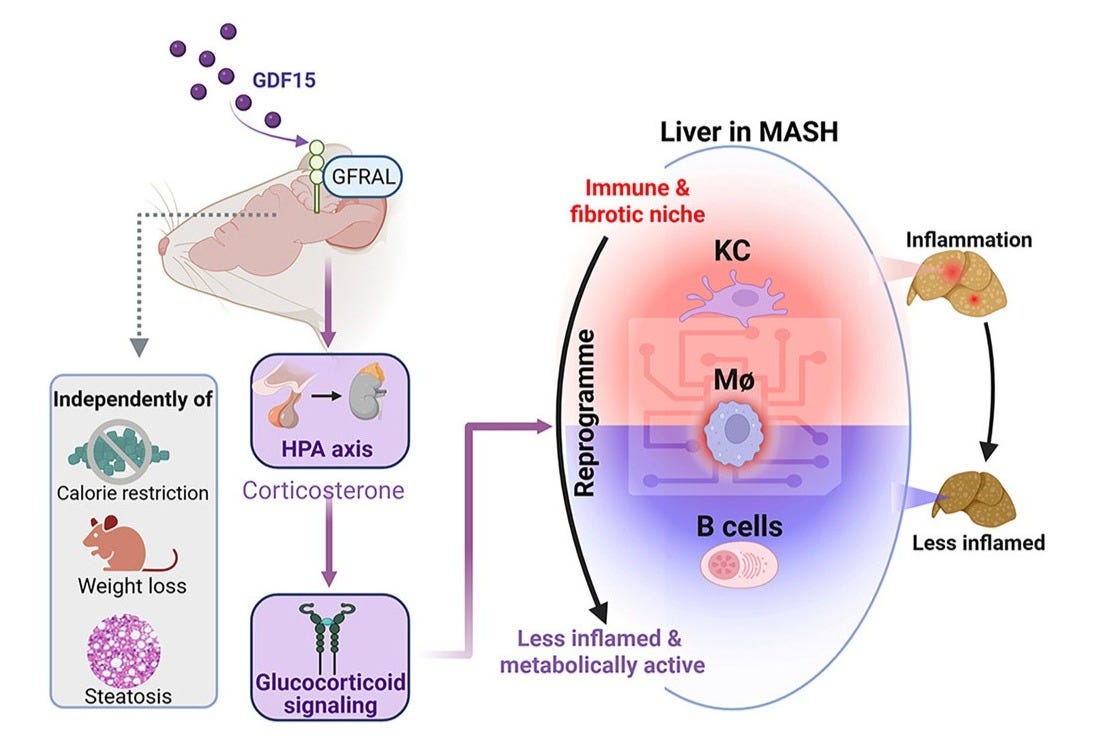
In this post, we discuss a new study suggesting an unexpected role for GDF15 — the energetic stress cytokine that labs around the world have shown to be a biomarker of disease, stress, and mental illness, and a signal of elevated energy resistance.
In mice, GDF15 helped protect the liver from inflammation through signaling involving the brain. The new findings suggest that some disease signals may in fact be part of the body’s efforts to heal, and that energetic stress biomarkers like GDF15 could be biomarkers of the healing process.
When an Alarm Is Also Part of the Solution
When we find high levels of a certain molecule in the blood of people with a certain disease, it’s easy to conclude that the molecule is part of the problem. But what if the molecule’s abundance is actually part of the body’s efforts to protect itself? To heal.
This is an important distinction in biology. Think about a fire alarm. The sound of a fire alarm is strongly associated with fires, but the presence or loudness of fire alarms doesn’t cause fires or make fires worse. As a result, turning off or removing the alarm doesn’t make the fire go away.
Getting rid of the alarm may give the fire the opportunity to spread.
Something similar may be happening with the stress-related hormone growth differentiation factor 15 (GDF15). We’ve discussed earlier how getting rid of GDF15 in people undergoing cancer treatment could in fact increase mortality.
In addition to transforming energy, our mitochondria participate in sensing and responding to stress. When cells experience metabolic strain, they release GDF15 into the bloodstream. That signal reaches the brainstem, kickstarting a cascade of changes.
We shared in a prior article how this kind of body-to-brain communication may be part of mitoception—the sensing of energy transformation capacity relative to demand.
Through mitoception, the brain can detect energetic stress and monitor the balance between our cellular energy demands and the available energy supply, based on the energy-transforming capacity of our mitochondria and metabolic circuitry.
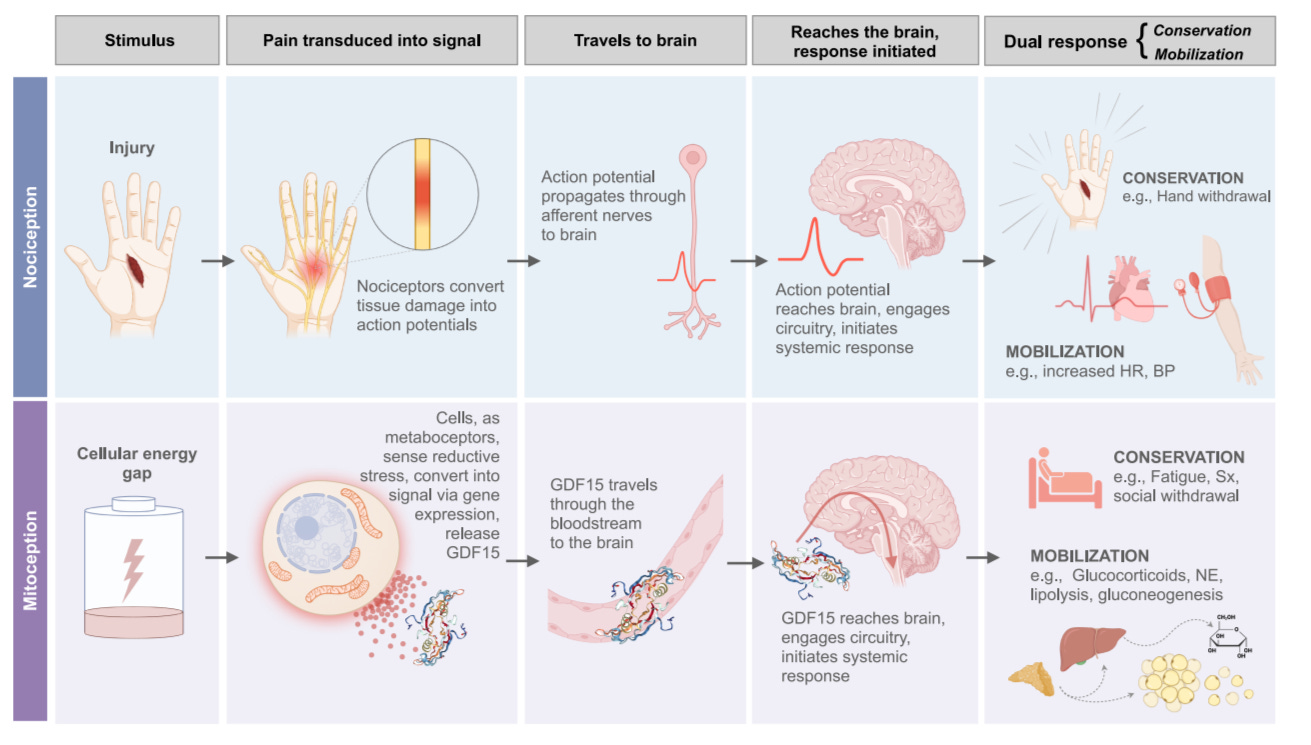
GDF15 is important for mitoception, but it has also been shown to influence appetite and body weight. Studies in animal models found that increasing GDF15 can lead to weight loss, and it does this by signaling to a receptor in the brain called GFRAL to help maintain the balance between food intake and energy expenditure.
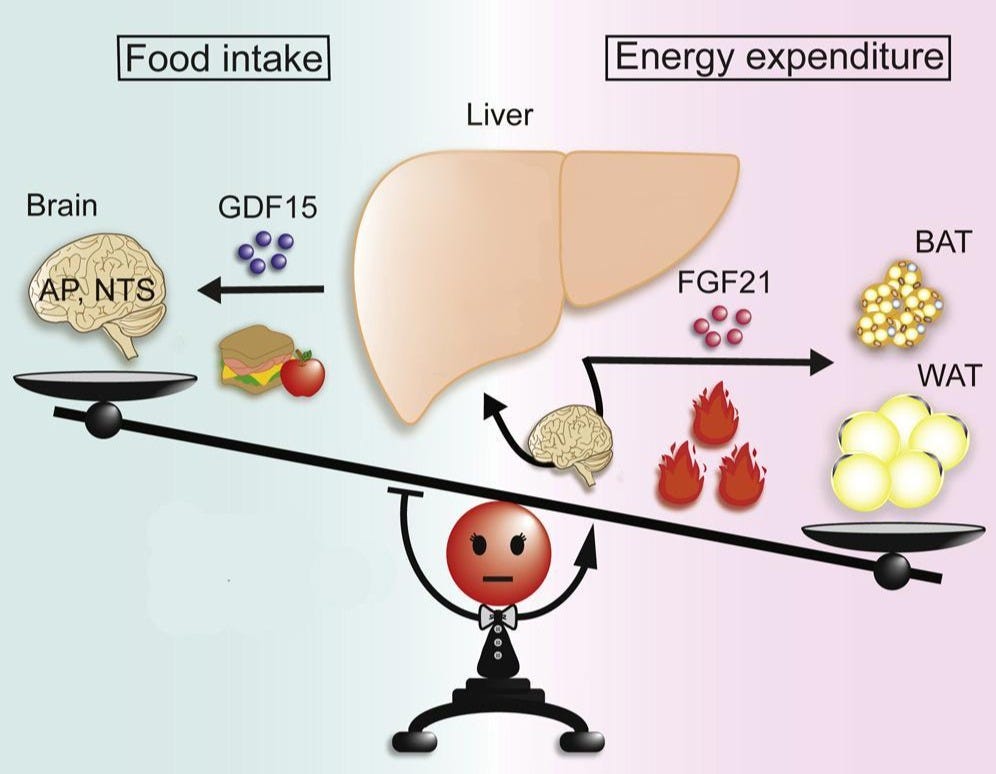
Work from labs around the world has shown that this small cytokine is elevated in many illnesses, including liver disease, and with psychological stress and mental illness.
So GDF15 is usually read as a marker of something going wrong. Hence the emergence of pharmacological approaches that have tried to neutralize or eliminate it.
But important questions remain. In the context of liver disease, is increased GDF15 part of the problem that contributes to liver damage? Is it a passive indicator of stress in liver cells? Or might it be part of a protective, organism-wide response, signaling to the brain so the body can mobilize resources to heal?
A new study, led by Greg Steinberg and colleagues at McMaster University in Canada, provides insights that bring us closer to an answer.
Exploring the Role of GDF15 in Liver Disease
To appreciate what the research team discovered, we should first talk about what happens in liver disease.
This study examined GDF15 in a serious form of fatty liver disease called metabolic dysfunction-associated steatohepatitis (MASH).
In this condition, excess fat builds up in the liver, inflammation develops, and liver cells (hepatocytes) become damaged. Over time, this can lead to progressive fibrosis—the buildup of scar tissue that interferes with liver function.
The team studied male mice fed a high-fat, high-fructose diet that produced features resembling what we see in MASH in humans. In a nutshell, high-fat/high-sugar is a potent combination to increase energy resistance.
The team used genetic techniques to remove either GDF15 or the GFRAL receptor. Compared to normal mice, the liver inflammation and scarring in GDF15/GFRAL-deficient mice were worse.
Without GDF15, the organism was in worse shape.
This was true even though other measures of liver pathology, like fat build-up in the liver and insulin resistance, were similar between groups.
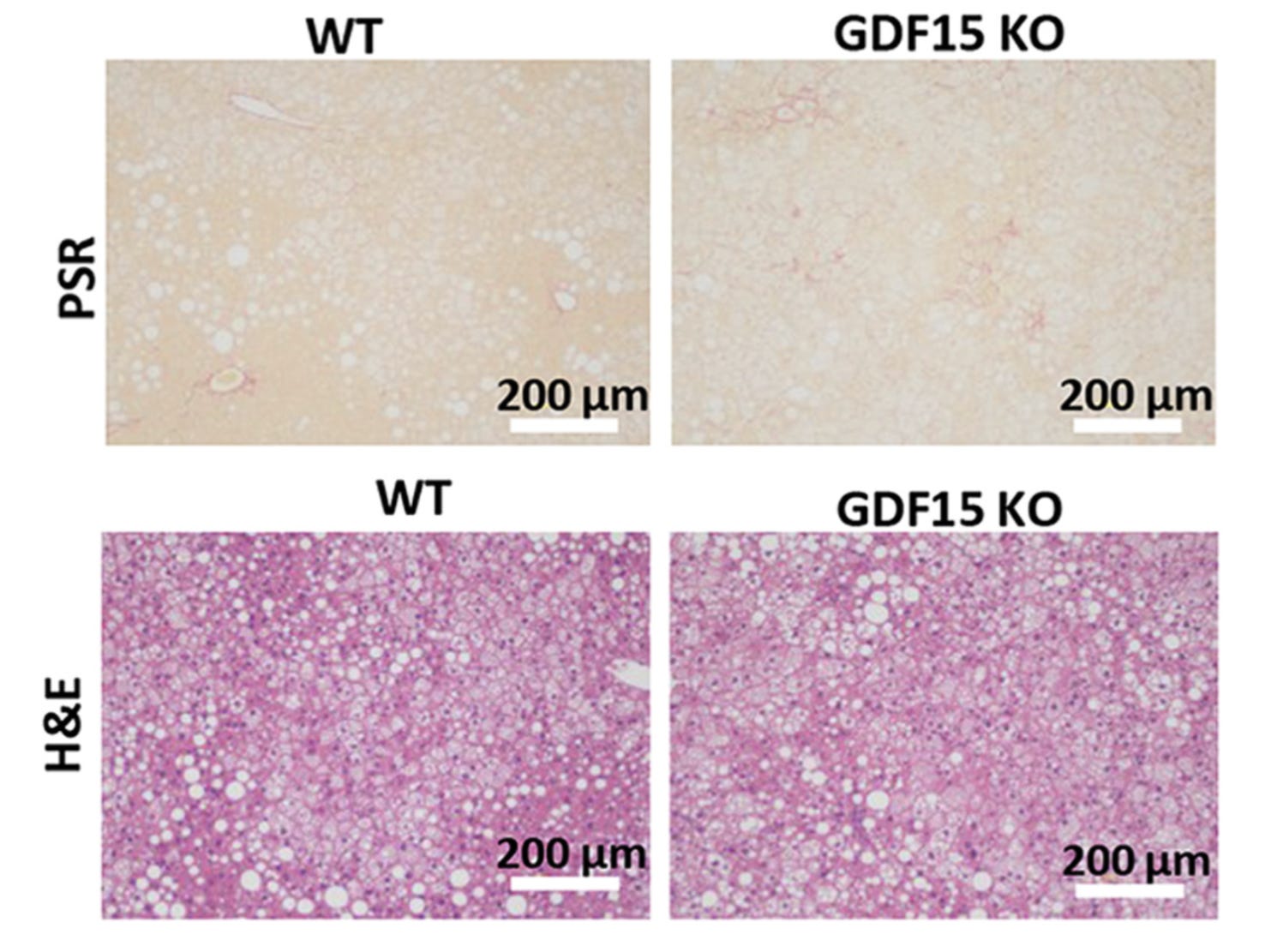
This suggested that GDF15 was doing something protective specifically related to inflammation. But mice without GDF15 also gained more weight, which made it difficult to draw firm conclusions from the results.
So they did another experiment.
This new experiment allowed them to remove the potential effects that differences in weight may have caused. One group of normal mice received extra GDF15 and could eat as much as desired. Keep in mind that GDF15 lowers appetite and promotes weight loss.
To control for these effects, another group that didn’t receive GDF15 had their food intake adjusted so that both groups had similar reductions in food intake, body weight, and liver fat.
If GDF15 protected the liver only by reducing food intake, both groups should have had similar benefits when they were matched for lower food intake, weight and liver fat.
They didn’t.
But the group that received GDF15 had a substantially larger reduction in inflammation and fibrosis. Lowering liver fat and reducing inflammation were not controlled by the same process.
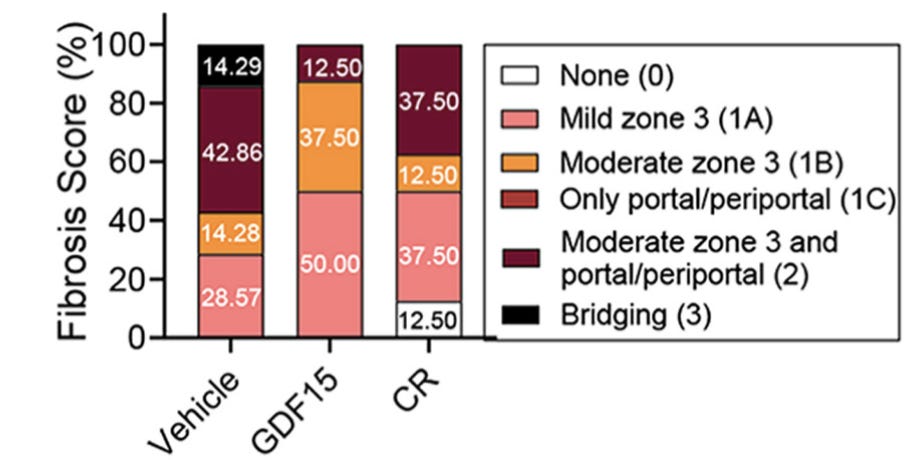
The extra protection from GDF15 was independent of weight loss. It’s not about obesity—it’s about the underlying metabolic state, seemingly controlled by GDF15.
These results suggested that GDF15 does more than regulate appetite.
How the Brain Fits into the Picture
Earlier, we mentioned GFRAL—the best-characterized receptor for GDF15. It is primarily found in a small region of the brainstem, sitting at the base of the brain, near the top of the neck.
So if the receptor is primarily located in the brainstem, how could GDF15 sensed by the brain change what happens in the liver?
The researchers traced a route through a stress-response system called the hypothalamic-pituitary-adrenal (HPA) axis. When the brain activates this system, hormones are released to help coordinate how the body responds.
In mice, one of these hormones is corticosterone—similar to cortisol in humans. These hormones, called glucocorticoids, can regulate immunity and reduce inflammation.
Consistent with a previous study, the Canadian team found that GDF15 increased circulating corticosterone and activated glucocorticoid-related signaling in the liver.
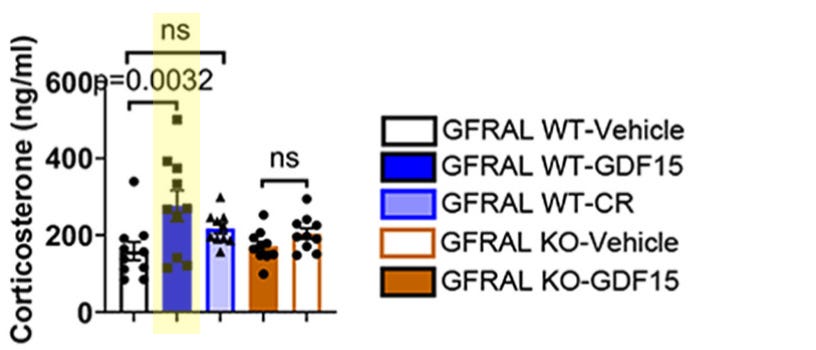
And when GFRAL was removed so the brain couldn’t sense blood GDF15, the liver wasn’t protected from inflammation and fibrosis.
Together with several follow-up tests, these results suggested that GDF15 protects the liver by signaling through the brain’s GFRAL receptors, which then triggers glucocorticoid signaling: an “anti-inflammatory” stress pathway.
And all of this happens independently of eating less.
So here’s the emerging picture:
Stressed tissues release GDF15, the brain senses it, and the brain recruits a systemic hormonal response that calms inflammation in the liver. The protection doesn’t come from GDF15 alone, or from the liver alone, but from communication across the whole organism.
This is a great example of how energetic signals generated in one part of the body, possibly via mitoception, can produce a whole-body response.
Changing Communication Between Liver Cells
The research team also looked more closely at what was happening inside the liver in their model of liver disease. They used spatial transcriptomics, a technique that maps cells and the patterns of gene expression within tissues.
The results pointed to immune system changes within the liver.
In the livers of animals that received GDF15, compared to the calorie-restricted group, the abundance of immune cells associated with inflammation and scarring was reduced. (The abundance of functional liver cells was the same between groups.)
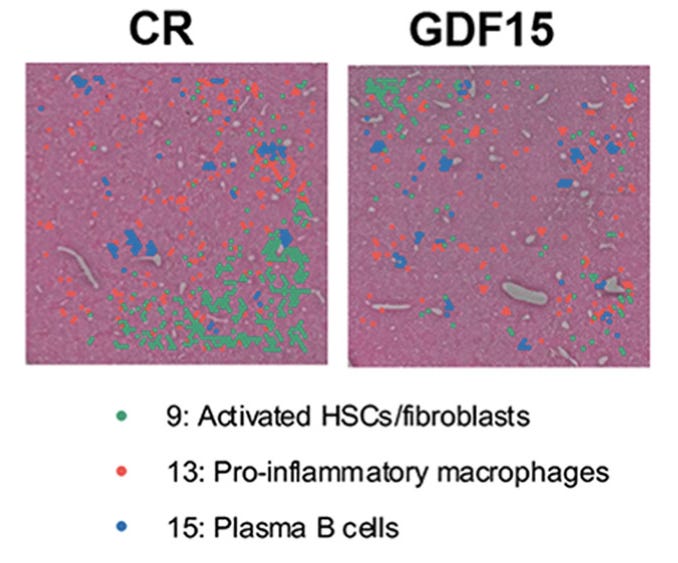
They also found changes in specific immune cells in the liver called Kupffer cells. In the GDF15-treated group, these cells had gene expression patterns suggesting less of an inflammatory state.
Computational analyses also suggested that several immune-cell populations were less metabolically active, along with less inflammatory signaling (mainly through cytokines) among these cells.
By recruiting the brain, GDF15 shifted the phenotypes of immune cells in the liver.
Viewing this result through an energetic lens, immune activity, tissue damage, and repair all require energy. GDF15 appears to affect not only which cells participate in inflammation, but also how those cells behave as a collective.
Their findings remind us that health depends on coordination among cells. We can’t get all the answers by just measuring individual molecules or looking at the behaviors of individual cells.
This study didn’t measure whether the changes that reduce inflammation “save” energy. If so, that would leave more of the limited energy budget available for healing. Those changes in cell phenotypes could reflect an energy-conservation or energy-redistribution phenotype—an intriguing possibility to investigate in the future.
A Different Way to Think About Stress
With this and other new research studies, we are beginning to see that the role of GDF15 in stress and health isn’t that of a straightforward disease biomarker.
Yes, GDF15 is elevated in illness and with metabolic stress. But is it mere smoke marking the presence of a fire, or part of the damaging fire itself? Or is it a pro-healing signal that helps protect the organism through stress signaling pathways?
When we look at molecules without understanding how they signal across the organism, we may miss or misinterpret what those biomarkers mean and what they do. The effects of GDF15 across body-brain systems likely depend on timing, intensity, duration, and context.
Glucocorticoids can suppress harmful inflammation. We use this in the clinic all the time. But chronically high levels can also be detrimental. May we not fall into simplistic thinking and forget about the beautiful co-regulatory, time-dependent effects in physiology.
We don’t yet know if the results above translate directly to humans. However, they remind us of an important principle we’ve written about before. Blocking a distress signal because it is associated with disease could interfere with a beneficial adaptive response.
The bigger emerging idea is that to fully understand and support health, thinking of the body as an interconnected, energetic whole is a valuable perspective.
An energetic view of stress, and an energetic view of health can be an antidote to overly reductionist thinking.
What we call inflammation may be the initial trigger for an organism-wide, brain-based response. Disease-related signals like GDF15 may in fact be part of the body’s efforts to heal.
And energetic stress biomarkers like GDF15 could be biomarkers of the healing process.
Have you encountered other examples of biological signals or markers of disease that turned out to be part of the body’s attempts to adapt? Fatigue, perhaps? What else?
We would love to hear your thoughts below.
The fire-alarm framing is the part I'll keep thinking about. So much of diagnostic medicine assumes a raised marker is the problem to suppress, when it may be the body's coordination signal. I see a parallel in how we read people: the fatigue, withdrawal and appetite shifts that follow a hard stretch look like dysfunction on paper, yet they can be the organism redistributing a limited energy budget toward repair. To your closing question, I'd add the fatigue that follows prolonged emotional strain. Clients often describe it as a collapse, but it frequently behaves more like an enforced recovery phase. The open question for me is timing: at what point does a protective signal, sustained too long, become part of the load itself?
This is a beautiful example of how biology challenges our assumptions. We tend to interpret elevated stress markers as signs that something is going wrong. Yet some may also be part of the body's attempt to restore balance. It makes me wonder how much we're missing when we study individual molecules without considering the intelligence of the whole system.