

ENERGY SCIENCE

The human mind can be both the greatest ally and obstacle in achieving individual health. As a result, grasping how our mind shapes our health is key to fulfilling the promise of personalized medicine. This article explores limitations with our current medical model, and how bringing the mind—or human experiences—into our conversation about health and healing is essential for medicine to shift into its next stage of evolution.
The Paradox of Medical Advances and Declining Health
Thanks to progress in diagnostics, pharmacology, and surgery, medicine has acquired a formidable ability to treat previously-elusive symptoms and disorders. However, disease incidence, particularly non-communicable diseases, hasn’t been declining.
Modern children and adults get sick more often with chronic diseases, receive more expensive treatments than ever before, and spend more time in disability and poor health.
As a result, healthcare spending in the United States has risen to a quarter of the gross domestic product (GDP). Despite the investment, the U.S. population doesn’t live much longer than 10 years ago. In fact, in the last decade the average U.S. lifespan has continued to fall behind that of other developed countries, urging us to reconsider the premise and our approach to the modern medical enterprise.
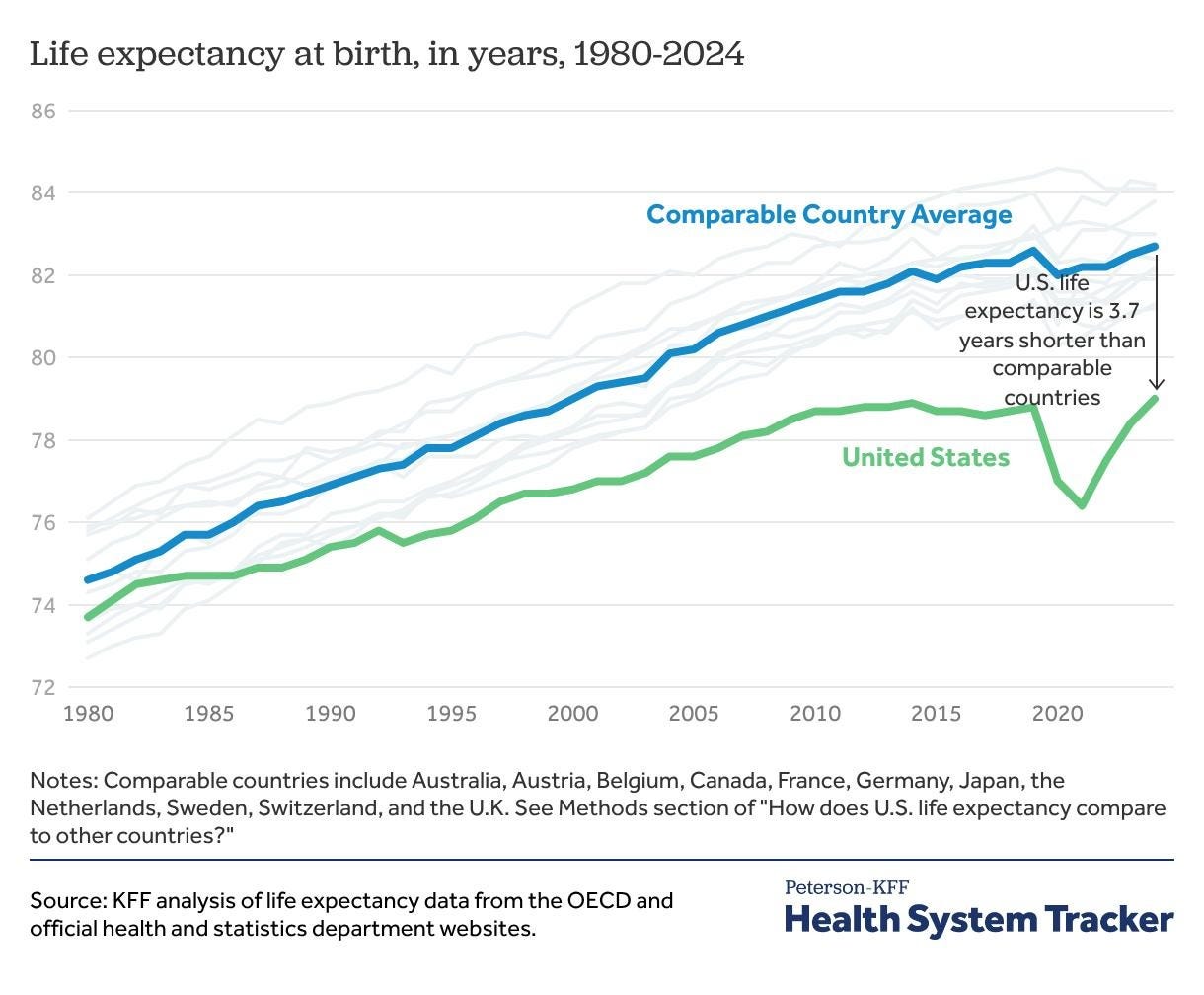
We have gotten better at fixing broken parts, but not at keeping people healthy.
What are we missing about health?
Intrinsic health is a field-like state that drives our ability to optimally adapt to challenges. It manifests as the intrinsic capacity of an individual to reach their full physical and intellectual potential. As medicine attempts to fulfill its mission and support public health, it needs not only to fix problems, but also to promote health to avoid sickness in the first place.
Examining the Mind-Body Connection
Of the factors that can tilt the delicate balance between good and poor health states, an understudied, poorly integrated, and rarely leveraged factor is the mind.
The human mind encompasses the subjective dimension of the lived human experience. It includes thoughts and emotions that release powerful hormones and shift systemic metabolism and pathophysiology.
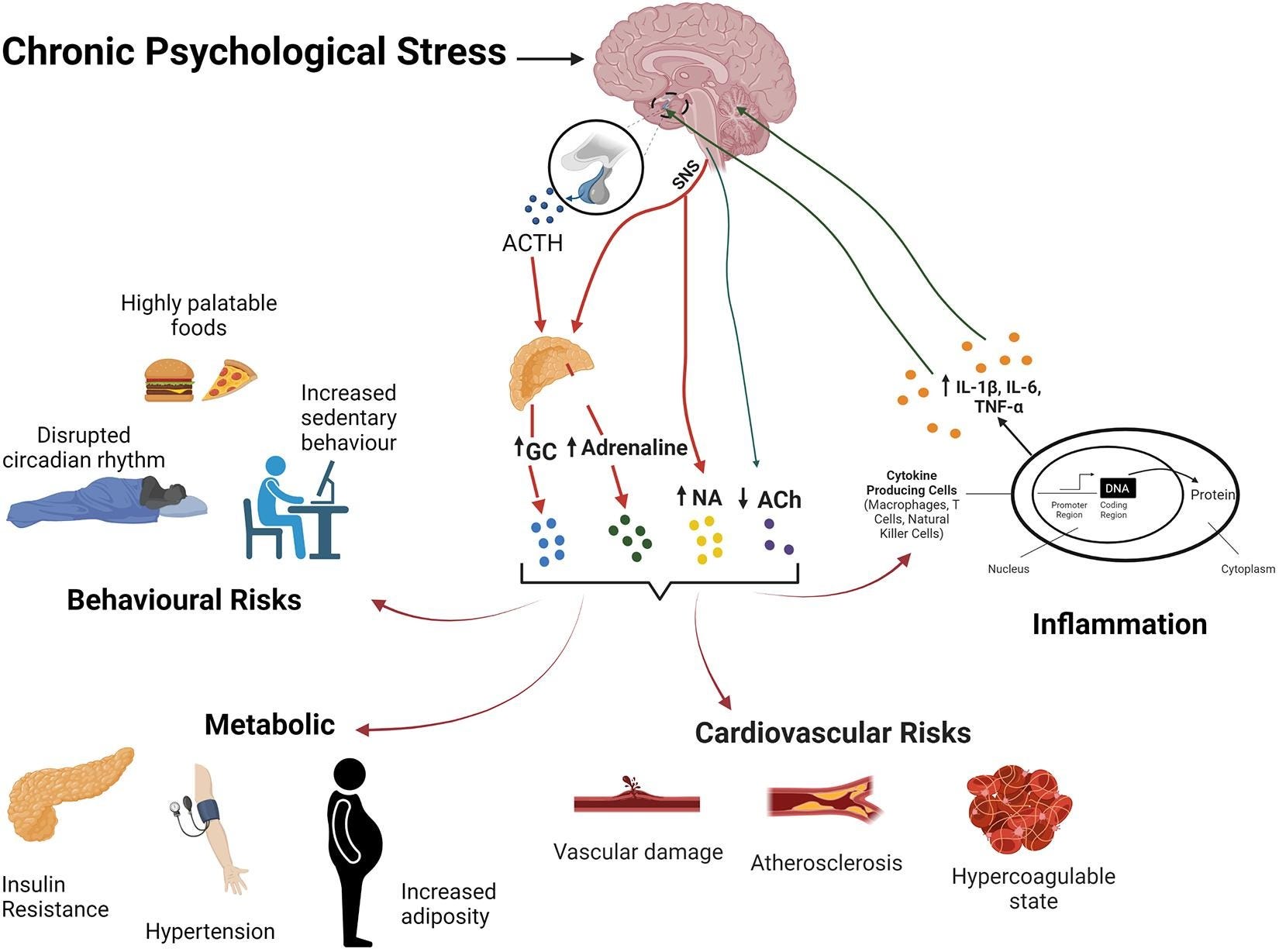
It also includes more subtle and less acutely salient inner experiences, such as our sense that the world is coherent and meaningful, our desire and ability to entertain social connections, and the overall emergent sense of well-being. All of these experiences—as ineffable as they are—shape human health.
The mind is also the “organ” of the human organism that gets injured by early life trauma and abuse. Once damaged, it becomes excessively vulnerable and easily triggers abnormal physiology that manifests as severe, medically-unexplained mental and physical health disorders. Traumatized minds increase the risk for most age-related diseases to arise over a person’s lifetime.
How can we be sure that we have much to gain by integrating the mind into medical training, practice, and research?
How the Mind Can Influence Health
Three major domains of human health are naturally under the control of the mind: behaviors, mental health, and energy metabolism.
Understanding how the mind connects with the biology of health at different levels cements the importance of bringing the mind into medicine.
1) The mind shapes health behaviors.
The pillars of health promotion include physical (in)activity, diet, sleep, and other modifiable behavioral strategies well known to mitigate disease risk. The effects of behaviors are particularly well-established for cardiovascular health and increasingly recognized for other chronic illnesses, including diabetes, neurodegeneration, and mental health.
Some behaviors increase disease risk. For example, overeating causes metabolic oversupply. Acutely, this leads to obesity and insulin resistance. Chronically, it damages neurons in the nervous systems and other tissues. Smoking increases cancer risk through well-defined carcinogenic mechanisms, whereas social isolation increases the risk of neurodegeneration through mechanisms that still elude us.
Nevertheless, health and social behaviors are directly under the control of one’ states of mind.
2) The subjective experiences of the mind, over time, crystalize into mental health.
Mental health is your ability to entertain positive, realistic interactions with your environment and other individuals. This involves brain-based perceptions of our external environment through the senses, but also of our internal physiological environment through interception.
This explains why our microbiome and its metabolic products influence our acute emotional tone and mental health. The mind also underlies our ability to accurately perceive the external environment and to consistently distinguish imagined from real occurrences.
The mind is the subjective interface between our inner biology and our outer environment.
3) The mind regulates energy metabolism.
Energy is the force that brings the otherwise inert genomic and molecular hardware of our cells to life. Energy metabolism fuels all cellular activities, from neuronal action potentials, production of immune cytokines and antibodies, to the dynamic expression of longevity-promoting genes that shape lifespan.
States of the mind–emotions, perceptions, and expectations–cause the release of hormones and neuropeptides with powerful metabolic effects. For example, acute psychosocial stress triggers cortisol release from the adrenal glands, and the neurotransmitter norepinephrine from sympathetic nerve terminals. Acting on target tissues, cortisol, norepinephrine, and other chemical messengers engage intensive energy-consuming cascades that increase cellular respiration, heart rate, and neural activities.
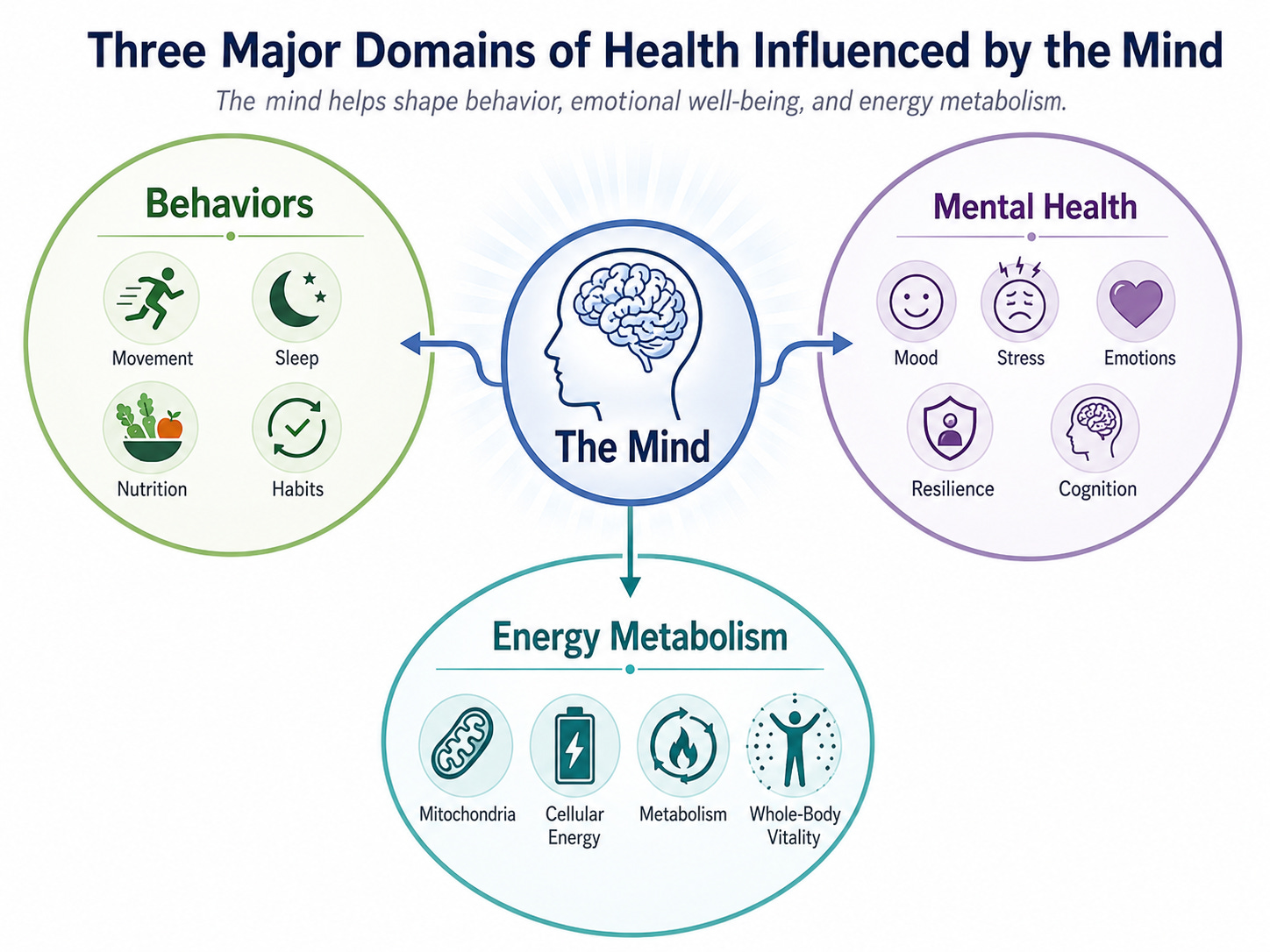
Through its brain-based signaling effects on cellular and systemic metabolism, the mind regulates energy expenditure and possibly cellular aging.
Because it’s connected to all of our being—behaviors, how we feel, and energy metabolism—the mind is both the greatest ally and obstacle in achieving individual health.
Our Vision for the Future of Modern Medicine
The defunct medicine of past centuries lacked proper biological grounding. As a result, it focused on occult concepts and brought little relief for real human suffering.
Now anchored in remarkable biological details, modern medicine effectively reduces all aspects of human suffering to physical and molecular events. But reductionism has long been recognized as an incomplete approach to make sense of life.
As our major analytical lens, reductionism leaves the mind outside our field of view and consistently fails to produce actionable healthcare strategies. To fulfill its evidence-based, personalized, and effectiveness aspirations, our medicine of the future needs to bring the human mind into the picture.
Advancing a robust science of mind-body processes has the potential to shift pieces of the health puzzle from the periphery of molecular medicine to the core of person-centered medicine.

Our goal as biomedical scientists should remain focused on building increasingly accurate models of human health. And I am increasingly convinced, focused on building a science of the healing process—Healing Science. We won’t be able to do this without integrating the full spectrum of human experiences that fill our minds.
Upon close inspection, we soon realize that all aspects of life that normally operate in healthy organisms and that falter in disease–from energy metabolism to information transfer–are naturally under the control of the human mind. The mind and body unfold together from energy transformation. They also evolved in tandem over millions of years to promote survival.
As a result, they are wired together, reflecting two important facets of the energetic process that you are.
Our scientific landscape is ripe for a new generation of translational mind-body, mind-mitochondria, and mind-molecule science. We need to build robust evidence bridges at the intersection of disciplines, and across levels of analyses.
If successful, this effort has the potential to reveal novel bioenergetic mechanisms through which the mind, and the fabulously individual experiences it holds, shapes health and aging trajectories over periods ranging from minutes to decades.
Once discovered, validated, and implemented, new mind-body principles could rapidly illuminate a new generation of scientifically-informed, energetically-inspired interventions designed to help people flourish—to fulfill their psychobiological potential.
Evidence suggests that if we help people flourish, we can also keep people healthy for longer. And thus help fulfill the much-needed promise of modern medicine.
Curious how health emerges from the interplay between our biology and experience? Explore our mind-mitochondria research.
This is a frame I've been waiting to see articulated — health as a cross-disciplinary, energetic process rather than a purely molecular one. I'd offer one addition, from a discipline that rarely gets a seat at this table: the built environment.
You describe the mind as “the subjective interface between our inner biology and our outer environment.” But that outer environment is now largely one we construct — and some of its inputs may act on cellular energetics through pathways that don't begin with conscious perception.
Light is an intriguing example. Mitochondrial dynamics and respiration appear to be clock-controlled and aligned with the light–dark cycle (Ceccato et al., Mitochondrion, 2026), while Glen Jeffery's group at UCL has reported wavelength-dependent effects on mitochondrial function, including opposing effects of shorter blue and longer red wavelengths.
The environment isn't simply a backdrop the mind perceives. It is also a continuous source of physical and sensory information to biology.
So perhaps the frame is not only mind–body, but mind–body–space. We evolved for hundreds of thousands of years in natural environments, yet in little more than a century we have radically remade the conditions in which we spend most of our lives.
If reductionism's failure is leaving things outside the field of view, the spaces we now spend around 90% of our lives inside may be one of the largest things still outside it.
That's the bridge I spend my days on, from the design side. I'd love to see it built from yours too.
The essay does not yet present a mechanism, causal model, or experimental design that would distinguish these interpretations from more conventional neuroendocrine, behavioral, or psychosomatic explanations.
At this stage, such claims therefore remain speculative rather than empirically distinguished.
A better approach would be to consider the extensive placebo and nocebo literature, which has experimentally demonstrated expectation-dependent changes in physiology and symptom expression under controlled conditions.
These studies could provide a much more robust empirical basis for testing specific causal pathways between mind and body or cosmos. Or whatever.