
A New Image Emerges
Seeing My Experience of Bipolar Disorder Through an Energetic Lens

LIVED EXPERIENCE
Our TSEE guest writer Hannah Warren is an artist, writer, and social entrepreneur. She serves as Communications and Advocacy Manager at Baszucki Group and Metabolic Mind where she focuses on advancing awareness of metabolic therapies for psychiatric conditions, amplifying lived experience, and empowering a growing network of advocates.

I have always loved optical illusions and the way they make me question my perceptions.
In grade school, I remember being shown the above image that can appear as either a young or an old woman, depending on how you look at it. At first, I could only see the old woman. It took time for the young woman to surface, but once she did, I could toggle back and forth between images, choosing which to focus on.
In my own life, I spent years under the weight of a bipolar I diagnosis.
I believed one version of reality: that I had a lifelong chronic illness and would need to take antipsychotic medications indefinitely, enduring their many side effects in order to maintain stability.
Metabolic therapies offered an alternative path and ultimately brought my symptoms into remission. Now, I am beginning to understand my condition through an energetic lens, and an entirely different image is emerging. This new image is as distinct from my former understanding as the young woman is from the old.

My Diagnosis
When I had my first experience of manic psychosis in 2012, it came seemingly out of nowhere, during a time when my future felt bright.
I was pursuing my master’s degree in London, a young social entrepreneur on a full scholarship. One night, I stayed up until dawn working on a paper, as I had done countless times before. This time was different. Instead of synthesizing my thoughts and contentedly crashing, I couldn’t quiet my mind.
My thoughts raced and spiraled, becoming increasingly erratic. They seemed to vibrate out of my head and dance in colorful shadows on the wall.
I stayed up for nights on end. My clothes began to move on their own. A luminous snake slithered through my apartment, both alluring and threatening.
Everything felt epic. The experience was equal parts majestic and terrifying, holy and horrifying. I eventually wandered out of my apartment and into a local church, where I asked to be introduced to God. I was waiting patiently when the police arrived instead. They took me to an inpatient psychiatric facility.
I felt like I was in a liminal space, somewhere between life and death, transforming into something otherworldly—only part human, a radiant beast. I believed a spiritual teacher would soon come help me master powers like telekinesis, telepathy, and teleportation. Something magical was happening to me.
I was hospitalized for about a month and a half. I slowly returned to reality, but it had changed since I left it. Everything felt darker: the air was grimy and suffocating. I experienced overwhelming suicidal depression that lasted over a year. The urge to die felt less like a thought and more like an incessant itch. Just functioning was immensely difficult.
I was diagnosed with bipolar I disorder and told it was a lifelong chronic illness. Only antipsychotic medication would keep me stable. Eventually, the suicidality subsided, but I was left numb and sedated. The medication’s side effects caused me to gain over seventy pounds. I felt like a different person. My best attributes were blunted. I lost my creativity, curiosity, and love for life.
I remained in this state for nearly a decade, until metabolic therapies restored me to myself.
My Recovery
In the summer of 2021, I found the website of metabolic psychiatry pioneer, Christopher Palmer. When I read about ketogenic therapy as a potential treatment for bipolar disorder, I was immediately fascinated.
In the years leading up to that discovery, I had already been experimenting with metabolic therapies without realizing it, including intermittent and extended fasting, exercise, stress management, and sleep regulation. My quality of life had improved significantly. I particularly noticed that I experienced greater mental clarity and a pronounced increase in energy when I fasted. Perhaps, I thought, the state of ketosis was a key part of this.
I immediately decided to adopt a ketogenic diet.
As my body shifted from burning glucose to ketones as fuel, I noticed profound benefits. What surprised me most, however, was not the initial improvement but how I continued to feel better with each passing year.
I have now been using metabolic therapies as my sole form of treatment for nearly five years, and my life is the best it has ever been. These therapies have restored my physical health, creative and cognitive capacity, and passion for life. I have not only returned to my baseline—the person I was before my illness—but have also experienced post-traumatic growth and a deeper sense of self-actualization through the immense challenges I have faced.
The Mind as an Energy Pattern
The research is still evolving, and there is much to learn in the field of metabolic psychiatry. However, I believe my healing and newfound stability are largely due to improvements in the quality and quantity of my mitochondria, achieved through metabolic therapies, along with consistently providing them with their preferred fuel source: ketones.
When I first heard Martin Picard’s interview with Bret Scher, Medical Director of Metabolic Mind, I was delighted by his infectious love of mitochondria. It also struck me that Martin doesn’t simply study mitochondrial psychobiology. He carries a distinct warmth, suggesting a life shaped by practices that cultivate and sustain positive energy. Later, I also had the opportunity to interview him and learn more about his energetic practices.
In that interview, he described the mind as an energy pattern, prompting me to reflect on my symptoms and recovery from an entirely new angle. I now think of my manic psychosis as characterized by an uncontrolled upregulation of energy. The Energy Resistance Principle (ERP), a framework developed by Martin and Nirosha Murugan, emphasizes that “to be alive is to transform energy,” and:
“To transform energy, there must be resistance. And to stay well, that resistance must be finely tuned. The future of medicine may lie not in targeting molecules, but in understanding and restoring energy flow.”
Experientially, in mania, it felt as though I had too little energy resistance. As if a tsunami of energy were sweeping me away. I felt like I was made of very little matter, more like a rapidly flowing current on the verge of combustion. My soul was trying to leap from my body.
Getting put on an antipsychotic stabilized me, but at the cost of a severe downregulation of energy, too much energy resistance. It was as though my once-bright light had dimmed, leaving me stumbling through near darkness.
Ketogenic therapy is something different entirely. Ketones keep me in the “Goldilocks Zone” of energetic balance. I’m not out of control like in mania, or muted like I was with psychotropic medications. With ketosis and other metabolic therapies, I am able to finely tune my energy resistance to stay healthy and stable.

Rethinking Altered States
In viewing my symptoms through an energetic lens, I find myself asking new questions about what it means to experience an organic altered state. As our modern world becomes increasingly interested in the therapeutic potential of altered states through psychedelics, I wonder: what if we have misunderstood the altered states that arise organically?
Given that energy is the source of all life, could an upregulated energetic state hold benefits we have yet to fully understand?
I believe there is a need for new scientific inquiry that explores these experiences from an energetic perspective, and better accounts for their complexity. In the meantime, I am already thinking about my past, present, and future differently.
I fell in love with India after a cultural exchange year as a Rotary Ambassadorial Scholar in 2005 and went on to live there for several years. One of my closest friends there, Satyam Chetanaya, has been on a lifelong yogic path. When I told him about discovering ketogenic therapy for my bipolar I disorder, he shared that it is not uncommon for yogis to experience periods of losing touch with consensus reality in uncontrolled ways along a path of spiritual discovery.
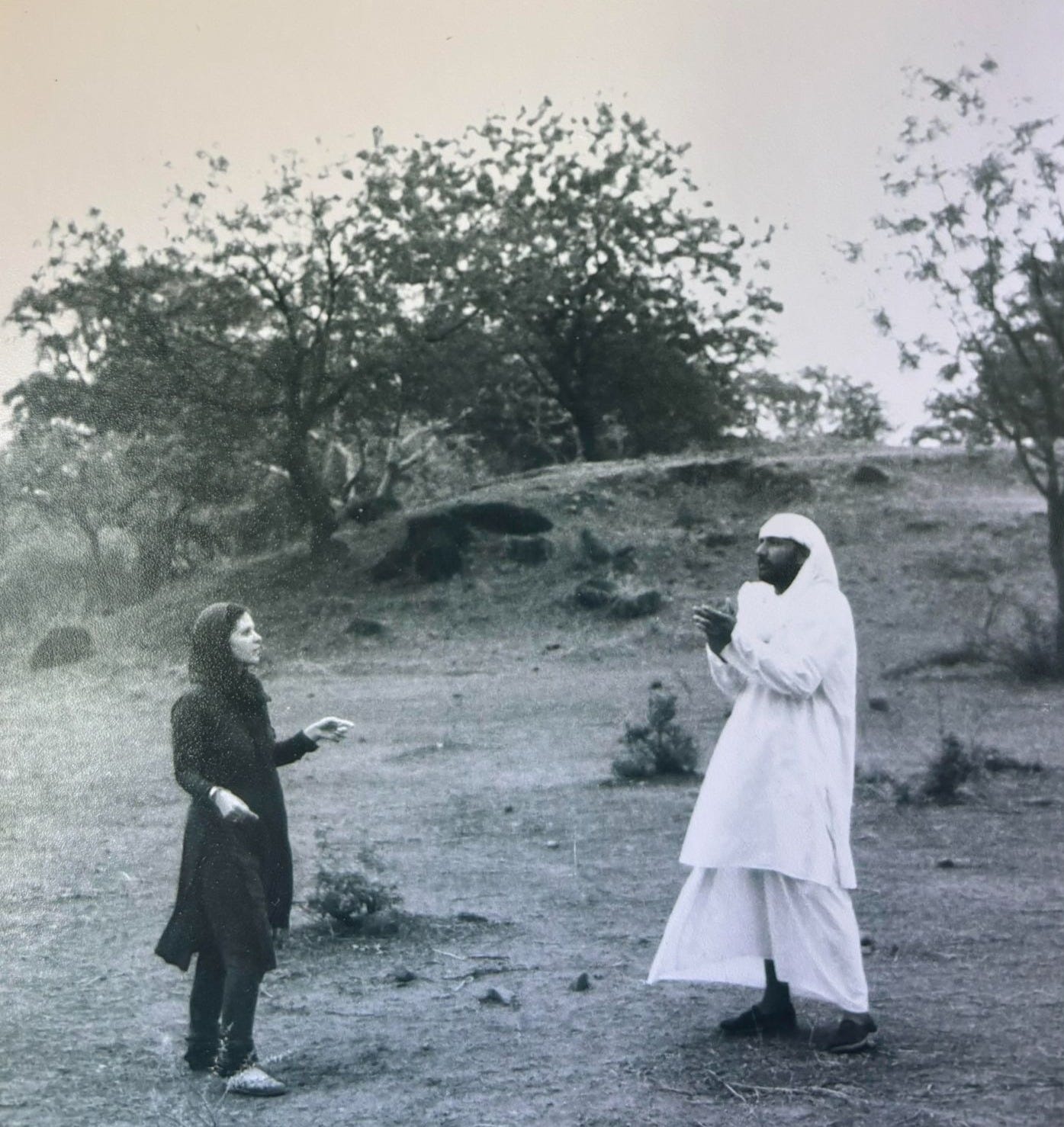
Traditional practices to maintain grounding often include metabolic interventions such as extended fasting and sustained caloric restriction, typically within structured eating windows. In this context, as part of a spiritual journey, the aim is not to suppress altered states entirely, but to learn how to access and navigate them in controlled ways as part of a disciplined practice.
Looking back, I am struck by the fact that I often felt a natural inclination to fast during manic states, yet I was forced to eat in the hospital. Could my body have been attempting to regulate itself? Could extended fasting, through its production of ketones and its influence on mitochondrial health, alone have supported a safe return to stability?
How might my experience have been different if I had been gently guided back to balance through metabolic therapies, alongside an integration process that honored the experience rather than simply pathologizing it?
Could I have emerged with a sense that I had undergone a meaningful altered state—one that carried insights and opportunities for growth—rather than leaving only with a diagnostic label and a sense of brokenness and shame?
I still carry vivid memories of those experiences, and I am now working to integrate them in a new way. Like symbols in a powerful dream, they hold valuable meaning that can be interpreted rather than dismissed.
I have also begun to intentionally practice brief, controlled, non-substance-induced altered states through breathwork and meditation. My initial experiences in mania were uncontrolled and overwhelming, but I now believe that, approached skillfully, with the right metabolic practices in place, altered states can offer meaningful insights that enrich life.

Beyond Illness
An energetic framework offers a new way to understand one of the central paradoxes of a bipolar diagnosis: it is unusual for a disease to come with such pronounced upsides, including heightened imagination, euphoria, and awe. What if, instead of a chronic illness, it were better understood as a propensity toward energetic fluctuations, something that can be regulated and integrated rather than simply suppressed?
At this stage in my lived experience, I no longer feel as though I have a chronic disease. Instead, it feels more like I have unique wiring and a form of energetic sensitivity that requires careful regulation through ongoing metabolic therapies. In ketosis, I experience a distinct sense of energetic peace. It allows me to access feelings of wonder and creative flow that were entirely inaccessible to me on antipsychotics—not with the frenetic intensity of mania, but with a grounded, balanced steadiness.
Throughout history, many philosophers, artists, spiritual teachers, and scientists have traversed altered states. In today’s world, how many of their contributions might have been diminished under treatments that impair cognition and blunt imaginative capacity?
I hope to see people who experience altered states find better solutions, grounded in an energetic paradigm. This is not only so they can lead healthy, fulfilling lives, but also because their sensitivities may offer a unique perspective, and, as history suggests, the potential to enrich the world in vital ways.
We need deeper scientific inquiry to explore altered states through an energetic lens, along with greater respect and curiosity for the subjective experiences of those who undergo them. I hope to contribute to this work in my career, especially by helping to center lived experiences in ways that are more empowering and validating.
It takes scientists like Martin to pioneer new lines of inquiry that truly value and honor the multifaceted nature of lived experience. His approach is not reductionistic; he recognizes that people are not averages and brings a deep respect for multicultural perspectives and the idea that spirituality and science can work in harmony to support a healthier future for humanity.
Because of this, I am honored to serve on the board of the Energy and Healing Institute, a nonprofit recently founded by Martin. I believe that establishing energy as a fundamental component of biomedicine has the potential to change countless lives, as it has changed mine. Much like the young woman emerging from the image, an energetic model can bring an entirely different picture into view, one that shifts our focus from combating disease to understanding and nurturing health.
We’re excited to be assembling a community around the Science and Experience of Energy with this Substack. We hope to bring people together to reflect on how we experience energy in our everyday lives.
If this post made you take a pause or if it resonated with you,
please share with someone you love.
 | A guest post by
|
So much love here! Grateful for this beautiful community.
I've heard your story many times, Hannah, but each iteration reveals a new facet, like a sparkling gem. I treasure those moments I had to speak with you and Martin, learning about mitochondria and the spiritual depths of healing.
I’m currently conducting a review of fasting across religious history, especially among mystic and visionary figures such as Joan of Arc and Catherine of Siena, who practiced rigorous fasting. Some might argue there’s a narrow threshold where the “mystic” edges into the “manic.”
Alongside the historical record, I’m also surveying contemporary scholarship on how fasting’s metabolic, neuropsychiatric, and bioenergetic effects show up today, particularly in Muslim, Eastern Orthodox Christian, and Catholic monastic settings, where fasting structures much of the calendar year. Often, these fasting traditions occur in the winter/early spring, a time also associated with transitions from depression to mania in the northern hemisphere.
Although I don't know as much detail about Ayurveda, I've practiced yogic asanas for many years, I appreciate prāṇa and its ways of helping to physically restore energy flow in the body through breath and movement.