
What We Miss When We Study Only Molecules
Reframing Health Through the Lens of the Biophysics of Energy

ENERGY SCIENCE
On this Substack, we’ve had different voices discussing mitochondria, metabolism, health, and life experiences. Underneath all of it runs a common thread: Energy.
Energy has been a central concept in physics for over a century. In biology and medicine, it is everywhere in practice, but it isn’t treated as a unifying framework. The result is that we have fields that are rich in molecular detail, but fragmented when it comes to understanding how our systems behave as a whole.
Physicists think about complex systems by tracking flows, gradients, rates of change, and transformations governed by physical laws. They tend to focus on the dynamics—the how of things: how systems evolve, at what rate, in what direction, and over what timescale—rather than the parts. That perspective has a great deal to offer medicine, and this piece is my attempt to weave these two worlds together.
When you understand the body as a physical system that transforms energy, new types of diagnostics and therapeutics become apparent. And it also begins to explain why light, movement, or even mental state can have such wide-ranging effects on how we feel.
We will come back to this at the end.
Before going further, we need to understand what energy actually is.
The Elusive Nature of Energy
“It is important to realize that in physics today, we have no knowledge of what energy is.” — Richard Feynman, The Feynman Lectures on Physics
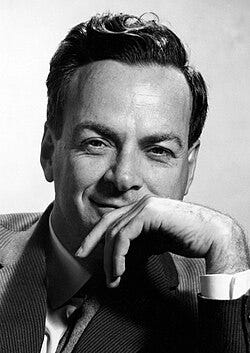
Let’s not be too hard on ourselves. Even Richard Feynman, one of the most brilliant physicists of the 20th century, admitted that the most fundamental concept in all of science is something he (and most other physicists) could not accurately define in the same way we define objects or mechanisms.
In his view, energy is not a thing, nor a mechanism. It is a conserved quantity. If you calculate it before and after a process, the total remains the same. That rule holds across every energetic transformation.
What makes energy useful is that it allows us to track change without needing to specify the mechanism in advance. It tells us whether a system can change state, and in which direction that change will occur.
What Is Energy, Really?
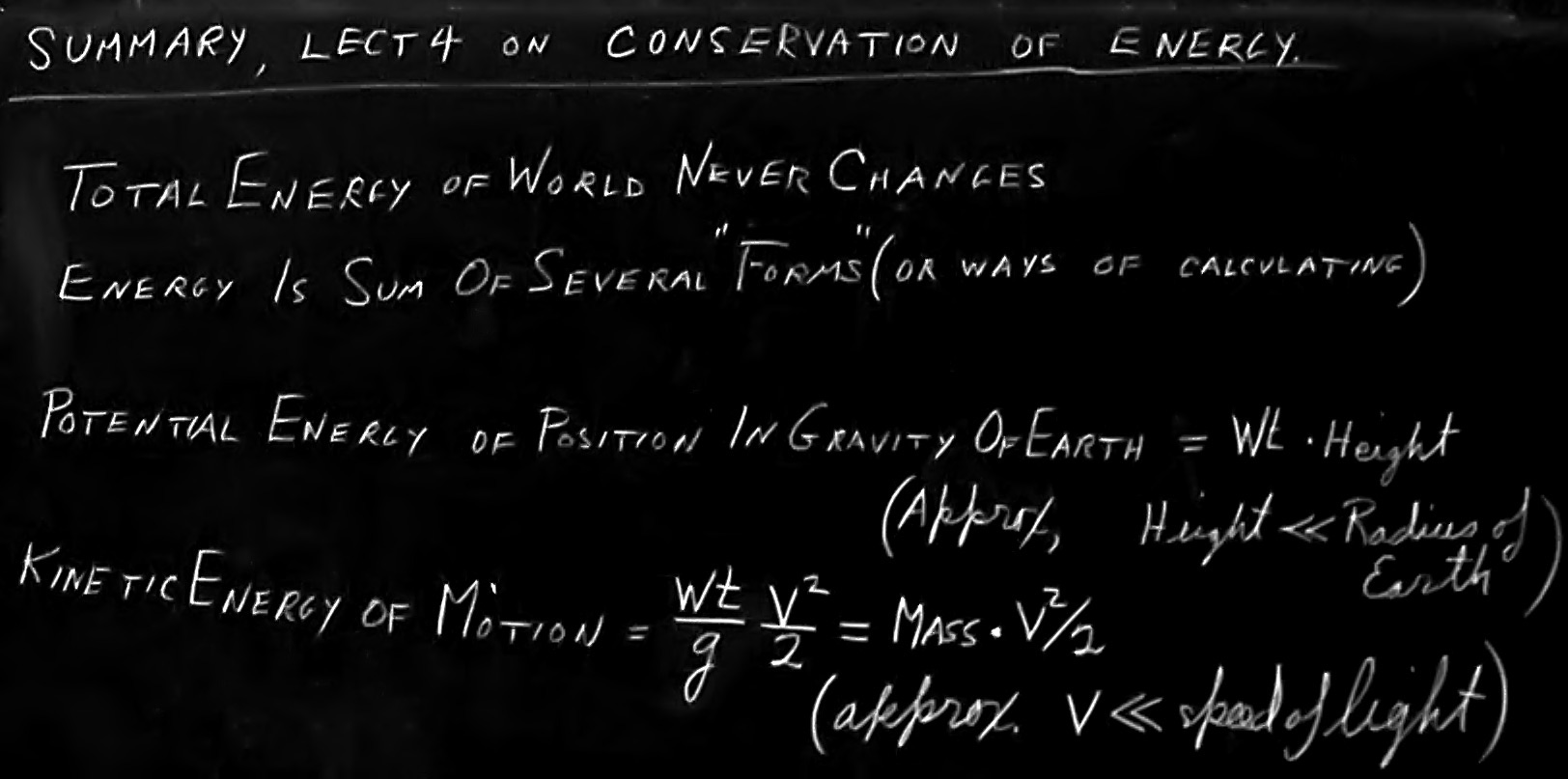
Feynman provided a great foundation that I like to build off of. Energy is, he wrote, “a most abstract idea, because it is a mathematical principle.” There are no little blobs of energy hiding inside objects. There is only the accounting, and the accounting always balances out.
Energy, the capacity to do work may also be viewed as potential for change in the state of a system. Not change in the casual sense, but in a thermodynamic sense. It encompasses transitions from one thermodynamic state to another, such as going from higher free energy states to lower ones, or from disequilibrium toward equilibrium.
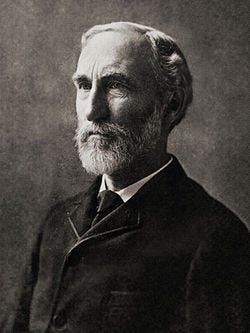
In the 1870s, Josiah Willard Gibbs formalized this. When the free energy change of a system, ΔG, is negative, a process happens spontaneously and releases energy that can do useful work. When ΔG hits zero, the system has equilibrated and directed change stops.
A living cell is, in thermodynamic terms, a machine for keeping ΔG relentlessly negative across thousands of simultaneous reactions. The moment it can’t do that anymore, it dies.
This is what death is. It’s not the loss of a gene, or the breakdown of a protein, but the unrestricted flow of energy towards equilibrium.
Let’s Do an Exercise Together
Look at your hand.
Something extraordinary is happening in there. Hundreds of billions of cells, each one an intricate site of energy transformation, are collectively maintaining a state of improbability. Proteins are being folded. Membranes are tightly held together. Ions are being pumped across electrochemical gradients against their natural tendency to equalize, creating bioelectric signals that race down axons. Mitochondria are spinning protons across nanometer-thin membranes like microscopic turbines.


At this moment, your hand is a local reversal of the universe’s most iron-clad tendency: the drive toward disorder.
The Question on No Medical Chart
Physiology has spent over 150 years cataloging these parts and events that are happening inside our bodies. And modern biomedicine has extended this view. But somehow, biomedicine has become a science of broken parts instead of a science of processes.
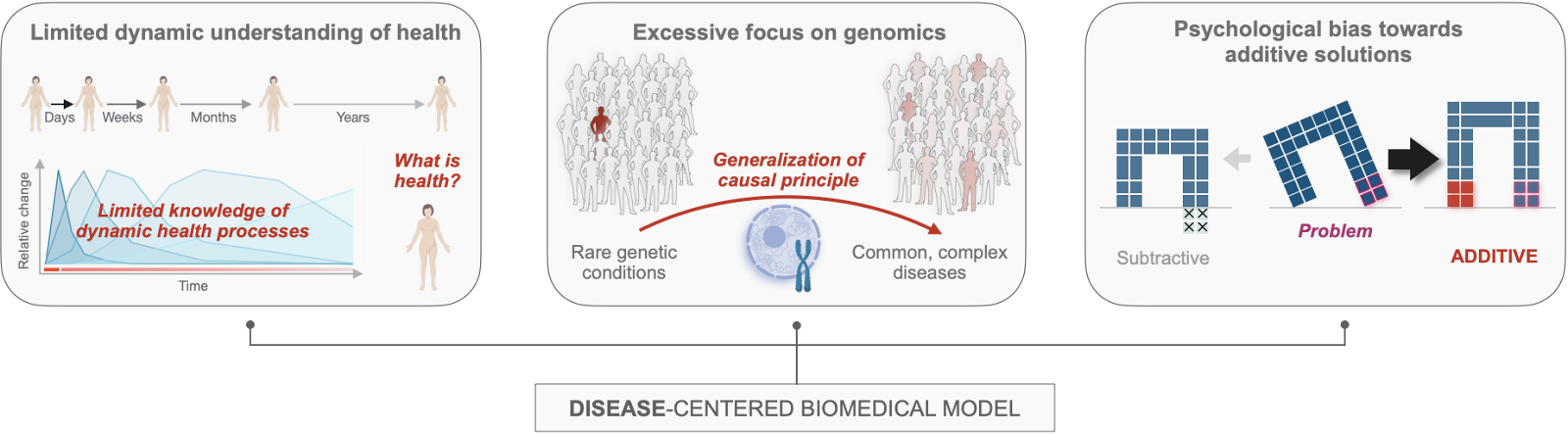
Find the mutated gene. Block the misfolded protein. Kill the invading pathogen by breaking down components.
This reductionist program has been enormously productive, and we shouldn’t pretend otherwise. But it opens a question that the parts-based framework struggles to answer: what about the timing and rates? The dynamics? What about other energetic forms that clearly carry meaningful biological information?
From an energy-centric perspective, life emerges as a dynamic interplay of processes, not just a sum of its parts.
Imagine, with this perspective you walked into a hospital, looked at a patient’s chart, and instead of asking which biomarker is off, you asked: “ Where did the energy go? How have the energetics changed? Which reaction rates have slowed? Which energetic flows have been rerouted or resisted?
To understand a physics-first view of the body, we need to start where Feynman started: with what energy actually is: the potential for change.
The Guardrails: Laws of Thermodynamics
Physicists have established a set of guardrails that constrain how energy exists, moves, and transforms in our universe. We call these the Laws of Thermodynamics. We will not go deep into the formal elements here, but if you want to, Peter Atkins’ The Laws of Thermodynamics: A Very Short Introduction is exactly what it sounds like, and it is worth every page. What matters for our purposes, is understanding why these laws are the governing rules of our bodies and health.
The First Law tells us that energy is conserved. Energy doesn’t disappear, and it isn’t created; it is transformed.
The Second Law tells us that, in a closed system, gradients dissipate and disorder increases.
Living systems are not closed. They maintain order by continuously taking in energy and exporting entropy (disorder or energy dispersal).
Health, in this context, is the ability to sustain organized energy flow. Disease then emerges when the flow of energy is resisted in such a way that normal rates and dynamics cannot be maintained.
Energy in All Its Forms
Energy is the potential for change, and it takes multiple interconvertible forms. Our bodies use all of them simultaneously.
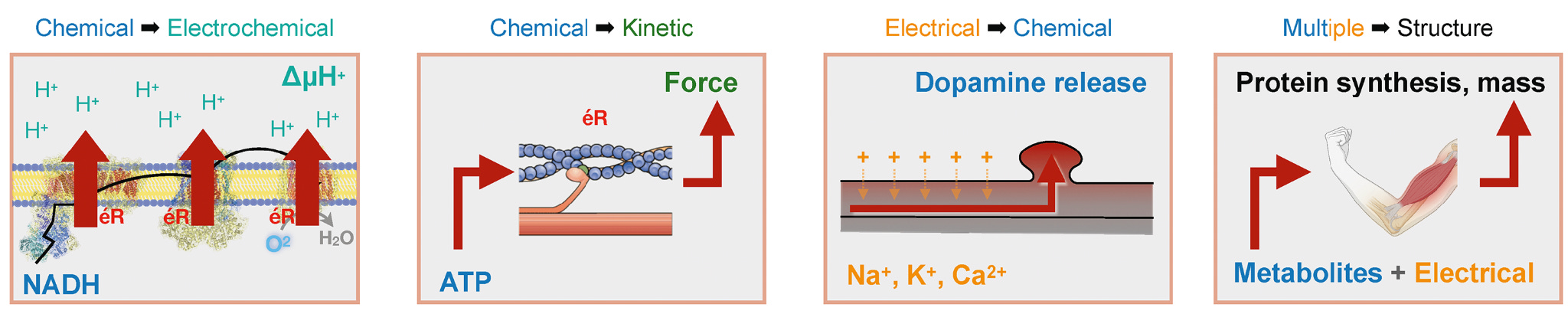
Kinetic energy is the energy of mass in motion, from a moving muscle to the thermal jiggling of molecules we measure as temperature. Potential energy is stored in position or configuration: gravitational, elastic, or electrochemical, as in ions separated across a membrane. Chemical energy resides in molecular bonds. Electrical energy is the work available from charged particles moving through a difference in electrical potential. Thermal energy is the random motion of atoms we experience as heat.
As we mentioned, the First Law of Thermodynamics states that the total of all these forms, summed across a system, never changes. Energy does not disappear; it transforms from one form to another.
In the body, these transformations run constantly and in parallel. Chemical energy in food enters a cascade the moment you eat. That energy is transformed into ATP within your mitochondria, and then it’s transformed into mechanical energy in muscle contractions, electrical energy in nerve impulses, thermal energy as body heat, and chemical energy again as new molecules are assembled.
And the transformation never stops. Even at rest or while sleeping, your cells consume roughly 40 kilograms (over 88 pounds) of ATP per day! This ATP is recycled continuously, since your body contains only about 250 grams (~0.5 pound) of ATP at any given moment.
You are not running on an energy storage device like a battery. You are a rushing river of energy routing and transformation.
The Thermodynamic Scandal of Being Alive
Here is the problem. The Second Law of Thermodynamics states that in any closed system, disorder always increases. Organized structures decay. Gradients equalize. Heat flows from hot to cold, never back. The universe tends relentlessly toward maximum entropy, toward equilibrium.
For biological systems, equilibrium has a simpler name: death.
So why aren’t you dead already?
Erwin Schrödinger asked this question in his thin 1944 book What Is Life?, a text that later inspired James Watson and Francis Crick‘s search for the structure of DNA. Schrödinger’s answer: organisms survive because they are open systems. They do not defy the Second Law. They satisfy it by continuously importing low-entropy energy from the environment, ordered chemical energy in food, or photons from the sun, and exporting high-entropy waste as heat and CO2. The organism maintains local order by increasing disorder elsewhere.
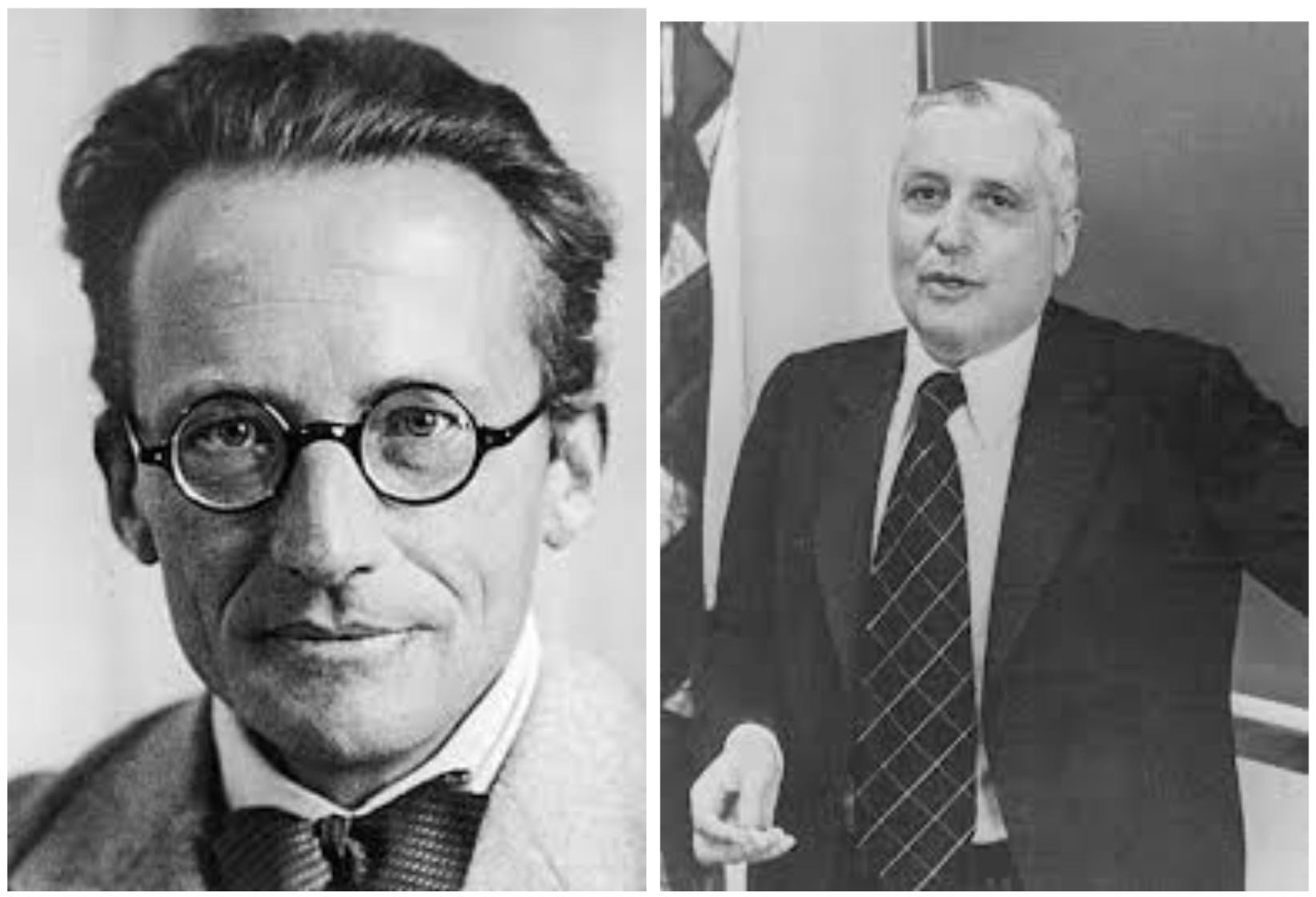
Ilya Prigogine formalised this into the physics of non-equilibrium thermodynamics, earning the Nobel Prize in Chemistry in 1977. Living systems, he showed, are dissipative structures. They maintain their organization not despite energy flow, but because of it. They are dynamic steady states held together by process. Stop the flow, and the structure dissolves.
This reframes what health actually is: the sustained capacity of a biological system to maintain its far-from-equilibrium state. And it allows us to see disease as not just an accumulation of broken biomolecules but a drift toward equilibrium, gradients weakening, flows slowing, and the energetic architecture beginning to fail.
Mitochondria: Beyond the Powerhouse
Linking non-equilibrium thermodynamics to health can feel like speaking two different languages, but they’re highly relevant to each other. The clearest example of a dissipative structure maintaining itself against entropy is not found in some exotic laboratory. It is actually sitting inside nearly every cell in your body: the mitochondrion.
Ask anyone (including my 6-year-old) what mitochondria do and they will say: they are the powerhouses of the cell! The label is misleading. A powerhouse stores fuel and dispenses it on demand. That is not what is not what mitochondria do.
Another common misconception is that mitochondria “produce energy as ATP.” They do not. What mitochondria do is transform energy from one form into another form that the cell can use.
ATP is referred to as the cell’s “energy currency,” but ATP itself is not energy. It is a molecule that carries the potential for change within its chemical bonds. When one of those bonds is broken, the system moves to a lower energy state, and that difference is used to drive processes like muscle contraction, ion transport, and protein synthesis.
But even this is only part of the energetic story.
What makes mitochondria particularly interesting is that they are not just chemical systems. They are physical systems.
Inside the mitochondria, an electrochemical gradient is maintained across the inner membrane. There is a difference in both proton concentration and electrical charge between the two sides, creating a voltage of roughly 180 millivolts across a membrane only a few nanometers thick. Scaled to that thickness, the electric field intensity is comparable to a lightning bolt.
A useful way to think about it is not as stored energy, but as tension. Like a dam holding back water or a spring held under compression, the system only has the capacity to do work as long as that difference exists. The moment it collapses, that capacity disappears.
Mitochondria are so vital to our health, not because they “make energy,” but because they maintain the gradients that allow energy to flow, to be transformed, and to be used.
And once you start to see that clearly at the level of the mitochondria, it becomes much easier to see it everywhere else in the body.
A Body Made of Gradients
Let’s zoom out, and we’ll see that a unifying energy-centric view emerges. Our body isn’t a collection of fleshy organs, but a hierarchy of maintained gradients, each requiring continuous energy expenditure, and each essential to that organ’s function.
Electrochemical gradients across neuron membranes propagate the action potentials underlying thought, perception, and movement. Oxygen gradients drive the diffusion that keeps every cell respiring. Pressure gradients move roughly 5 litres of blood per minute through 100,000 kilometres (I’m Canadian: kms, not miles!) of vasculature. Temperature gradients between core and periphery are actively managed to keep enzymatic reactions within their functional range.
All of these gradients are non-equilibrium structures. They exist only because our organism is continuously transforming energy across scales to maintain them. The moment that energy transformation stops or the energy flow is interrupted, the gradients begin to equalize. That equalization is what we call death. And its partial, localized version is what we call disease.
What the Biophysical Lens Allows Us to See
We started this piece with a question: what happens when we bring an energy-centric view through biophysics into biomedicine?
Our bodies exist only because energy is continuously flowing through them, maintaining gradients, driving processes, and sustaining organized complexity. Seeing it this way does not replace molecular biology. It adds a dimension that molecules alone do not capture: process, flow, rate, and thermodynamic state.
When you understand the body as a system that transforms energy, certain health conditions and diseases begin to make more sense.
Fatigue can be understood as reduced energy throughput. Inflammation as a reallocation of energy toward defense. Changes in mood or cognition as shifts in how energy is distributed across neural systems.
In cancer, cells abandon efficient aerobic metabolism and switch to a far less productive energetic pathway. This is the Warburg effect, first described by Otto Warburg in the 1920s. The metabolic shift happens early in tumour development, suggesting the change in energetics may be a driver of malignancy rather than simply a consequence of it.
In metabolic syndrome, the coupling between energy intake and expenditure becomes dysregulated at a systemic level, across adipose tissue, liver, muscle, and brain simultaneously.
The biophysical lens also clarifies why certain everyday behaviors have such broad effects.
Morning light exposure influences circadian timing and mitochondrial function. Movement increases the capacity of the system to process energy. Practices like mindfulness shift physiological state, altering how energy is distributed across the nervous system.
Once you see physiology through this energy-centric lens, the logic of non-chemical interventions also begins to make more sense.
Magnetic fields, pulsed ultrasound, and specific wavelengths of light do not introduce new chemical species into the system. They alter the energetic environment, influencing membrane potentials, ion channel kinetics, and mitochondrial dynamics. In doing so, they shift how energy moves through cells and tissues. These are not alternatives to molecular medicine. They are tools that become obvious once the physics of the system is taken seriously.
Diagnostically, a biophysical framing points toward different measurements. Not only which proteins are present, but whether electrochemical gradients are within operating range, whether metabolic flux rates suit the physiological context, and whether the thermodynamic state of a tissue is drifting toward equilibrium. These are quantifiable. They are simply not what most clinical tools are currently designed to measure.
Physicists have been discussing energy for a long time, largely without biomedical scientists joining in. That is starting to change. And when it does fully, what becomes possible is not just a new set of tools but a fundamentally different approach to human health.
Thank you for joining us on the journey to building the foundation for the next phase of evolution for biomedicine. Please leave a comment to share how this perspective aligns with your experience, and consider sharing this post.